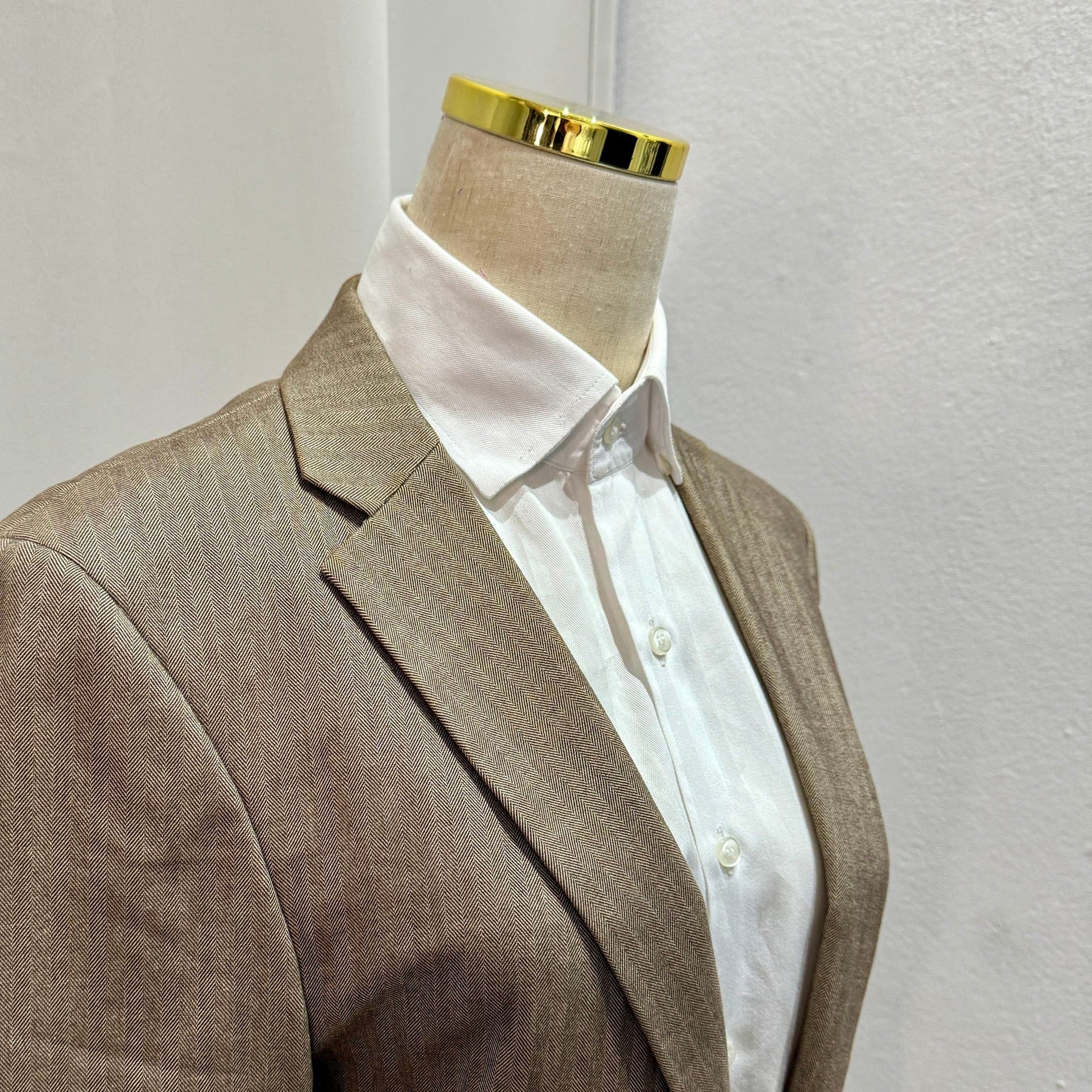

Linen is the coolest cloth you can tailor: flax fibres conduct heat away from the body and take up moisture without feeling damp, which is why linen suits outlast every trend in Bangkok. Choose a jacketing weight around 240 to 300 g/m for a suit that drapes instead of crumpling, or a linen-wool blend if you want the coolness with fewer creases.
Every April, when the city turns into a slow steam bath, the same thing happens at the atelier: the wool swatches stay on the shelf and the linen books come out.
Linen is the one cloth that seems to have been invented with Bangkok in mind, and after three decades of cutting it we have opinions: about the wrinkles, about the weights worth buying, and about why a linen suit, done properly, is anything but casual. Here is the whole case, made with affection.
Why linen loves Bangkok
Linen is spun from flax, and flax fibres are hollow and long. That simple fact does most of the work. The hollow fibre conducts heat away from your skin instead of trapping it, and it can absorb a surprising amount of moisture before the cloth feels damp, then release it quickly. On a humid Sukhumvit afternoon that means a linen jacket feels dry long after a cotton one has started to cling.
The weave helps too. Linen yarns are thicker and slightly irregular, so the cloth sits a fraction away from the body rather than wrapping it like a knit. Air moves through and under it. The effect is real enough that you can feel it walking out of air conditioning into the street: wool warms up with you, linen keeps its own climate for a while.
- Cool on the skin - heat moves out through hollow fibres instead of sitting against you.
- Dries faster than cotton - humidity does not leave the cloth feeling clammy.
- Stronger than it looks - flax outlasts most summer fashion cloth; old jackets get better, not thinner.
About the wrinkles
Let us deal with it head on: linen creases. It creases because the same stiff fibre that holds the cloth away from your body does not spring back when you fold it. There is no honest way around this, only good and bad versions of it.
Nobody has ever looked elegant fighting their clothes, and linen never asks you to.
The good version comes from weight. A flimsy 180-gram linen crumples into sharp little creases at the elbow and the lap within an hour. A proper jacketing linen, around 240 grams and up, falls into soft, wide folds instead, the kind that read as relaxed rather than slept-in.
This is the single most common mistake we see in off-the-rack linen: the cloth is too light, because lighter cloth is cheaper, and the garment pays for it all day long.
The other answer is a blend, which gets its own section below. But part of our affection for linen is the wrinkle itself. A linen suit that has been worn through a warm day says something quietly confident: this is a natural cloth, chosen on purpose, by someone who is comfortable.
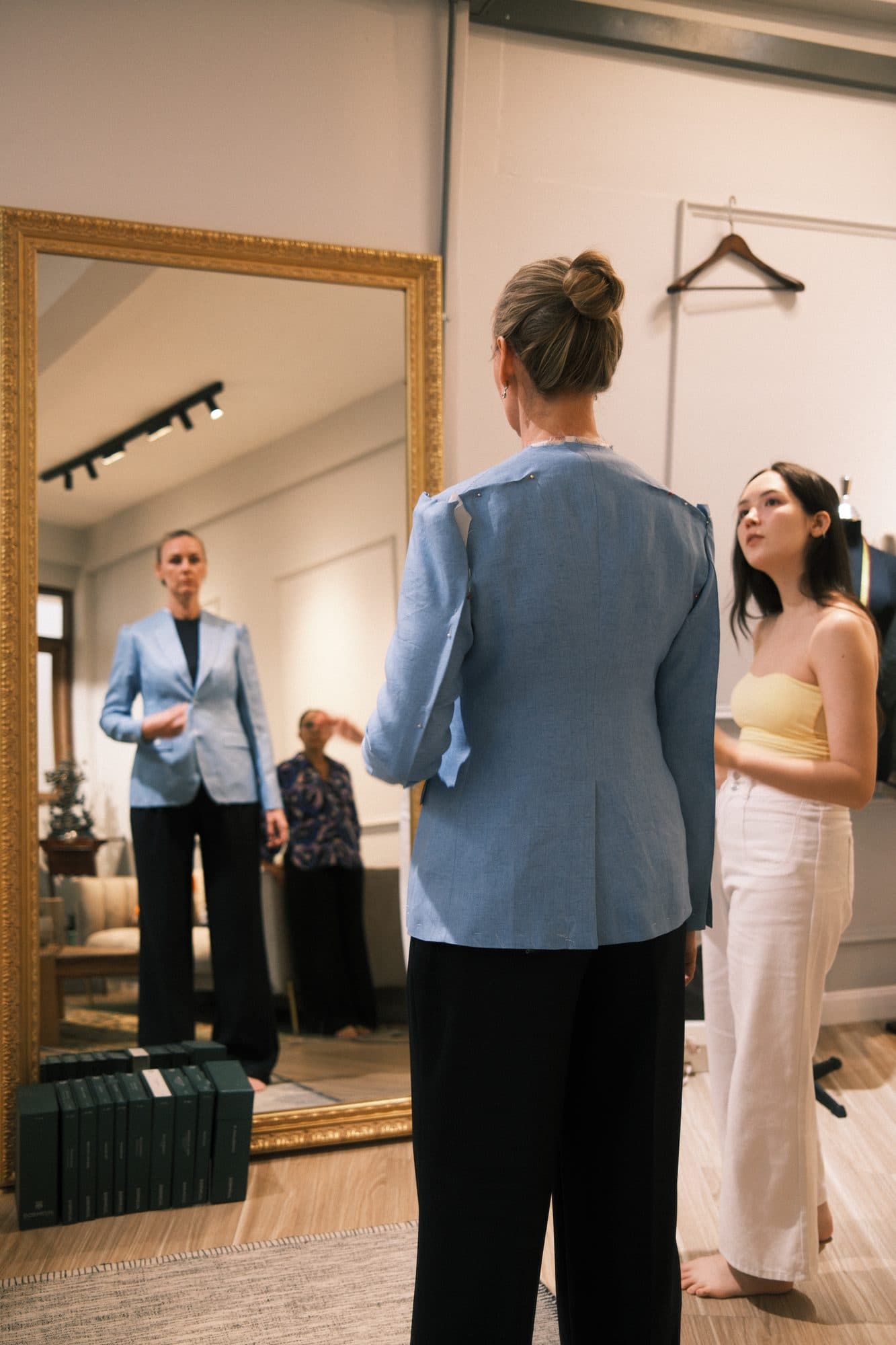
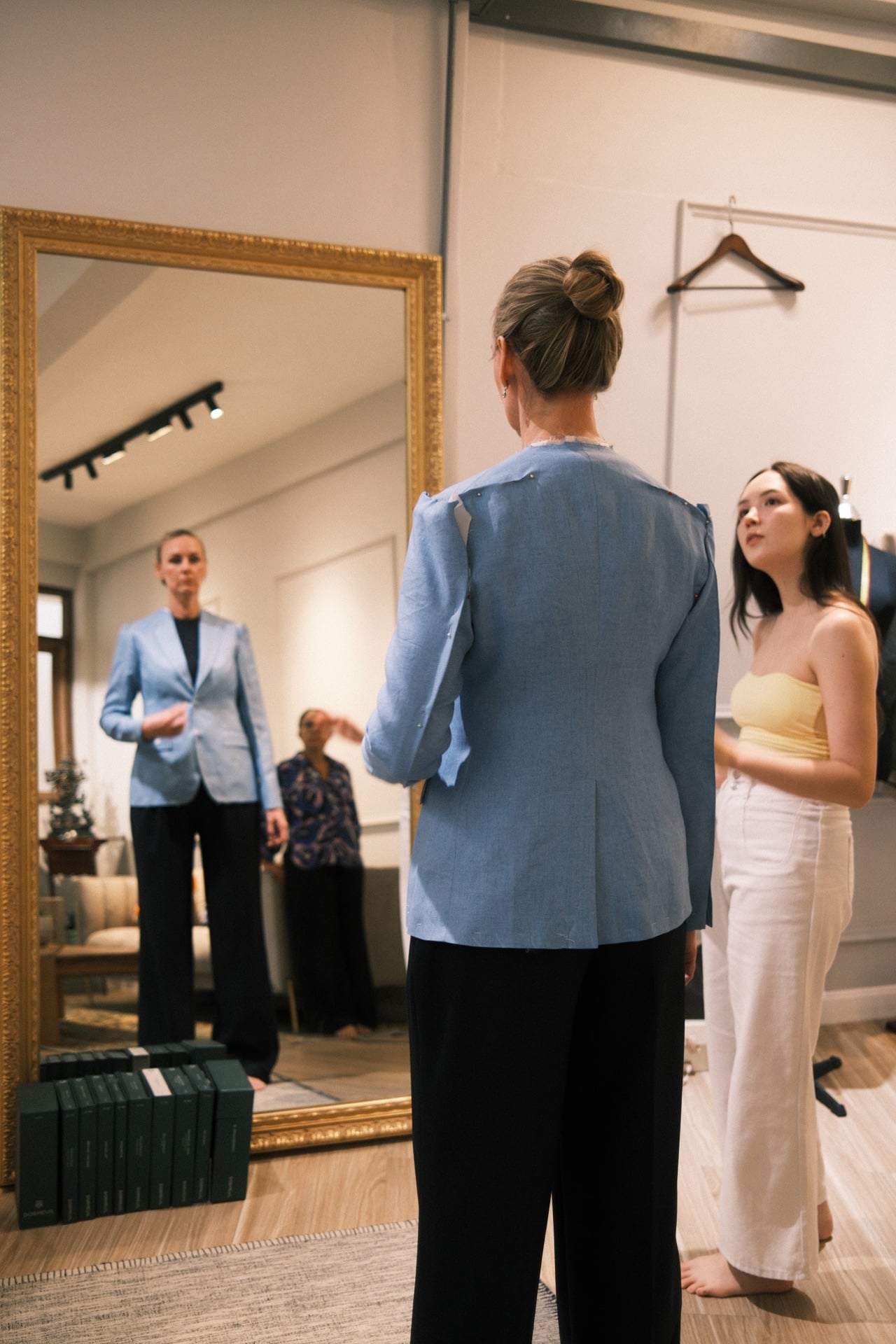
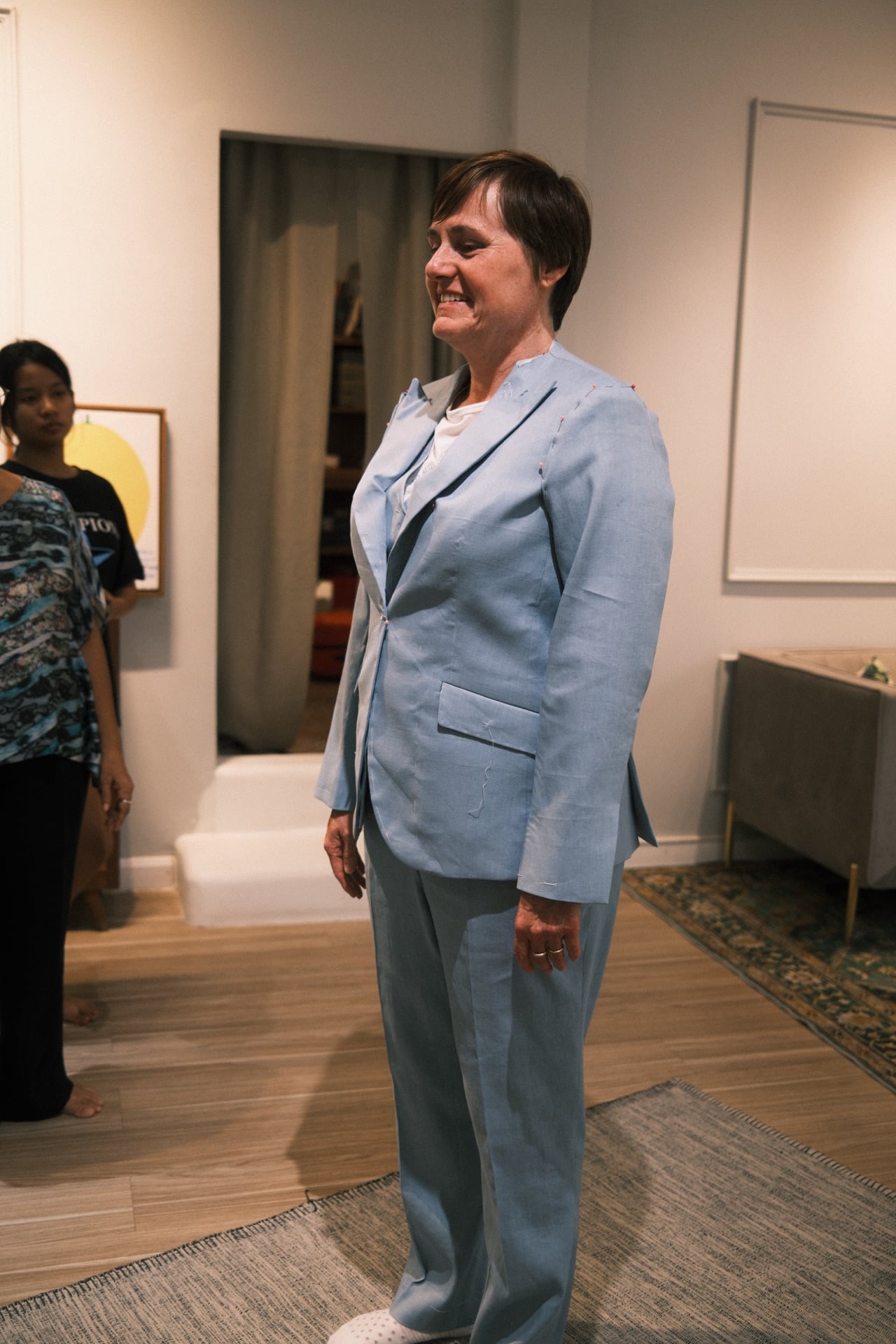
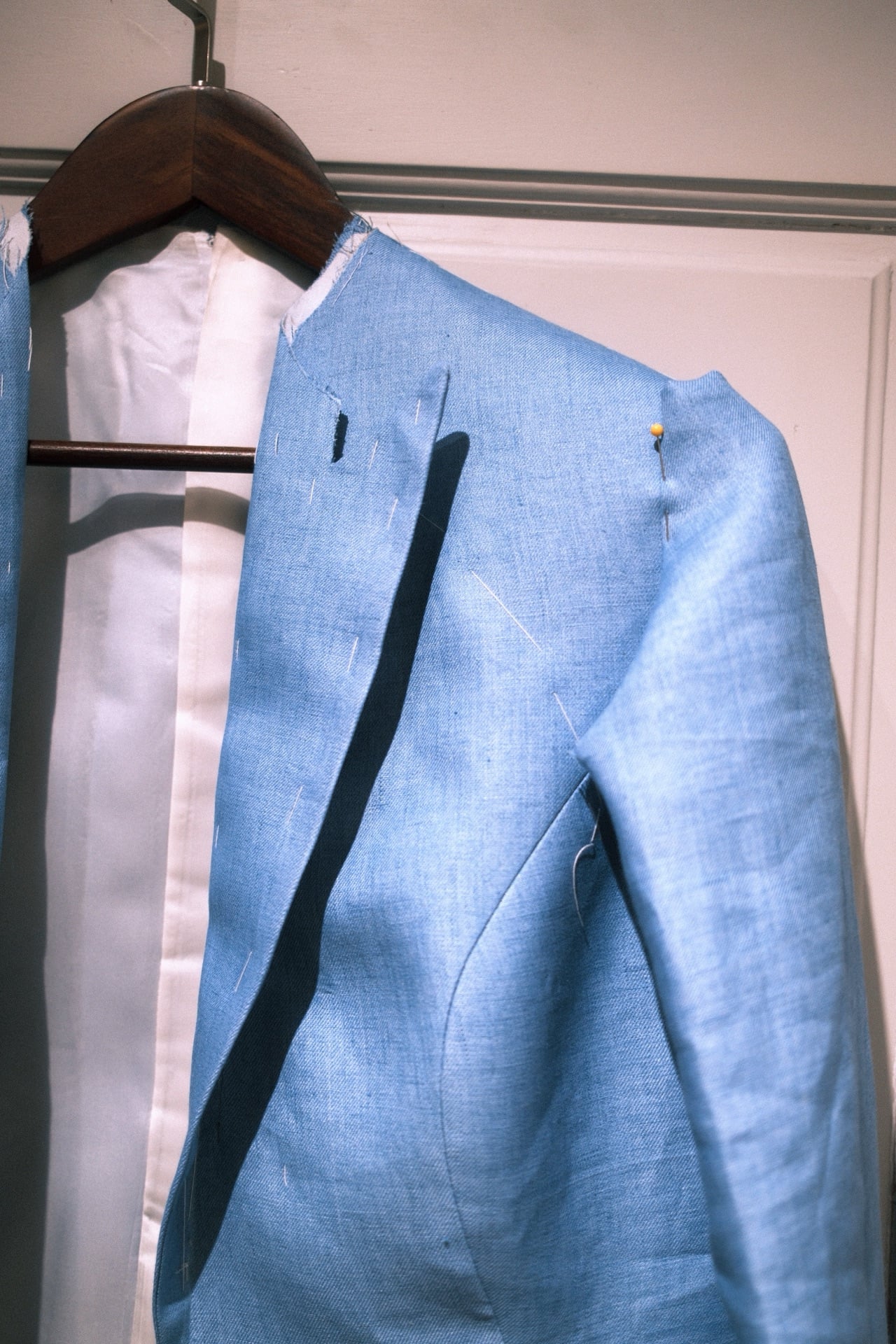
Mirror fitting: what you see on the body is what the linen will do for years.
Linen, cotton or tropical wool?
These are the three cloths we reach for when a client says the suit has to survive Bangkok outdoors, not just Bangkok air conditioning. They solve the same problem three different ways.
| Cloth | In the heat | Creasing | Character |
|---|---|---|---|
| Linen | The coolest of the three, and the driest feel | Creases openly, in soft folds if the weight is right | Textured, relaxed, gets better with age |
| Cotton | Breathes well but holds moisture longer | Creases sharply and shows it more | Matte, crisp when pressed, casual |
| Tropical wool | Good airflow for wool, warmer than linen outdoors | Barely creases at all | Smooth, formal, the safest office choice |
The honest rule of thumb: if the suit will spend its life in meetings, tropical wool is hard to beat and we say so. If it will walk streets, sit on terraces, travel, and be worn because you want to wear it, linen wins.
Cotton sits between the two and suits people who love a crisp, pressed look and do not mind ironing. We compare all the suiting fibres, including silk and blends, in our guide to selecting fabrics for a women's suit.
Weights, weaves and blends
Weight is the first thing we check on any linen bolt. Shirting linens run light, roughly 140 to 200 g/m, lovely for blouses and dresses but too flimsy for a jacket that should hold a lapel. For suits we look for 240 to 300 g/m.
It sounds counterintuitive to choose a heavier cloth for the heat, but the extra body is what turns creases into drape, and linen at that weight is still far cooler on the skin than a light wool.
At a glance
- 140-200 g/m - shirting and soft dresses, not jacketing
- 240-300 g/m - the sweet spot for a tailored two-piece
- Linen-wool - coolness with crease recovery for the office
- Linen-silk - glow and drape for evening
- Linen-cotton - casual summer jackets, less formal
Provenance matters with linen more than most fibres. The flax that becomes the world's best linen grows in a narrow coastal band running through France, Belgium and the Netherlands, and the old European mills, the Irish and Italian weavers above all, still set the standard for jacketing linen.
Good European linen has a depth of colour and a dry, cool hand that the cheap stuff simply does not; put the two side by side and your fingers will tell you before your eyes do.
Blends are the diplomatic solution. Linen-wool keeps most of linen's coolness and texture while the wool springs the creases back out; it is our usual suggestion for a first linen suit that has to work hard at the office. Browse what is currently on our fabric shelves any time.
Colour and styling
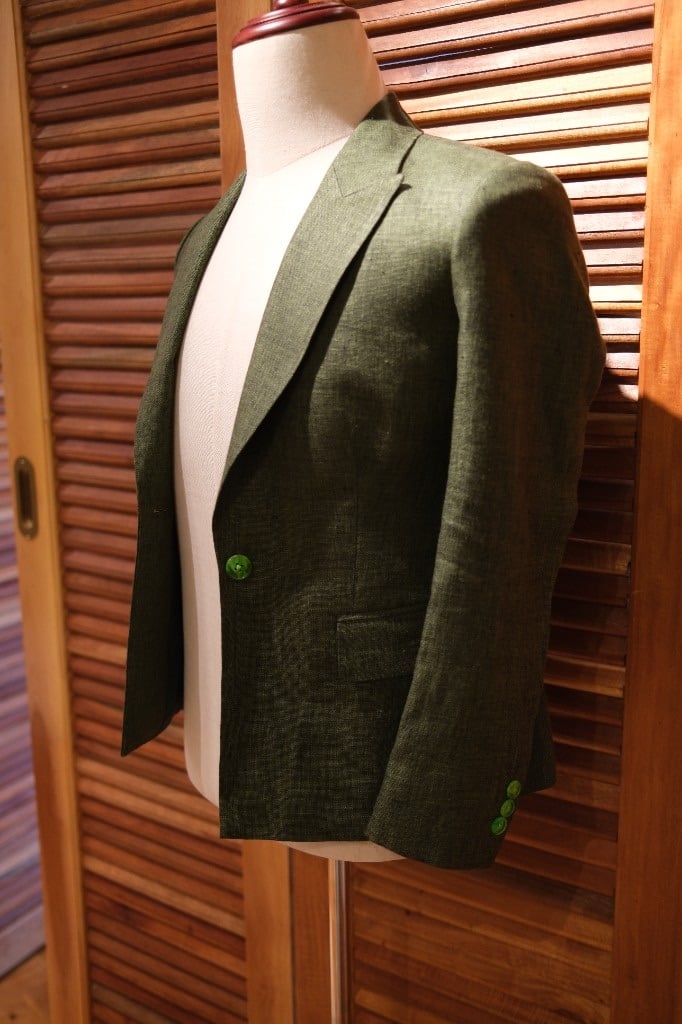
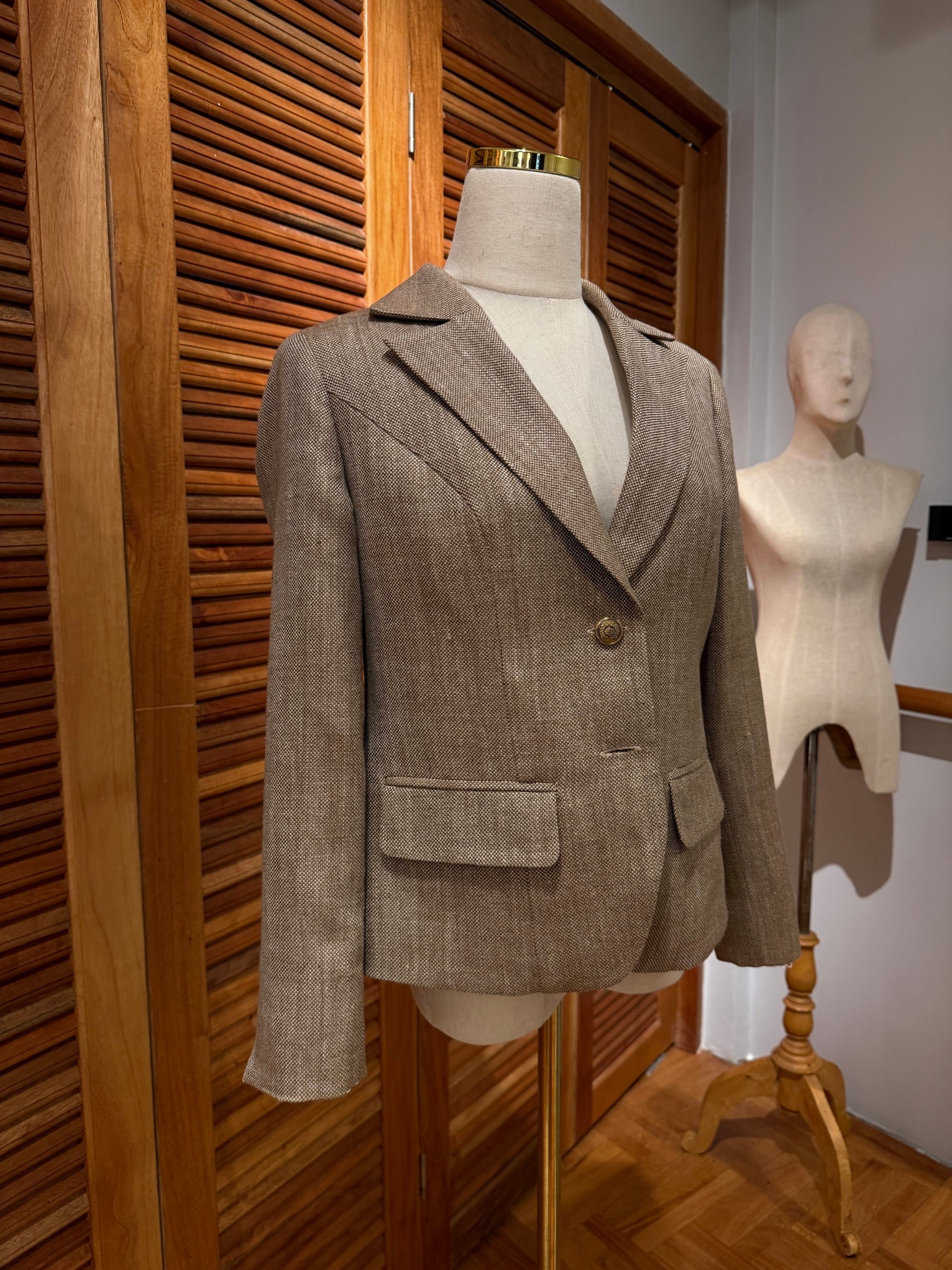
Linen takes dye differently from wool: colours come out slightly dusty and sun-washed, which is exactly its charm. The classics are the naturals, oatmeal, sand, stone and cream, and they are classics for a reason: they photograph beautifully in tropical light and make the texture the point.
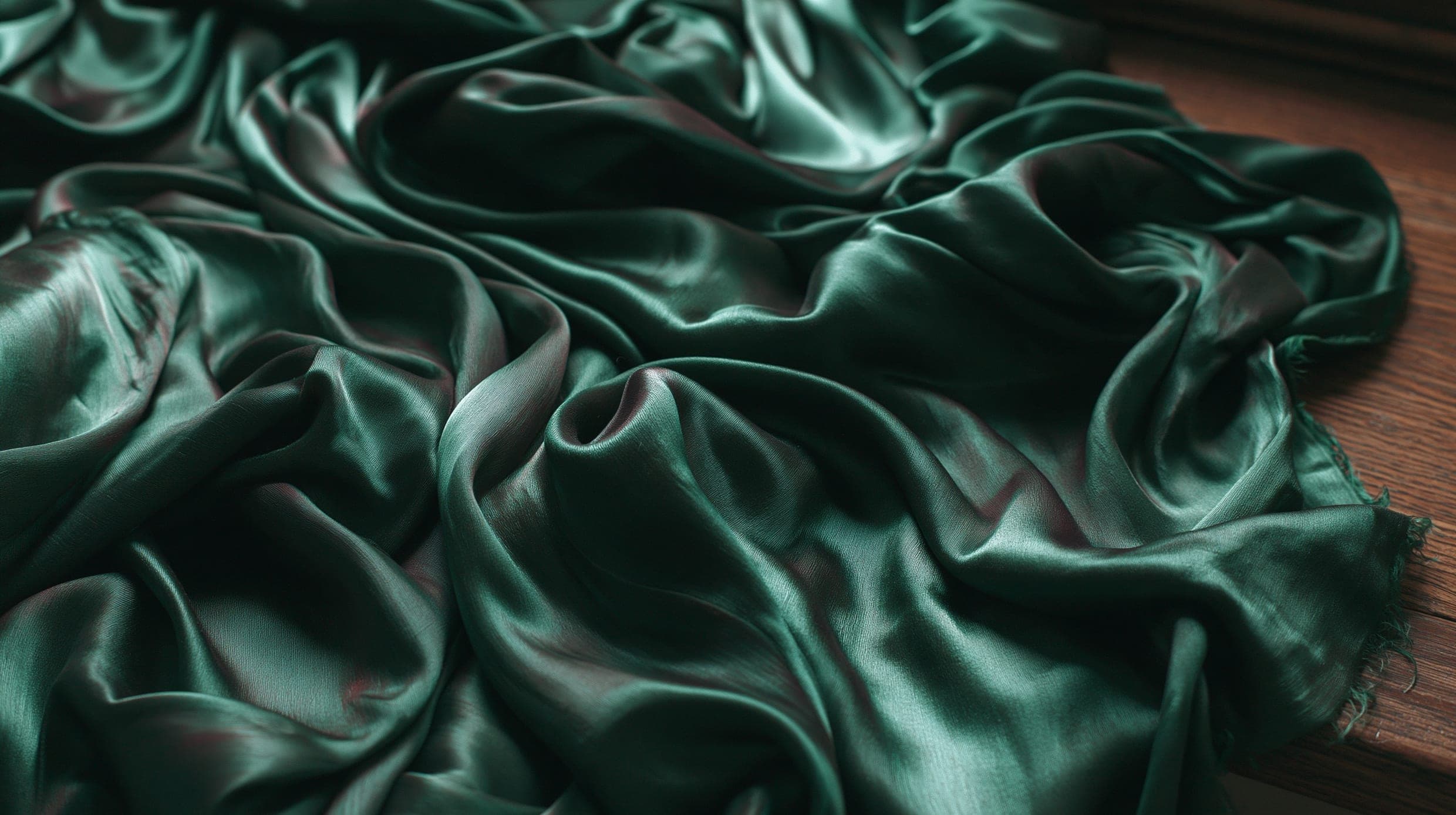
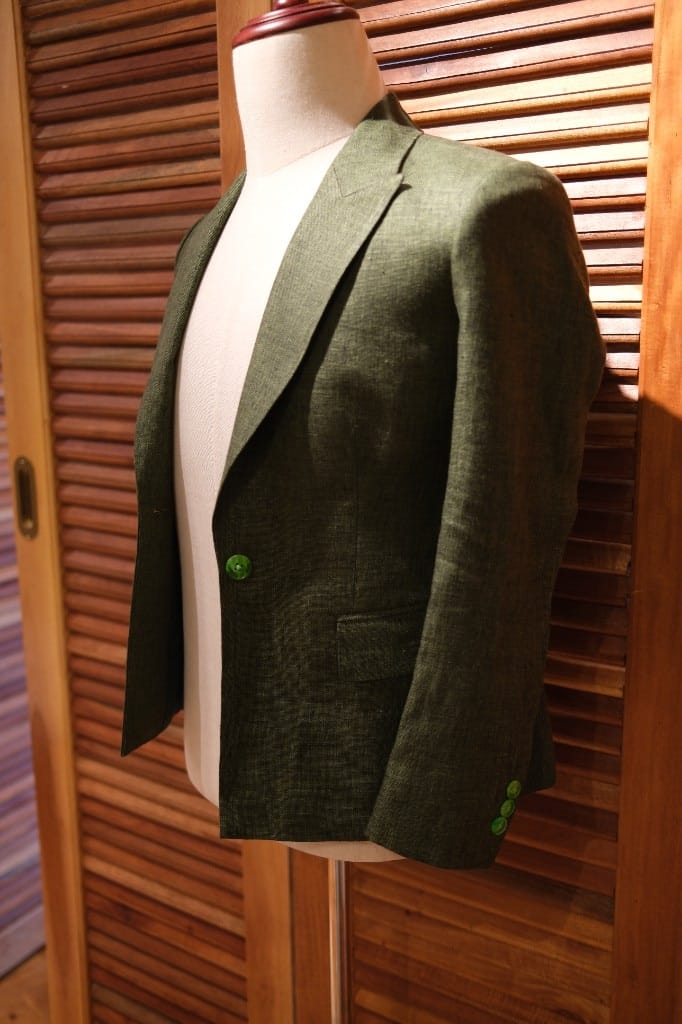
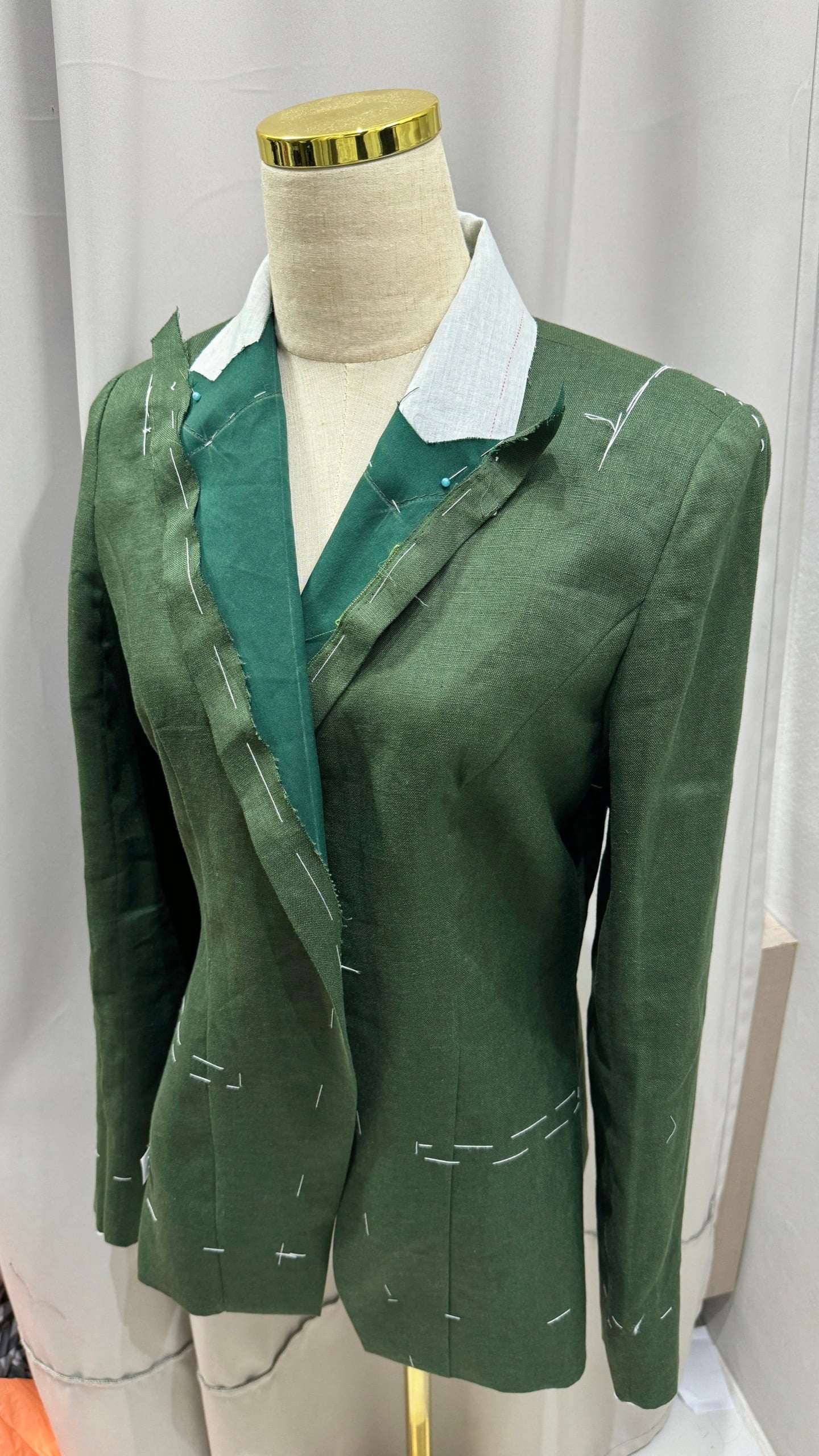
But the quiet secret is dark linen. A deep olive, a navy or a bottle-green linen suit reads unmistakably professional while wearing much cooler than it looks, and the slight texture stops the dark colour from feeling severe.
Dark linen is our standing answer to the client who loves the idea of linen but worries it looks like a beach holiday: it does not, and it has quietly become one of the suits we cut most.
- Trousers a touch wider so the cloth can swing
- Jacket worn open over silk or cotton
- A vest as a third piece: three outfits from one commission
- Formal workplace: structured cut, dark colour, let the fibre work quietly
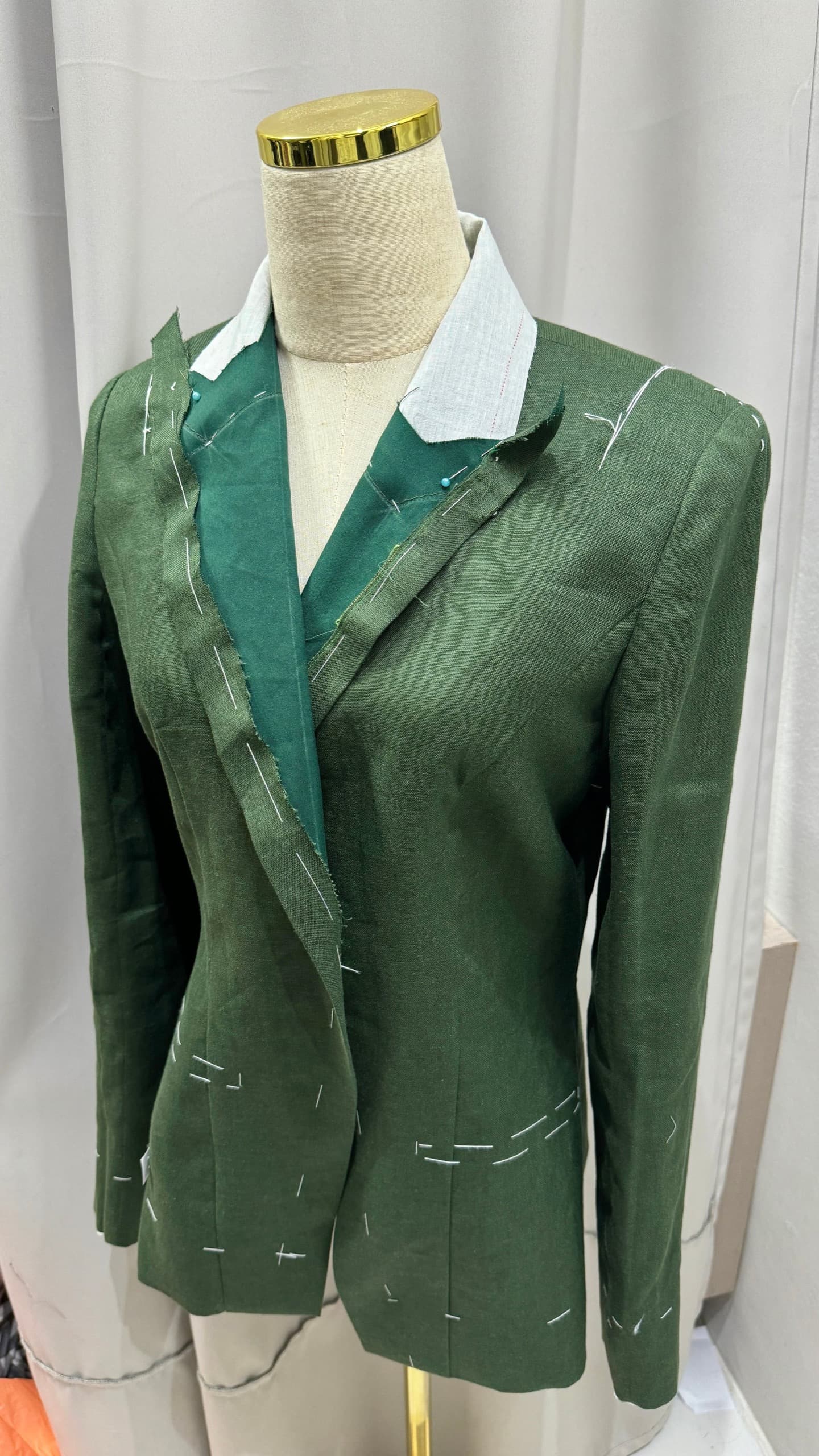
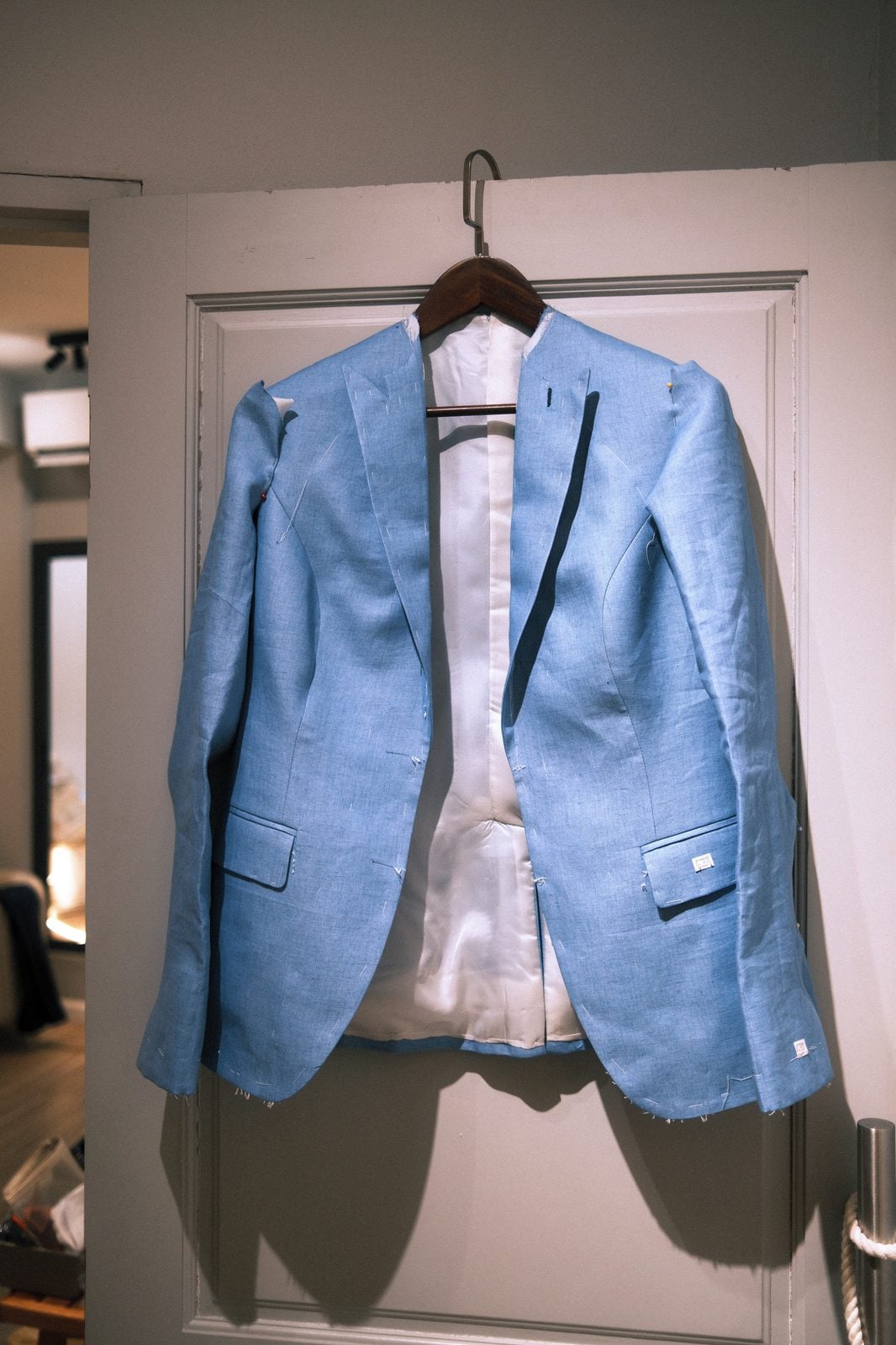
Dark green linen in basting: professional colour, summer fibre.
How we cut linen differently
Linen is not wool with a different label; it asks for its own construction. Because the fibre has no elasticity, it will not ease and shrink into shape under the iron the way wool does, so the fit has to come from the cutting.
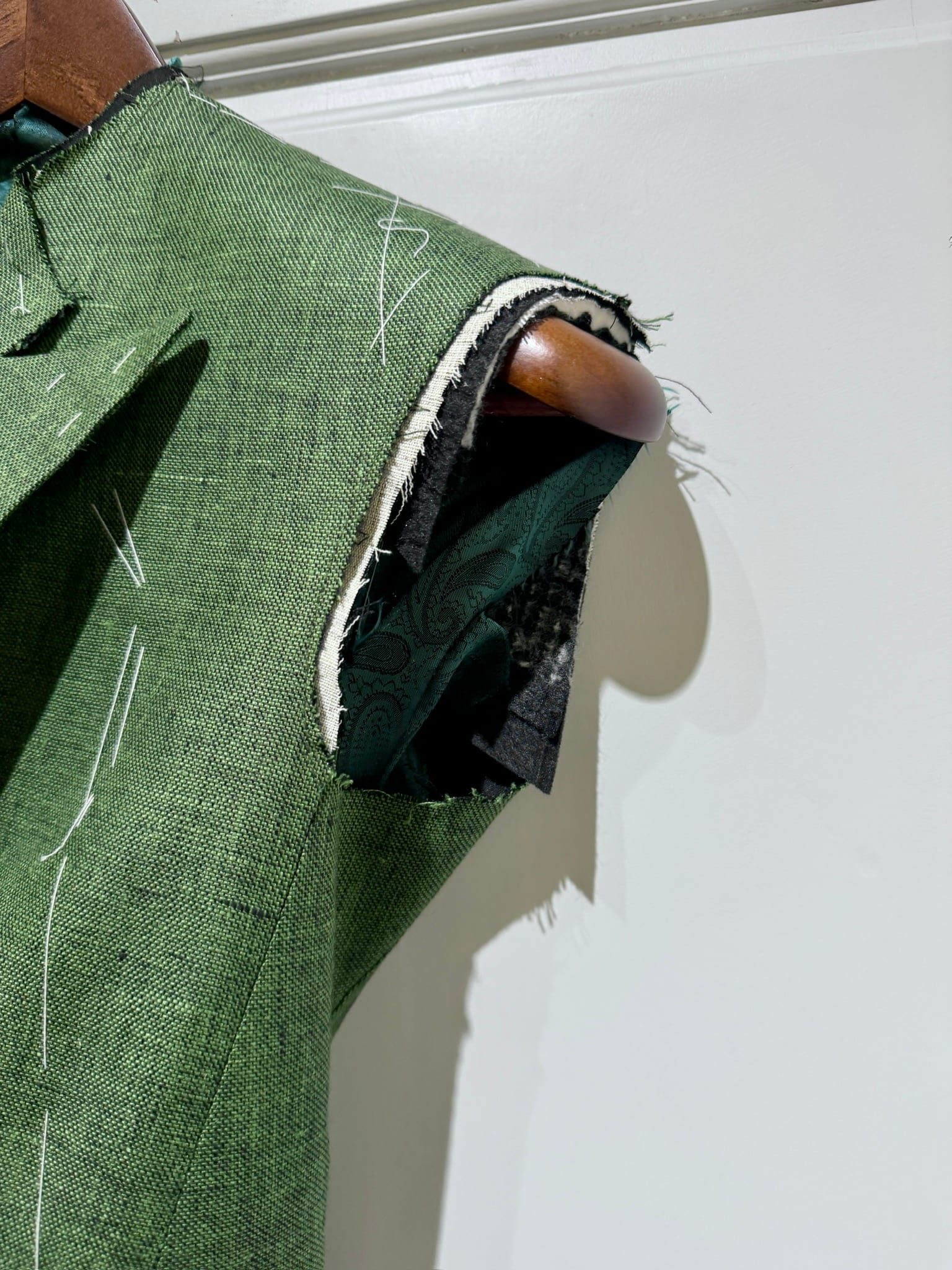
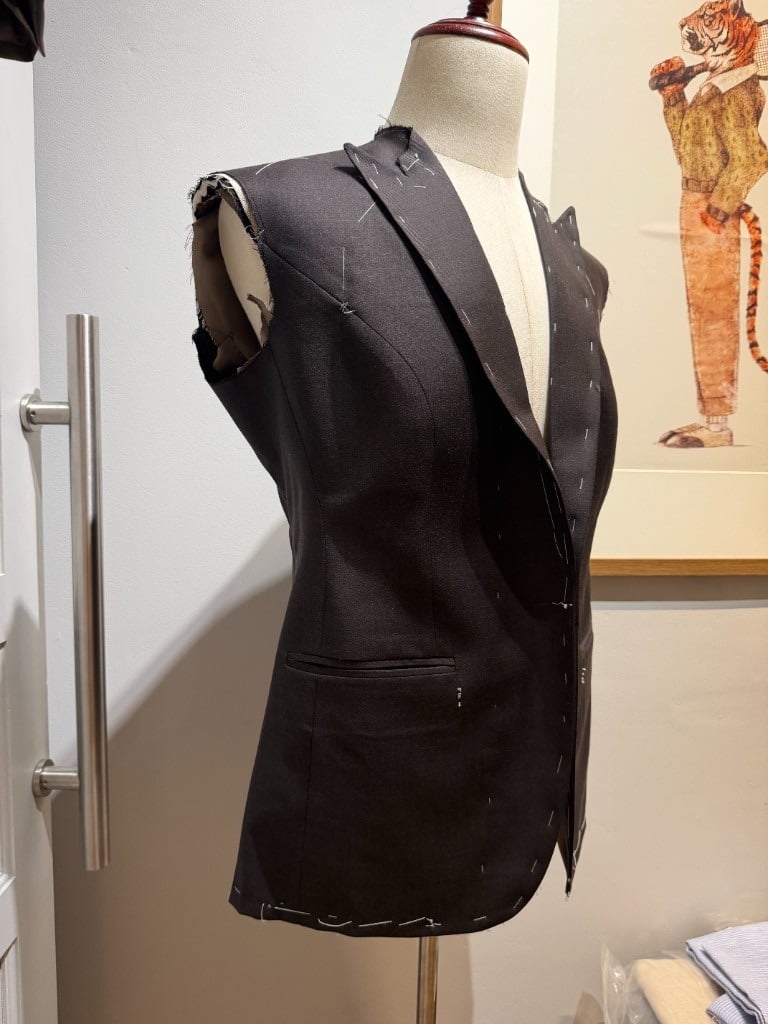
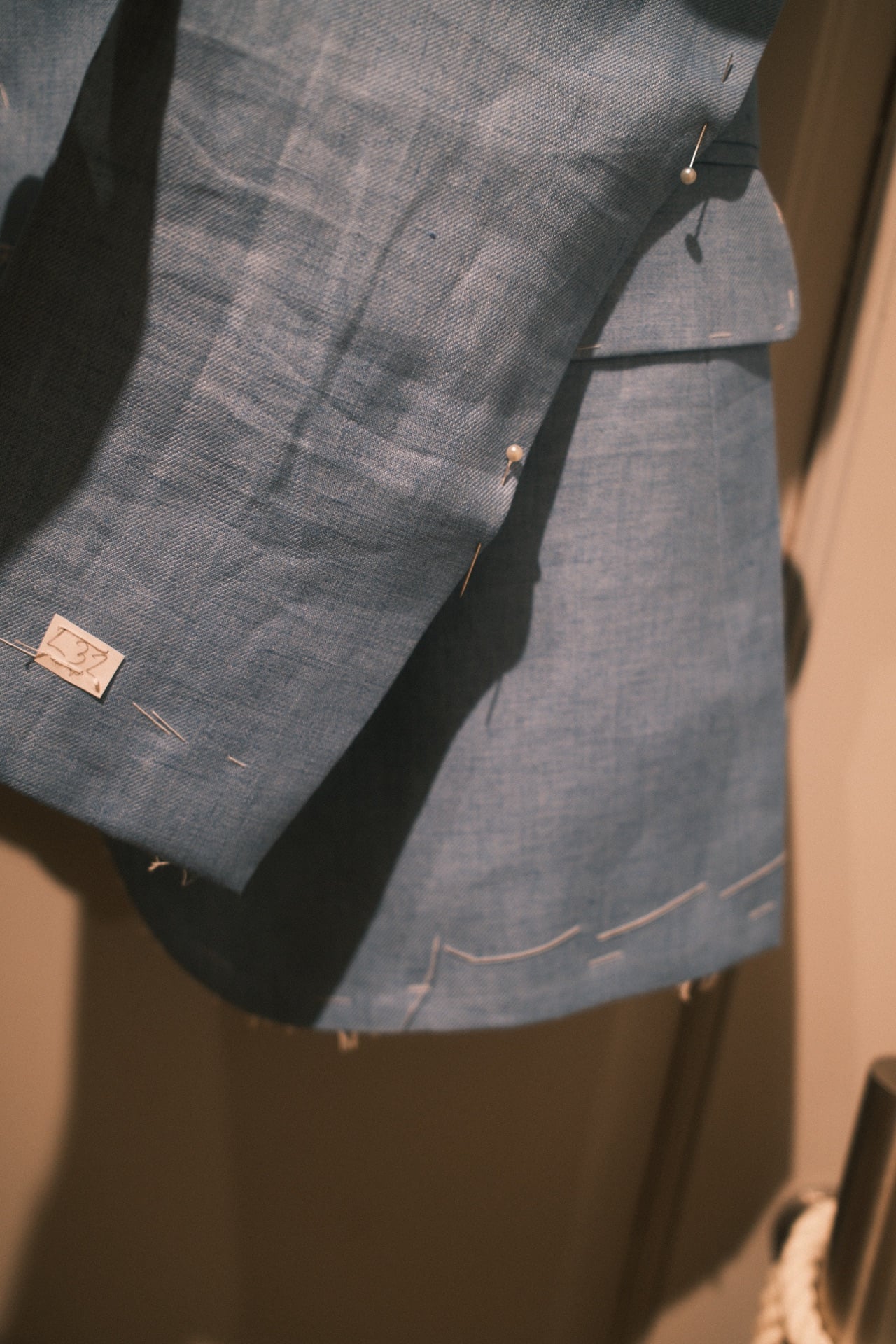
We draft linen a touch more generously through the shoulder and sleeve, and we baste and fit it on the body before the final seams go in, because what you see at the fitting is what you will get for years.
Inside, less is more. A half or quarter lining keeps the back of the jacket breathing, which is half the reason to choose linen in the first place; a fully lined linen jacket is a small tragedy.
Seams are pressed open and finished cleanly since linen frays more than wool, and we press with more steam and less force. None of this is visible on the hanger, and all of it is why a tailored linen suit behaves so differently from a mass-made one. You can see how the fittings work on our process page.
Living with linen
Linen is low-maintenance if you let it be:
- Air the suit after wearing
- Steam rather than iron between wears (a hotel bathroom during a hot shower works on trips)
- Dry clean rarely, only when it actually needs it
- Avoid over-pressing: it flattens the texture that makes linen beautiful
And wear it. Linen is one of the few cloths that genuinely improves with use: it softens, the drape relaxes, the colour settles. A five-year-old linen jacket that has seen some life is a nicer thing than a new one, which is not something anyone says about polyester.
Quick answers on linen suits
Not if it is cut for one. A darker colour, a structured shoulder and a linen-wool blend read as polished as any worsted, and a full linen suit in navy or olive holds its own in most Bangkok offices.
Pure white and rumpled weekend linens are the casual end, not the fibre itself.
Linen creases, and it is honest about it. A good heavier linen, around 240 grams and up, falls into soft folds rather than sharp crumples, and a linen-wool blend keeps most of the coolness with far fewer creases.
If you want no creases at all, choose tropical wool instead.
At LALEDA, tailoring starts from 13,200 THB for a bespoke two-piece women's suit and from 10,000 THB for a jacket alone. Those are making costs; fabric is quoted separately and depends on the bolt you choose. European linens and linen-wool blends sit above entry-level fabrics, so cloth usually moves the total more than labour. Full numbers are on our pricing page.
Come feel the cloth
No article does what thirty seconds with a bolt of good linen does.
Come by the atelier, put a European jacketing linen next to a fast-fashion one, and you will understand this whole love letter in your fingertips. We will talk through your week, your office and your climate honestly, even if the honest answer turns out to be a custom women's suit in another cloth entirely.
Book a Suit Consultation