
Thai silk is one of the few fabrics worth crossing the city for. Woven from the cocoons of mulberry silkworms, the good stuff has a weight and a faint two-tone shimmer that machine-made satin never quite manages.
Here is where to find the real thing in Bangkok, how to tell it from the tourist version, what to pay, and how to turn a few metres into something you will actually wear.
What counts as real Thai silk
Thai silk is worth crossing the city for, if you know what you are looking for.
Genuine Thai silk is reeled from mulberry-fed silkworms and woven, often by hand, in Isaan, the country's north-east. Three things give it away.
It has body and a little weight, not the flyaway thinness of cheap polyester satin. The surface carries fine, slightly uneven slubs from hand weaving, rather than a flat, perfectly uniform face. And it shimmers in two tones, because the lengthwise and crosswise threads are often dyed different colours, so the cloth shifts between, say, gold and green as you move.
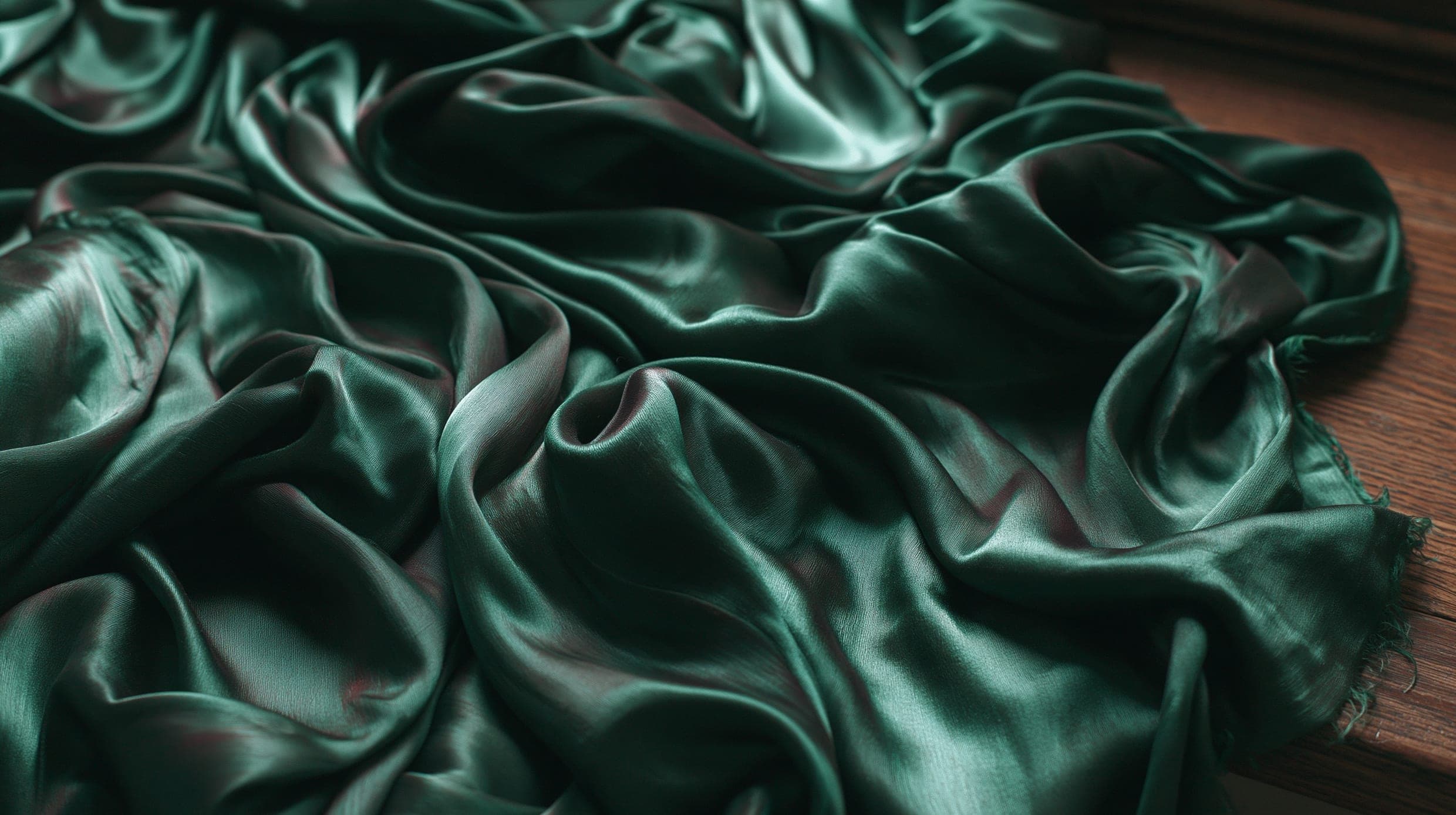
Silk is sold by weight, or ply. One and two-ply silks are light and fluid, lovely for blouses, scarves and soft dresses. Four-ply is dense and structured, the kind of cloth that holds a clean A-line skirt or a jacket. Most occasion dresses sit happily in the two to four-ply range.
Where to buy Thai silk in Bangkok
You can buy Thai silk at every price point in Bangkok, from polished flagship stores to dusty market stalls. These are the places we point clients to most often. For the wider fabric picture, our full guide to buying women's fabrics in Bangkok covers the markets in more detail.
1. Jim Thompson
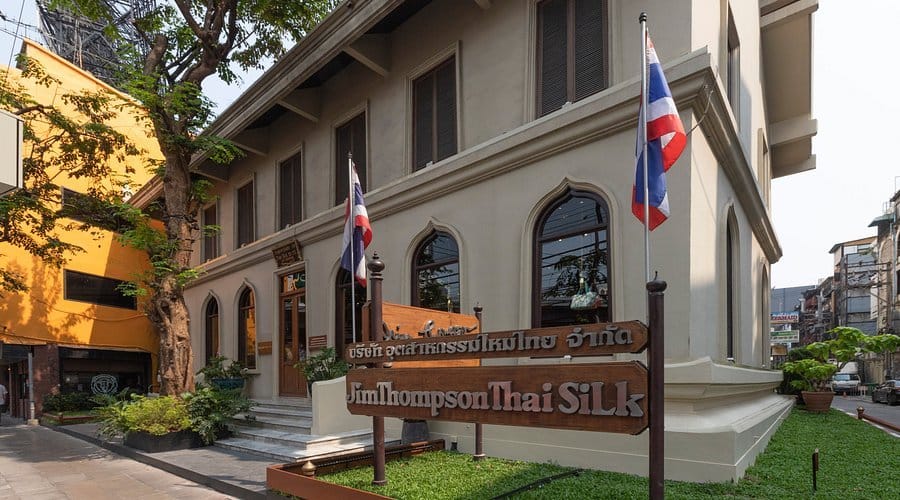
The icon, and a safe place to start. The flagship on Surawong sells beautifully finished silk by the metre at premium prices, with reliably high quality and a huge colour range.
Plan on roughly 2,000 to 3,000+ THB per metre for fashion-weight silk at the flagship; exotic weaves, special patterns and limited collections can run higher. Staff will pull bolts, talk weight (ply), and cut cleanly. You leave knowing the cloth is real Thai silk.
If you want the same brand for less, the factory outlet on Soi Sukhumvit 93 carries surplus fashion weights and home-furnishing bolts at a fraction of flagship prices. Worth a taxi if you have an afternoon and a clear idea of how many metres you need.
Photos: Surawong flagship
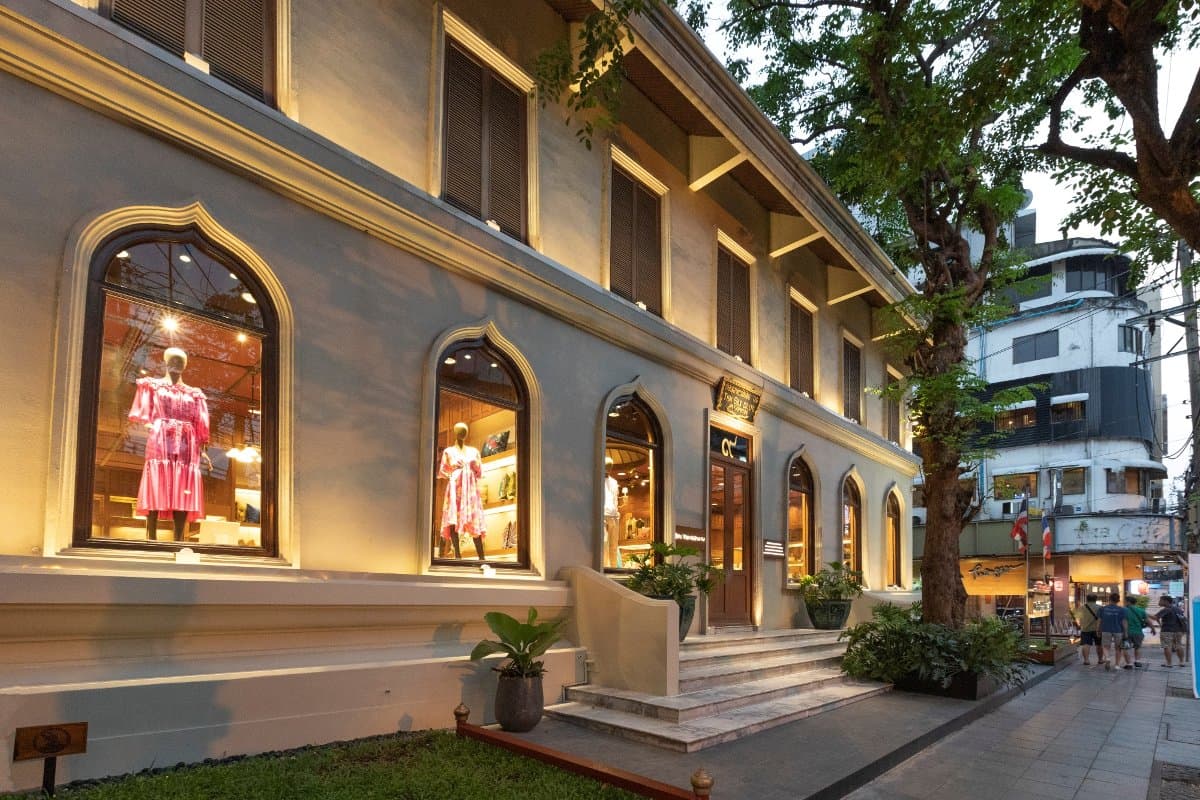
The Surawong facade at dusk. Easy stop if you are around Silom or Sala Daeng.
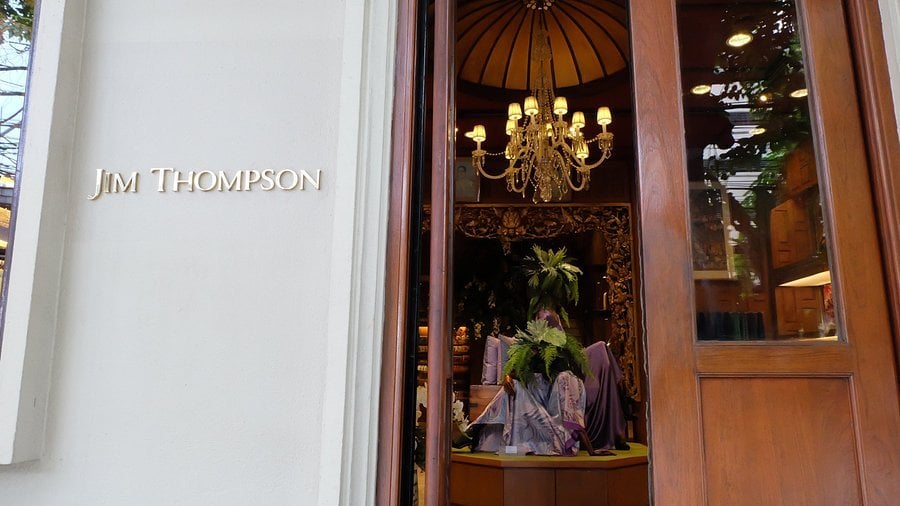
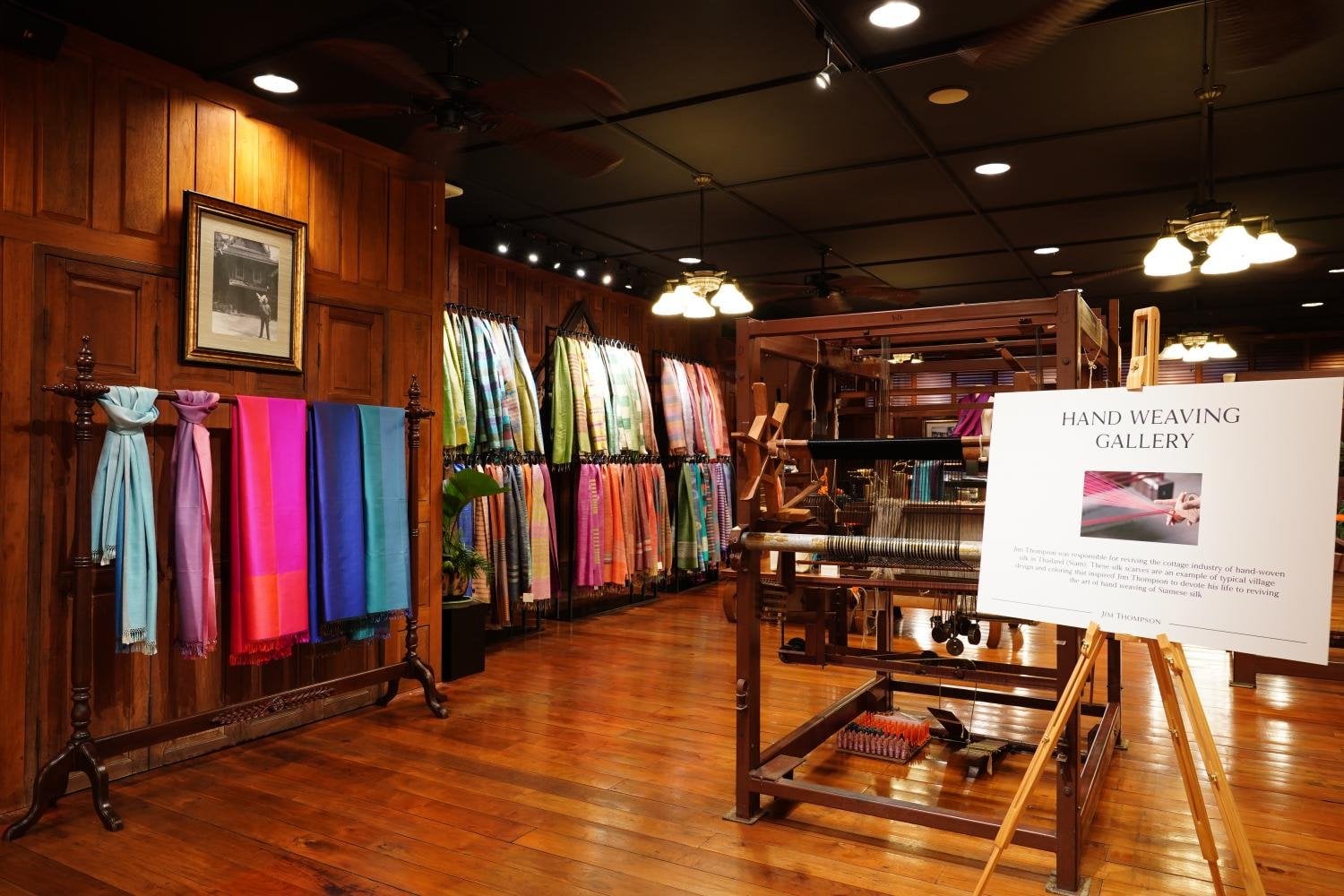
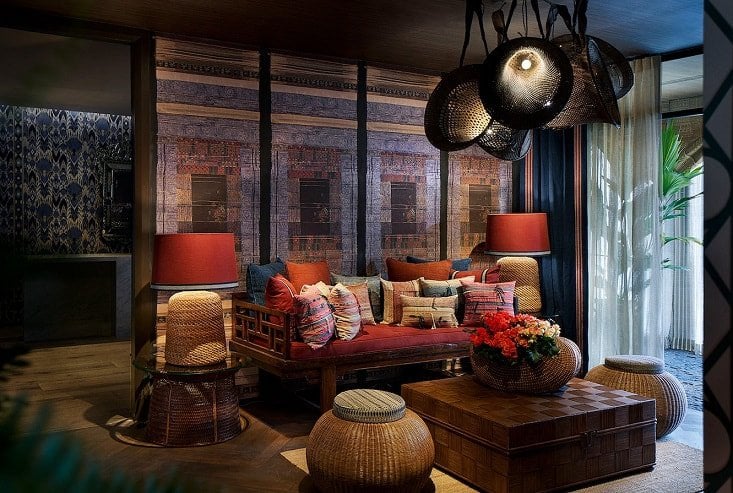
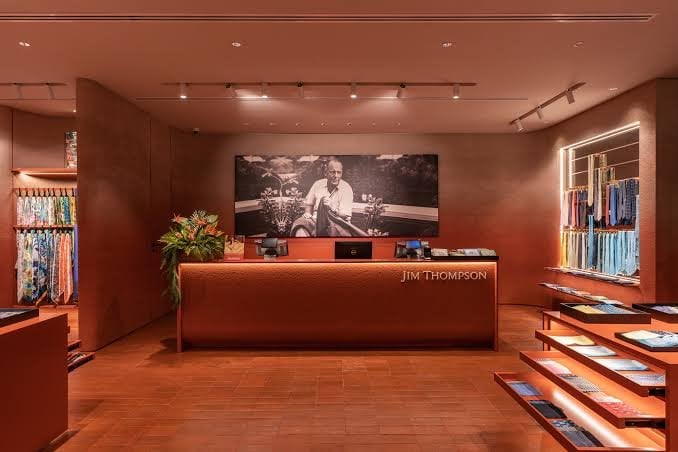
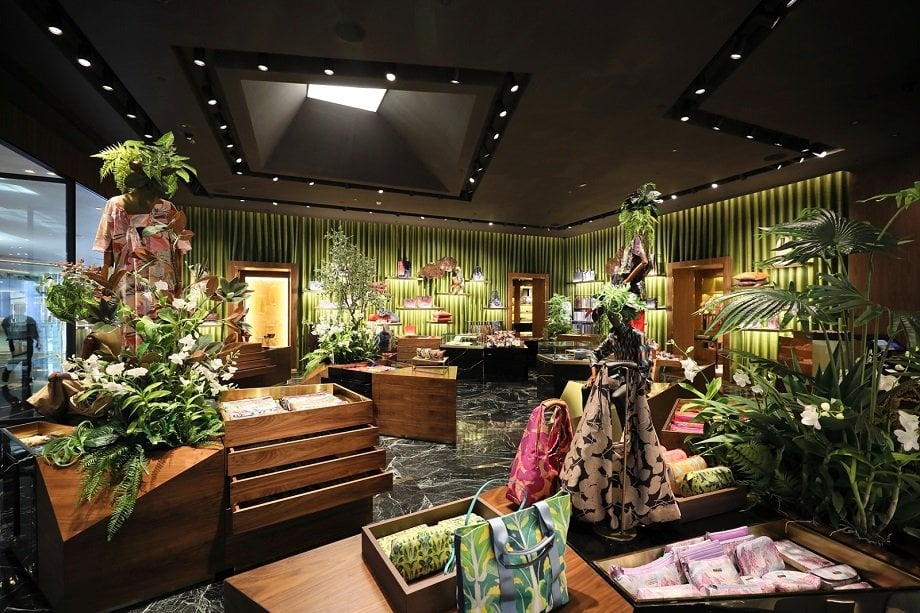
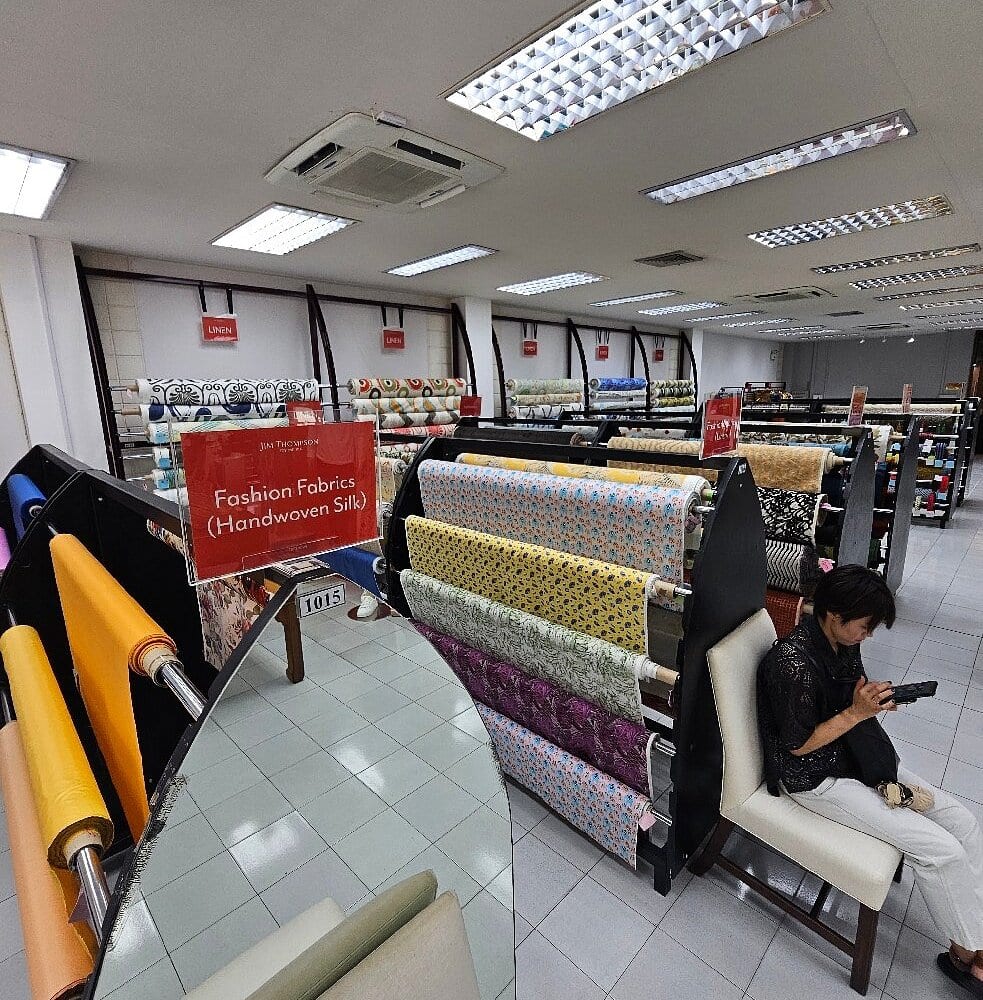
Flagship: 9 Surawong Road, Bang Rak (a few minutes from Sala Daeng BTS). Daily roughly 9:00-21:00.
Outlet: 153 Soi Sukhumvit 93, Khlong Toei (best reached by taxi; not a short walk from the BTS). More on that stop in our women's fabric shopping guide.
2. H.M. Factory for Thai Silk
A quieter, more local find, and a favourite of ours for buying genuine Thai silk closer to the source. H.M. Factory for Thai Silk is a working silk house in upper Sukhumvit, hidden just behind Emquartier shopping mall on a sleepy small alley, where you can choose handwoven cloth by the metre without the flagship markup.
The range runs from soft, lighter silks for blouses and dresses to denser weaves for jackets, with the two-tone, slubby character that tells you it is the real thing.
It is a showroom rather than a mall, so it is worth messaging ahead to check the day and what they have on the bolt before you make the trip.
Photos
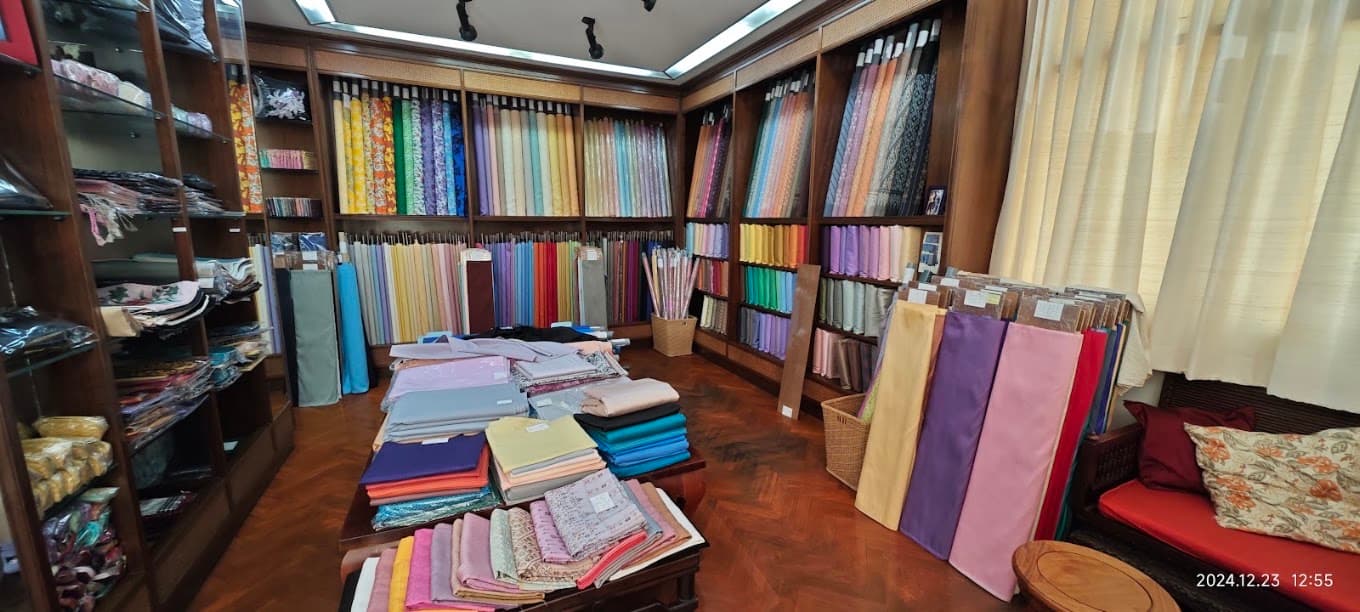
Wall-to-wall silk at H.M. Factory, sorted by colour on the bolt.
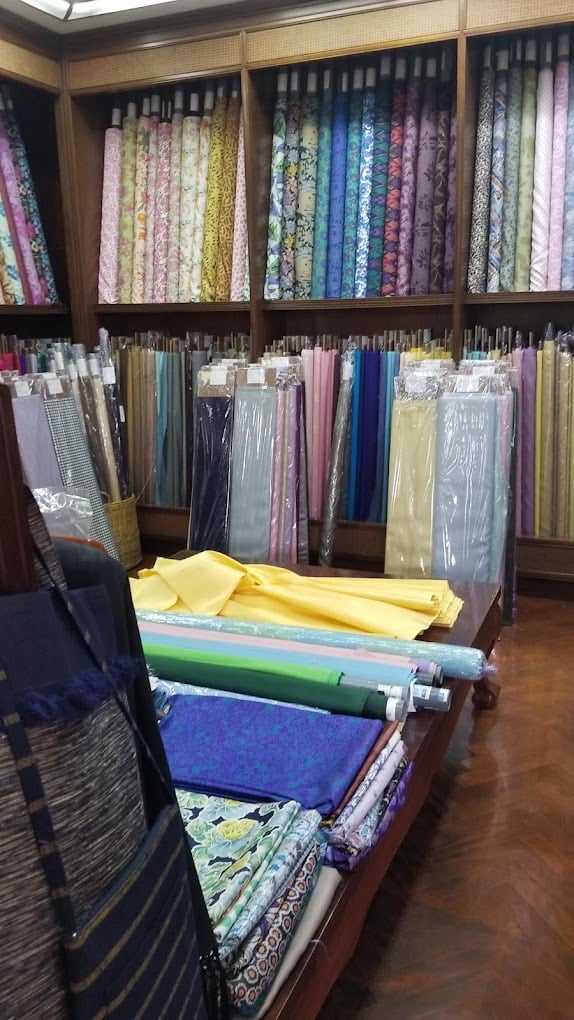
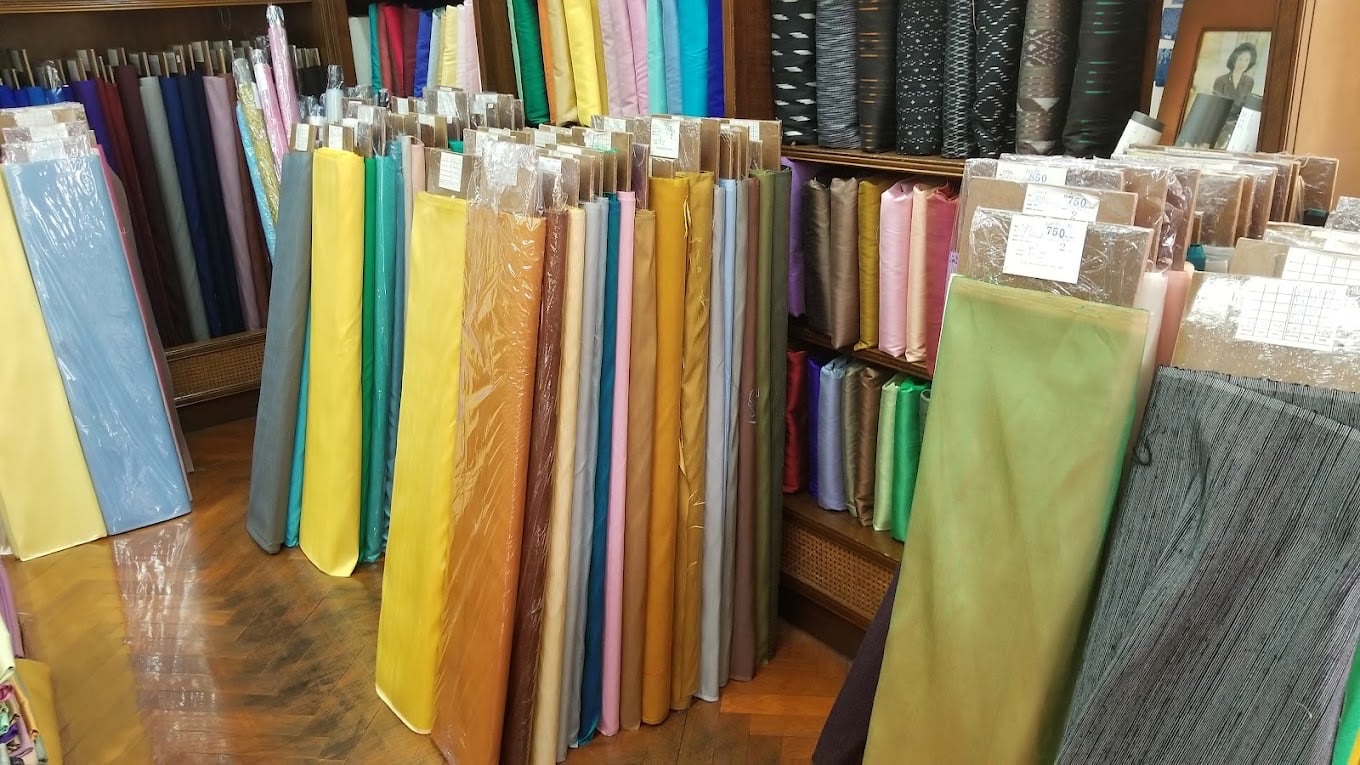
Location: 45 Soi Phrom Chai, Khlong Toei Nuea, Watthana, Bangkok 10110
3. Phanthip Thai Silk
A compact Thai silk shop on Phra Sumen Road in Phra Nakhon, a short hop from Khao San if you are staying in the old city. Phanthip sells silk by the metre at mid-range prices (plan around roughly 1,000 THB per metre for solid fashion weights, then confirm on the bolt).
It is the kind of independent house we point clients to when they want real Thai silk without a full Chinatown market circuit: focused stock, a proper shop address, and good reviews from visitors who came specifically for yardage.
Photos
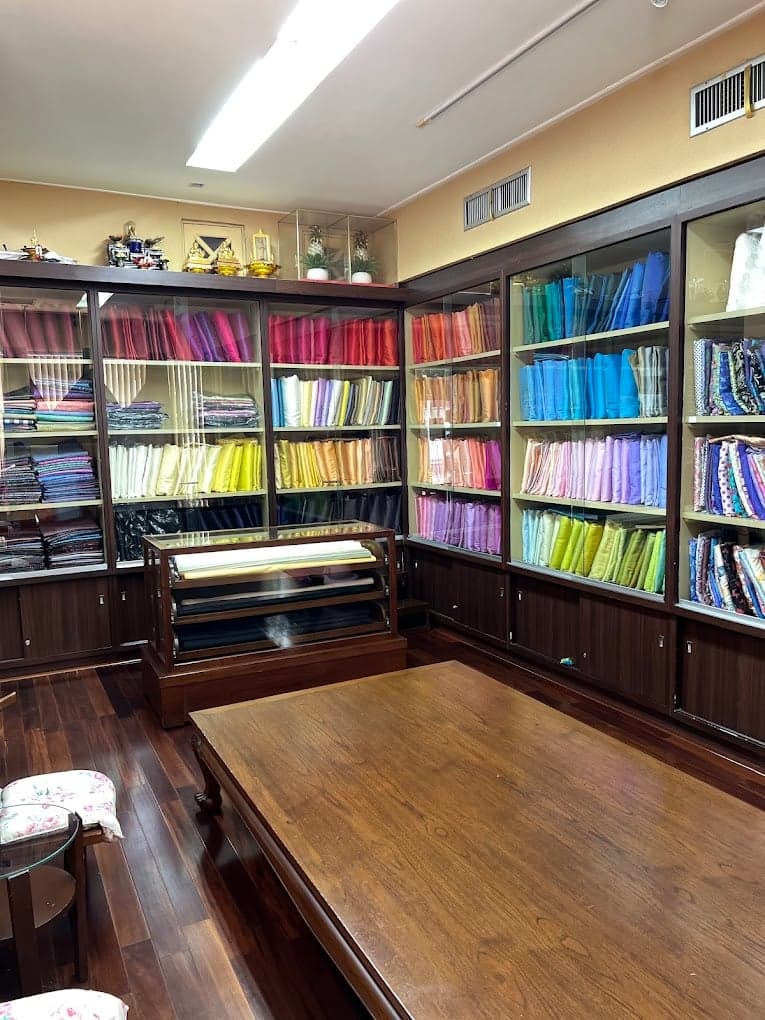
Showroom: wall cabinets of silk by colour, cutting table in front.
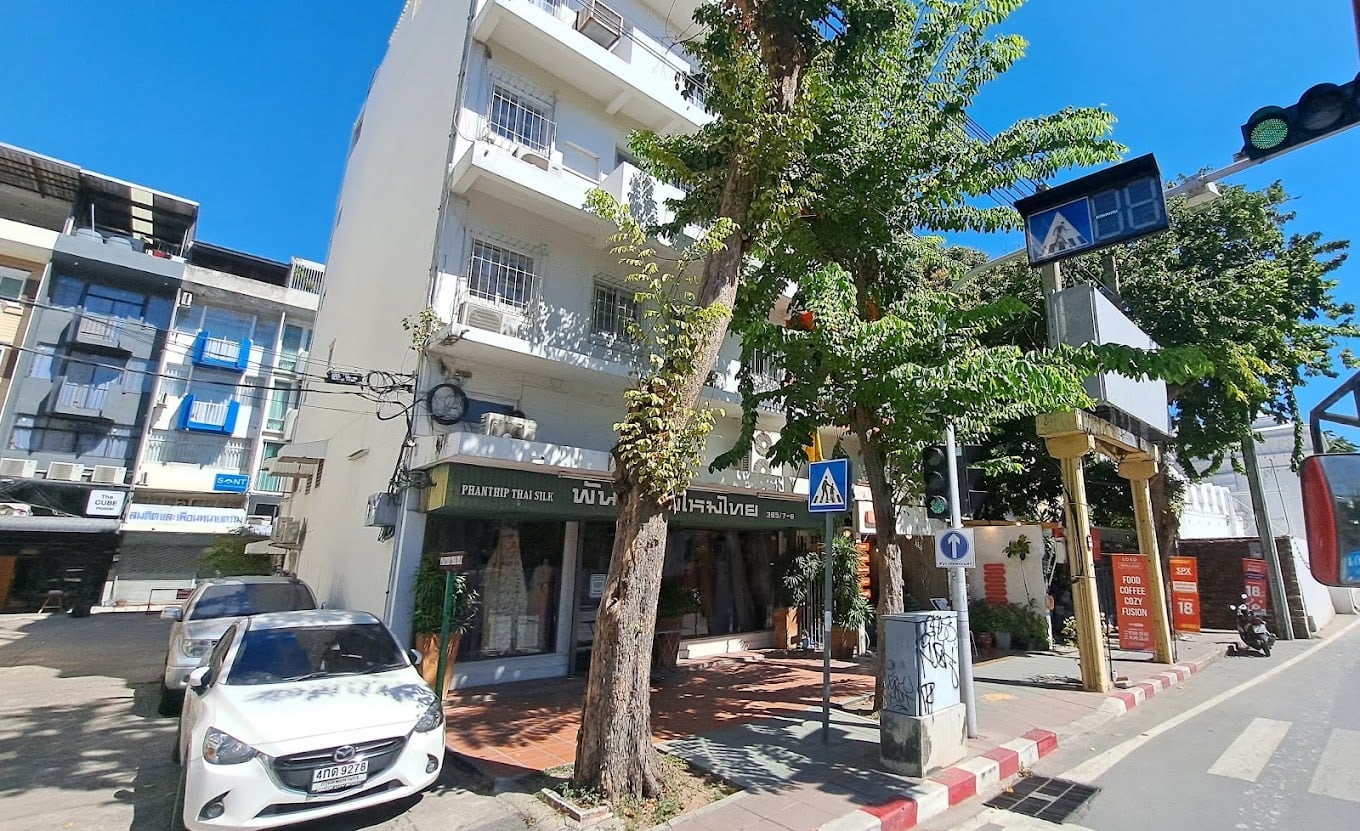
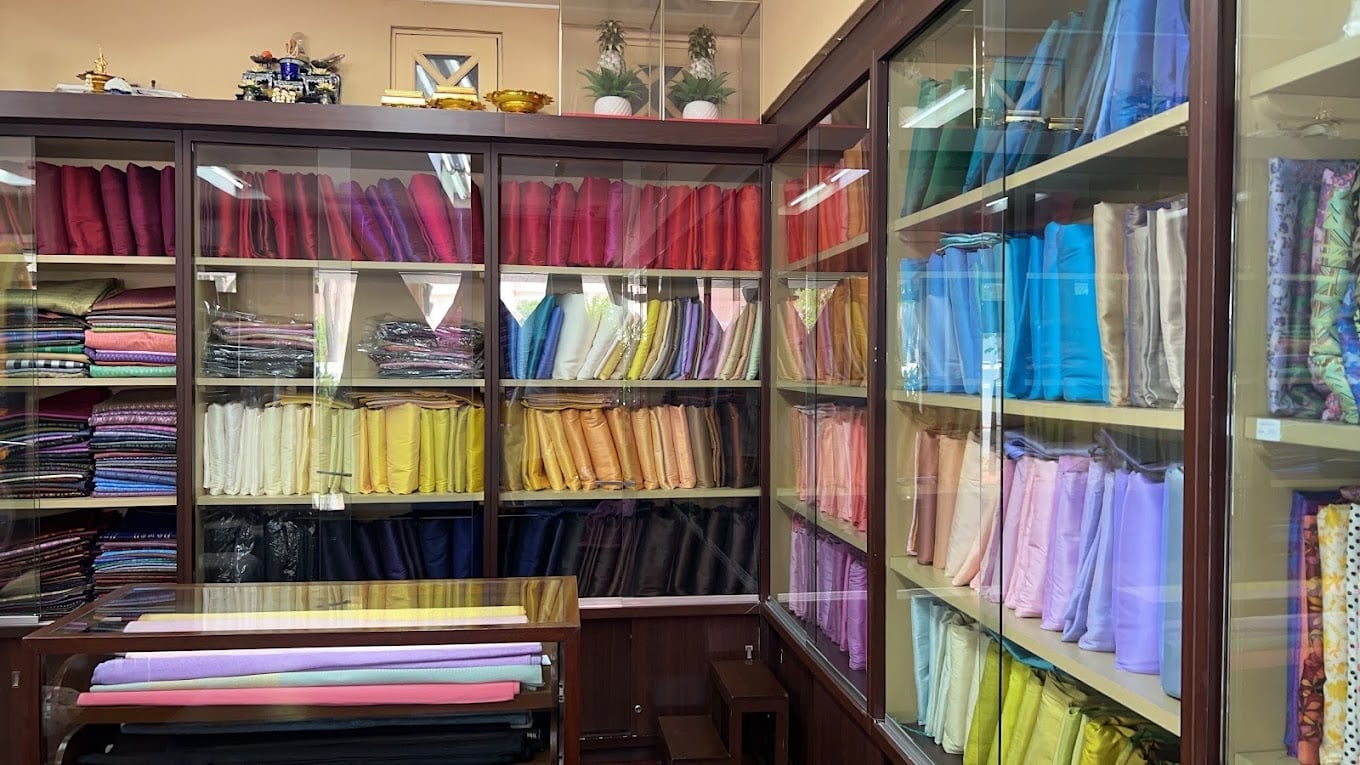
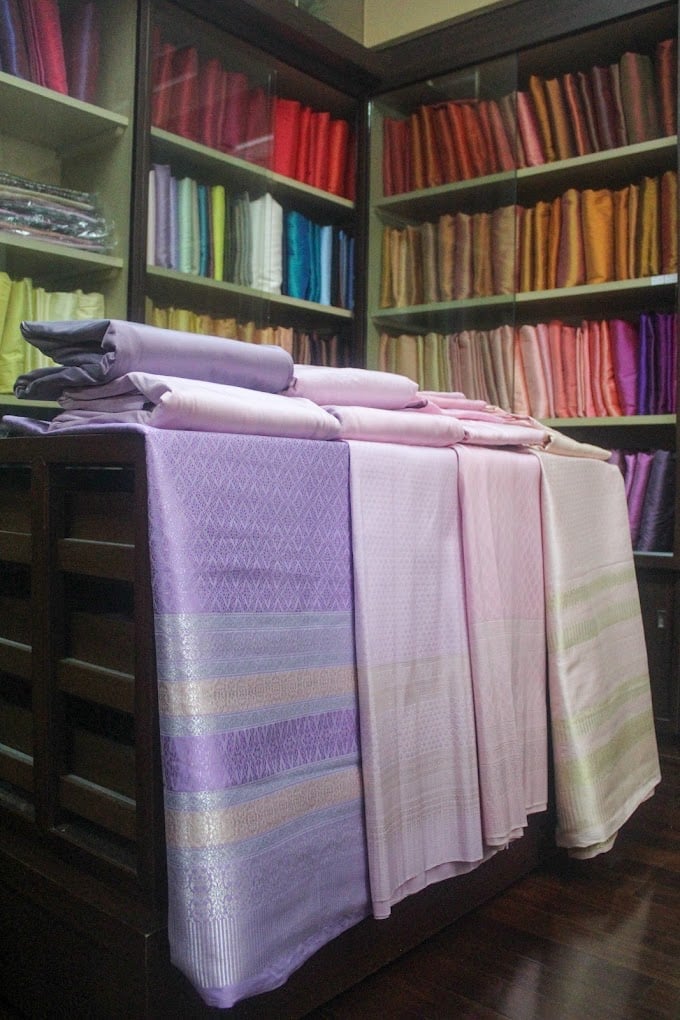
Location: 365/7-8 Phra Sumen Road, Wat Bowon Niwet, Phra Nakhon, Bangkok 10200 (near Khao San Road)
4. Old Siam Plaza
If you only have time for one stop, make it this one. The Silk Zone on an upper floor of this old, air-conditioned plaza at the edge of Chinatown gathers a couple of dozen independent silk shops under one roof, the largest single concentration of Thai silk in Bangkok.
Prices are keen and the choice is enormous, and because the shops sit side by side you can compare weights, weaves and colours in minutes rather than trekking between markets. The ground floor is worth a wander too, for traditional Thai sweets and ready-made local clothing.
Tip: start at the Silk Zone first, take photos of bolts you like (with the stall number), then loop back once you have compared. Carry cash; some smaller stalls still prefer it.
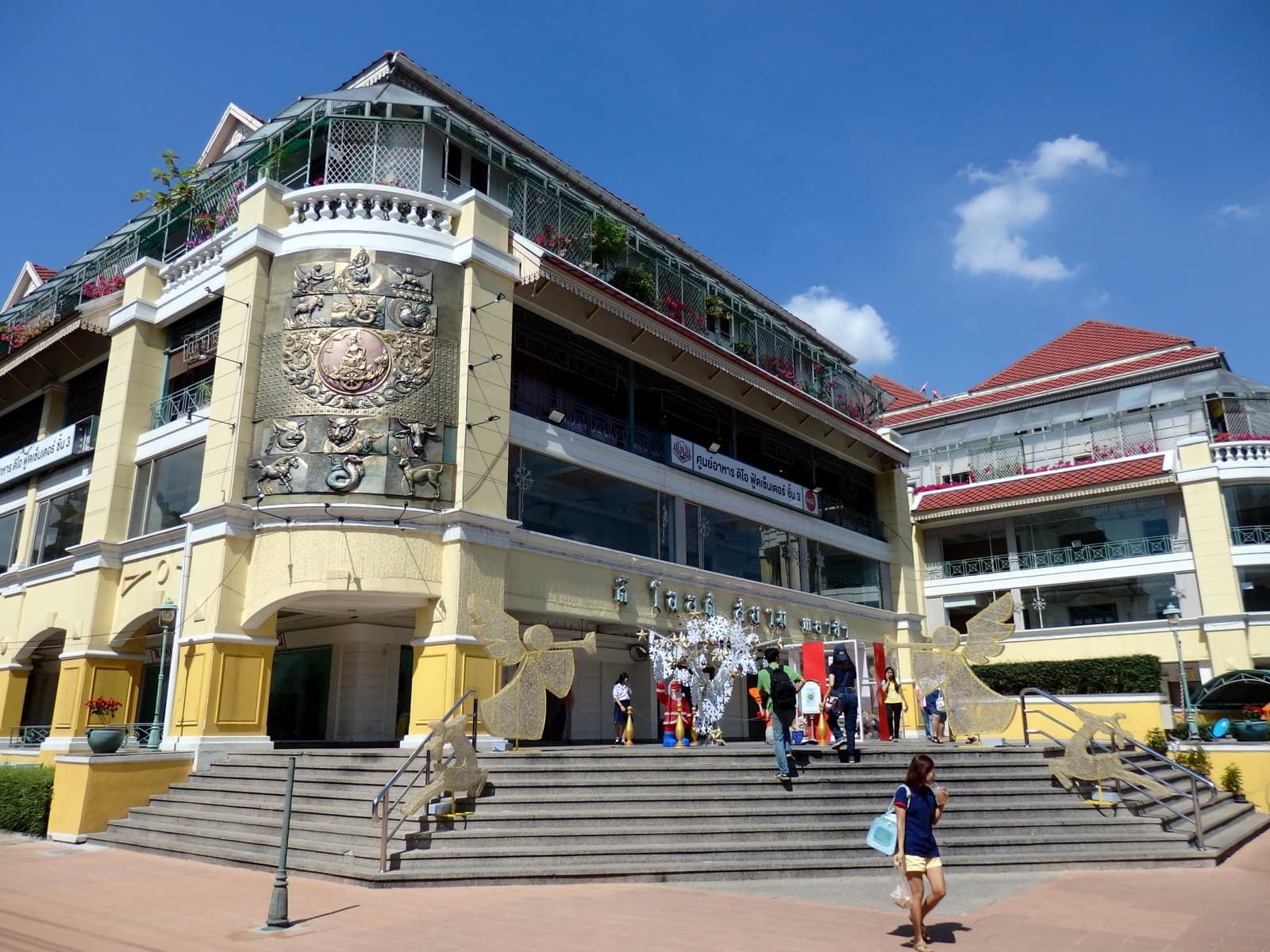
Photo: mohigan, CC BY-SA 3.0, via Wikimedia Commons
Location: 12 Tri Phet Road, Wang Burapha Phirom, Phra Nakhon (near Sam Yot MRT)
5. Sukjai Thaisilk
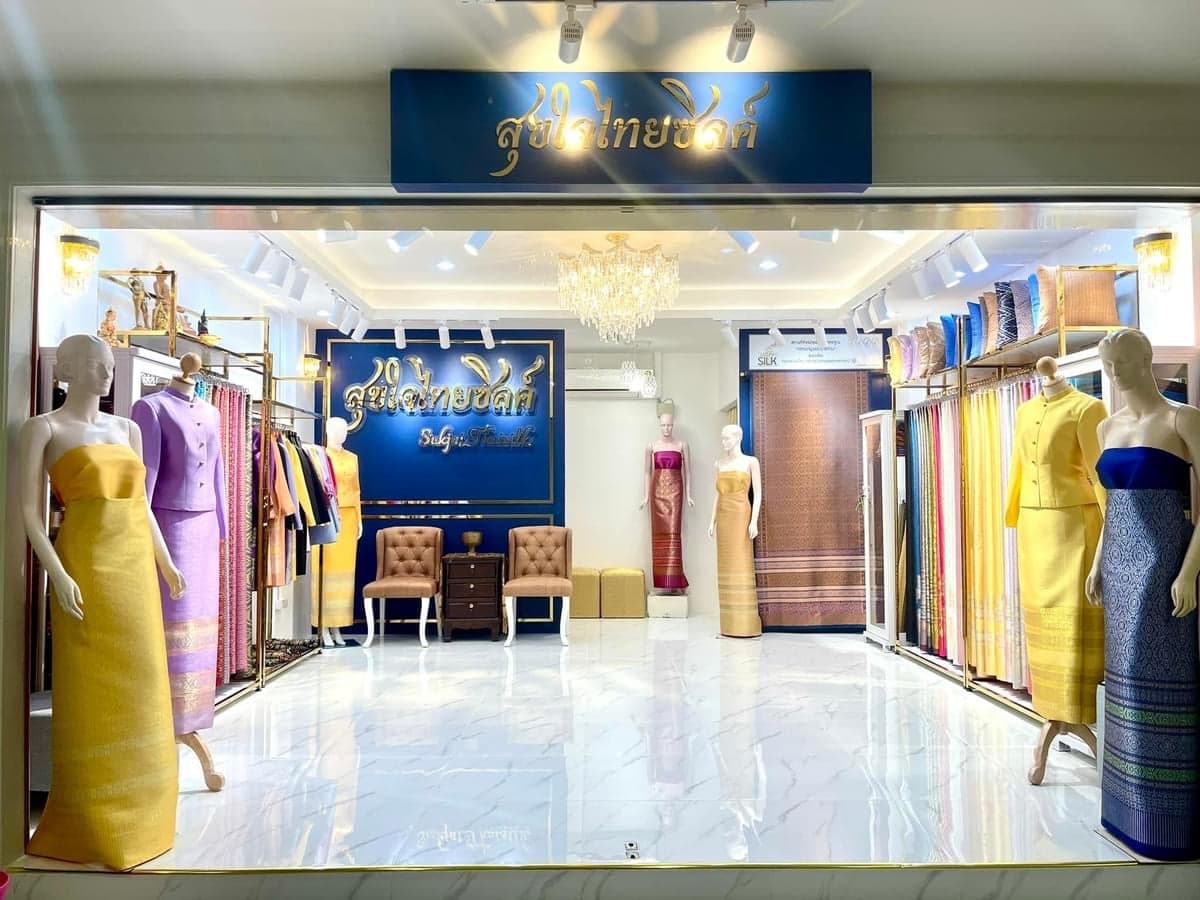
One named stop inside the Old Siam Silk Zone if you would rather walk into a polished booth than hunt every stall. Sukjai Thaisilk (room C2-14 on the second floor) sells Thai silk by the metre with a bright, modern showroom: mudmee and traditional patterns on hanging racks, solid fashion weights, and a few ready-to-wear samples so you can see how the cloth falls.
Useful when Old Siam is your only morning stop and you want a clear shop name to aim for.
Confirm the room and hours on Google Maps before you go. Still compare a second stall in the Silk Zone if you are choosing colour carefully, and use the same real-vs-fake checks as elsewhere.
Photos
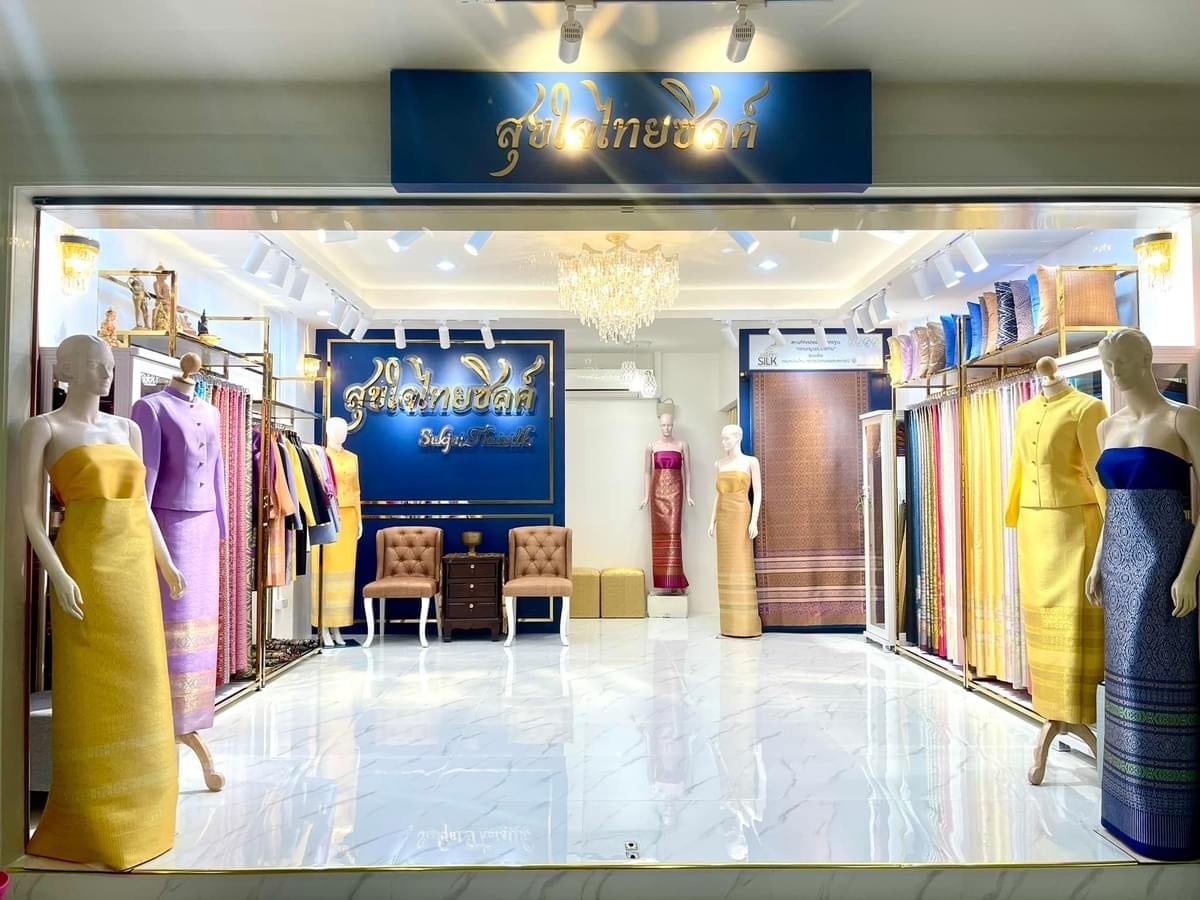
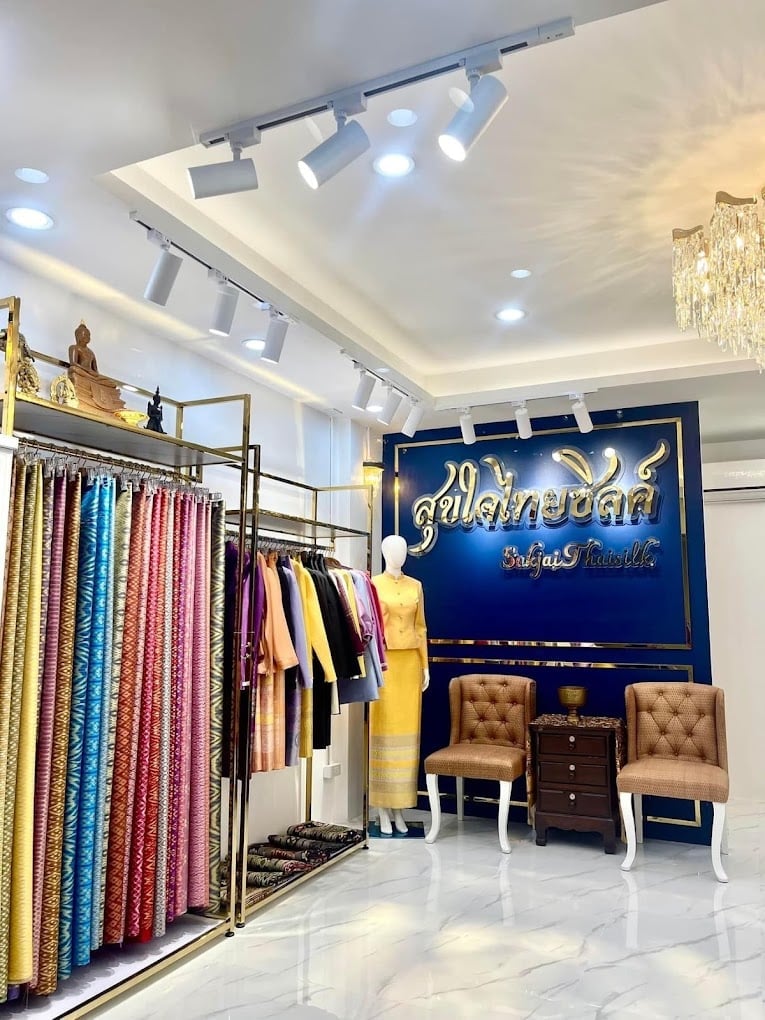
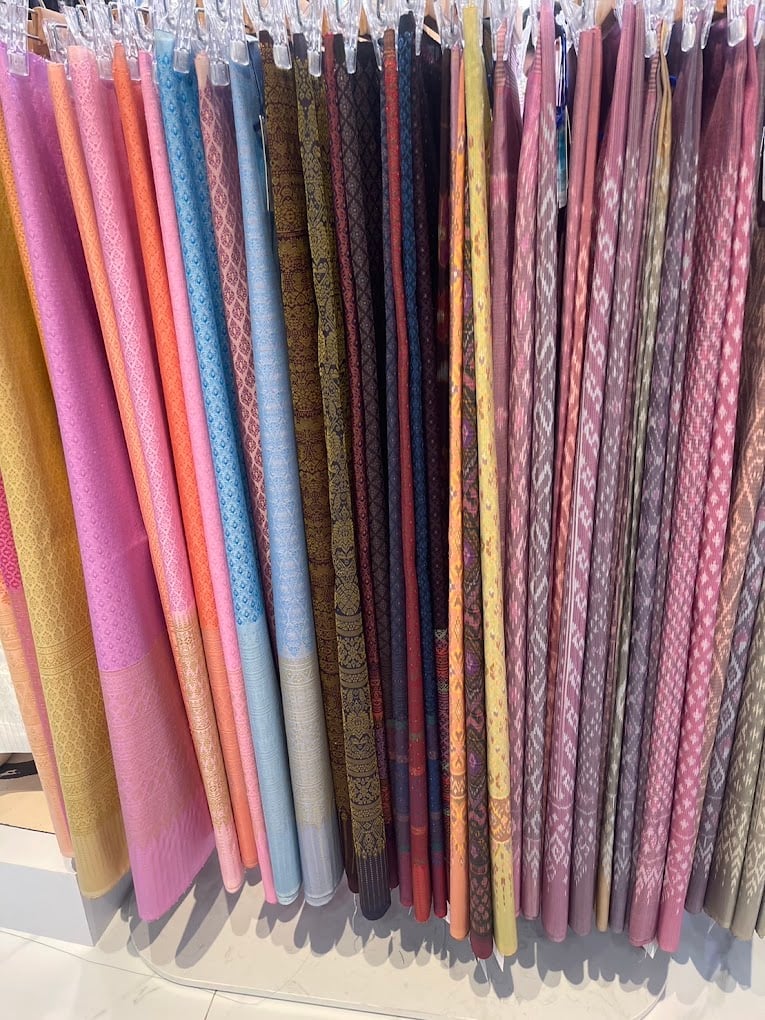
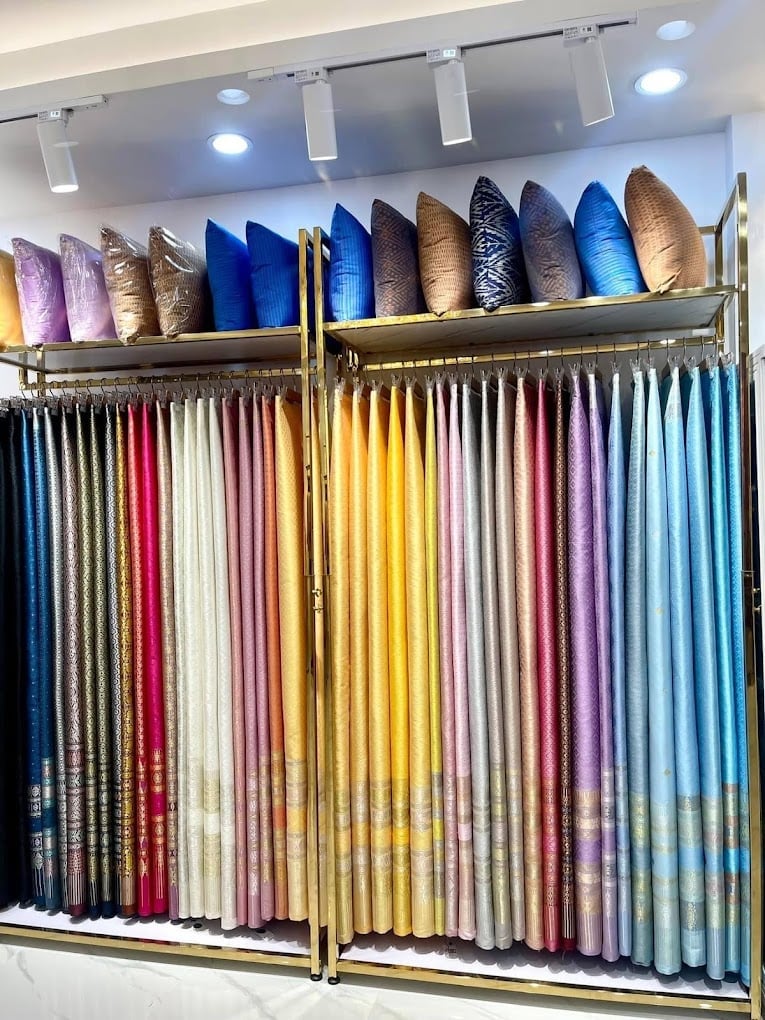
Location: Old Siam Plaza, 2nd floor Silk Zone, room C2-14, 12 Tri Phet Road, Phra Nakhon (near Sam Yot MRT)
6. Gandhi / Cynosure Fabrics
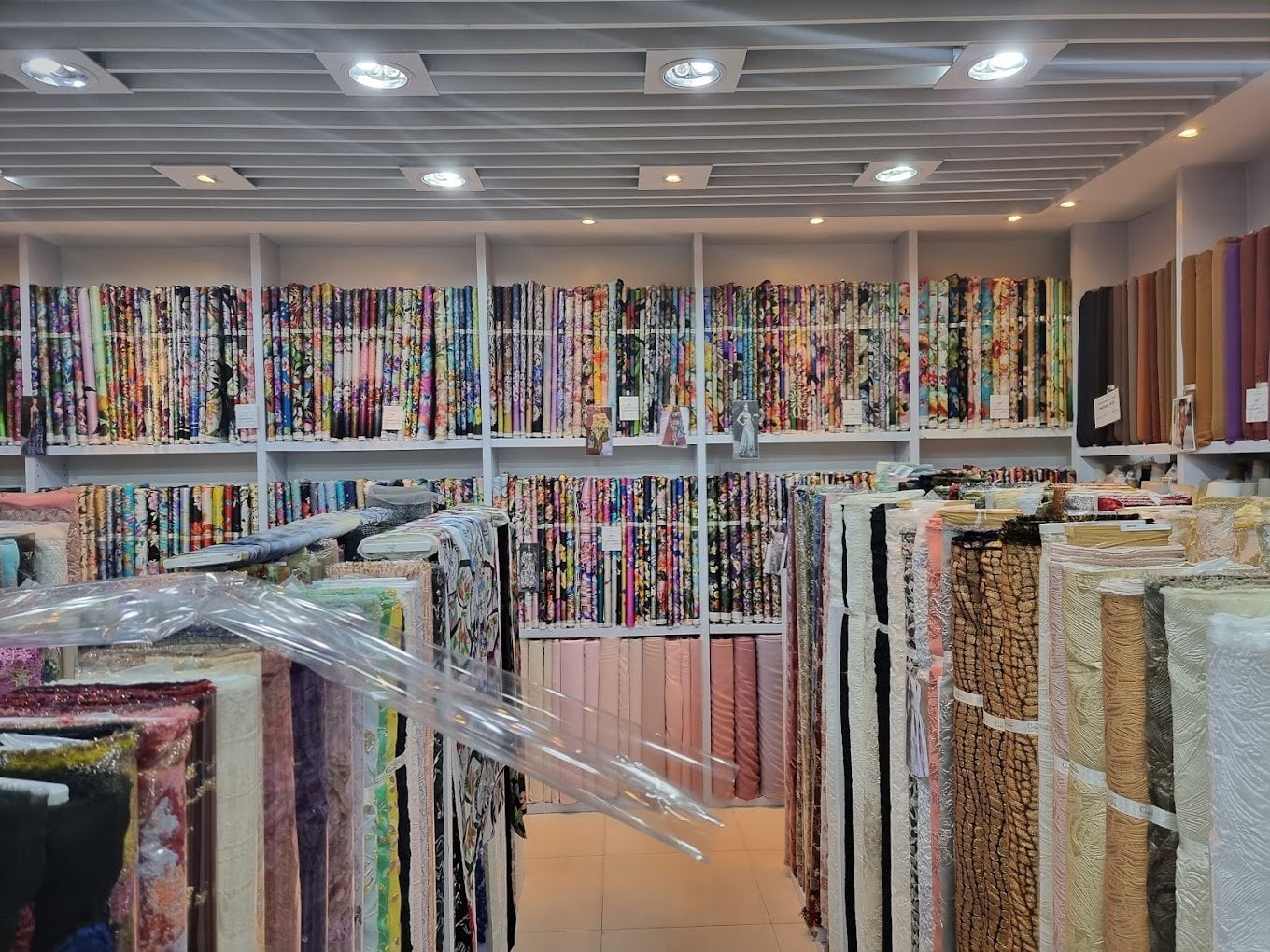
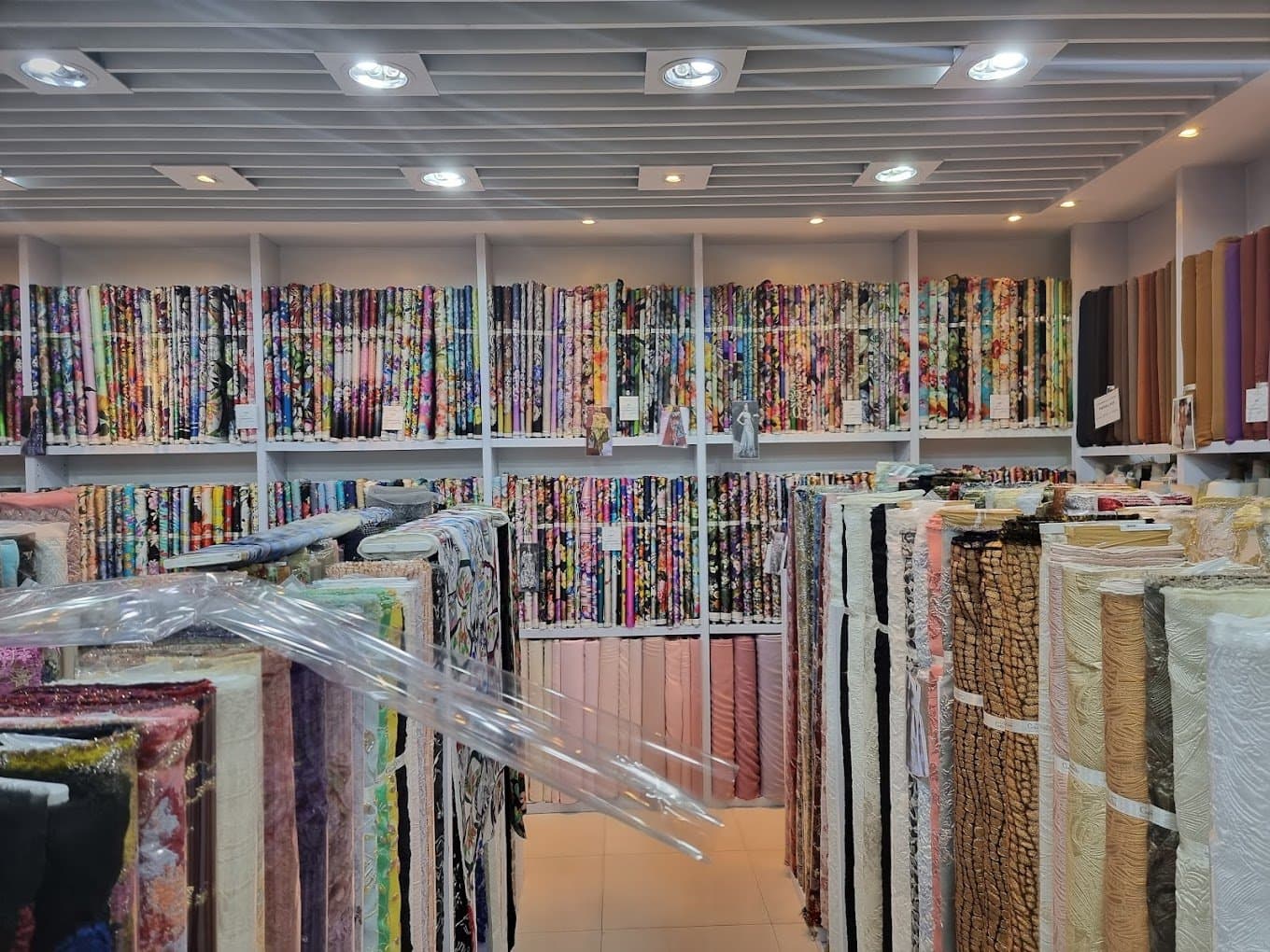
Long-standing fabric houses on the Chinatown side of the fabric district. This is not a Thai-silk stop: stock is mainly imported Italian silks (with chiffons and other dress cloths alongside).
Expect premium pricing: good Italian silks here can run 5,000 THB per metre and up. We send clients here when they want European silk for evening or wedding work, or a fine imported silk to pair with something bought at Old Siam or H.M. Factory. Ask for Italian silk by name and feel weight and drape before you cut.
Area: Chakraphet fabric streets, Phra Nakhon (confirm the exact shopfront on Maps; several related names sit close together)
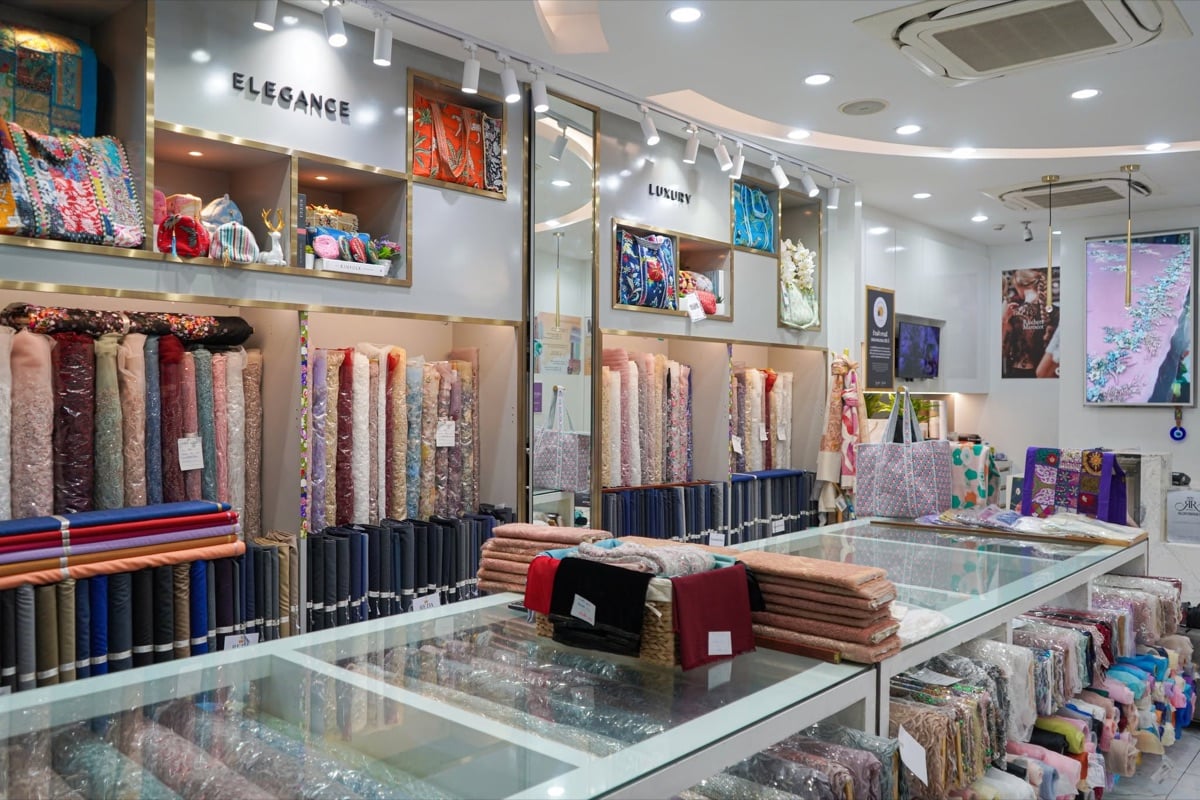
Which shop for what
- Guaranteed brand silk, easy visit: Jim Thompson Surawong flagship.
- Same brand, lower price, more metres: Jim Thompson outlet (Sukhumvit 93).
- Handwoven Thai silk without flagship markup: H.M. Factory for Thai Silk.
- Independent silk near Khao San / old city: Phanthip Thai Silk on Phra Sumen Road.
- Biggest choice, compare many stalls: Old Siam Plaza Silk Zone.
- Named booth in Old Siam (mudmee and patterns): Sukjai Thaisilk, room C2-14.
- Imported Italian silk (not Thai silk), from ~5,000 THB/m: Gandhi / Cynosure Fabrics, then come to us for cutting.
A practical half-day silk route
Morning
Sam Yot MRT to Old Siam Plaza (Silk Zone first; start at Sukjai Thaisilk, room C2-14, then compare a neighbour stall). If you also want imported Italian silk, walk the Chinatown fabric streets for Gandhi / Cynosure. If you are already around Khao San, swap in Phanthip Thai Silk on Phra Sumen for a focused metre buy instead of a full market loop.
Afternoon
Taxi to H.M. Factory if you want quieter handwoven stock, or to Jim Thompson Surawong if you want brand certainty.
Finish at LALEDA
End on Rama 4 with your metres in hand for a fabric consult. In heat and traffic, two serious stops beat four rushed ones.
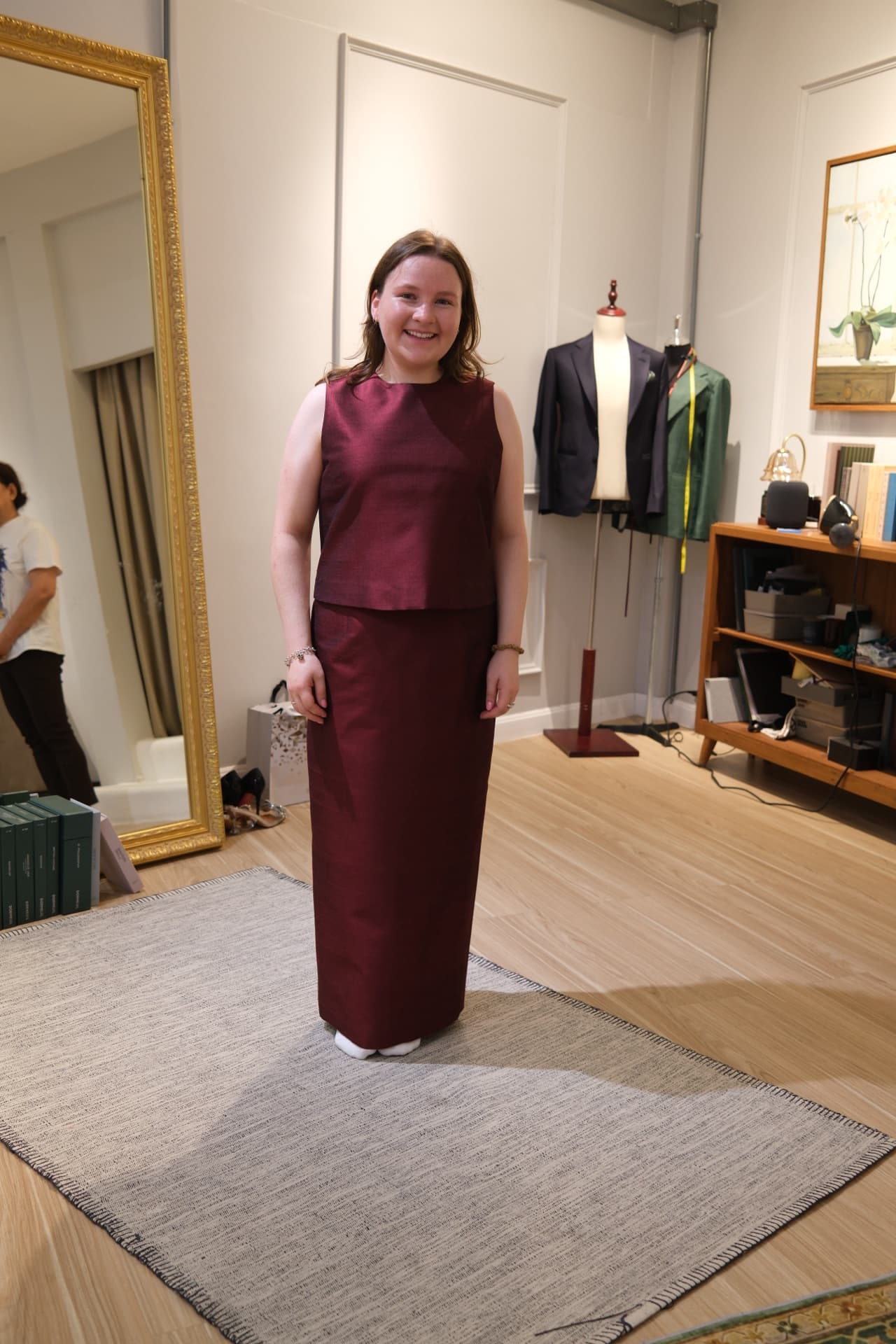
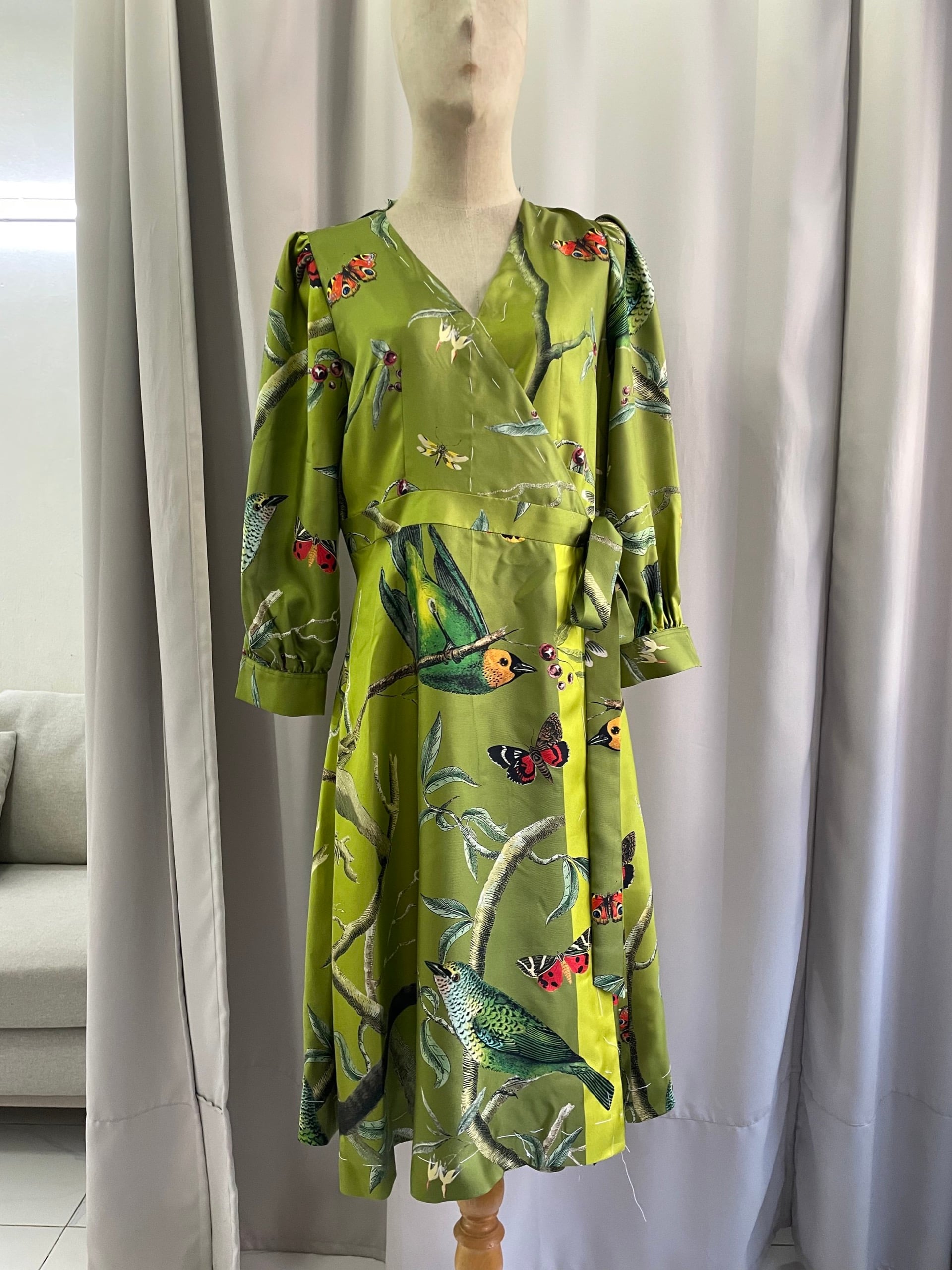
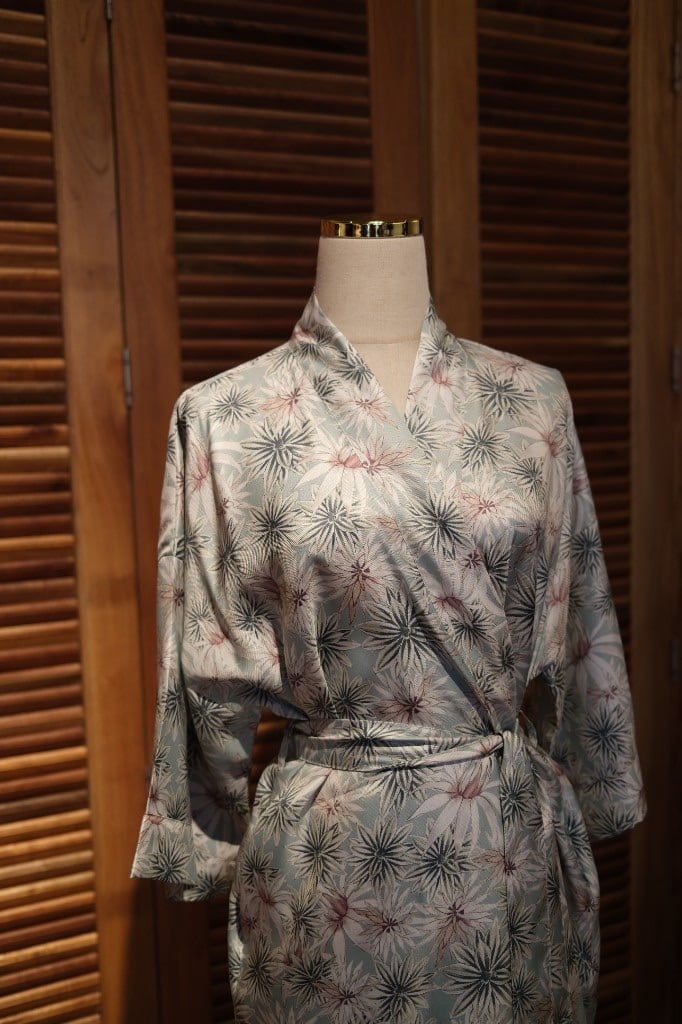
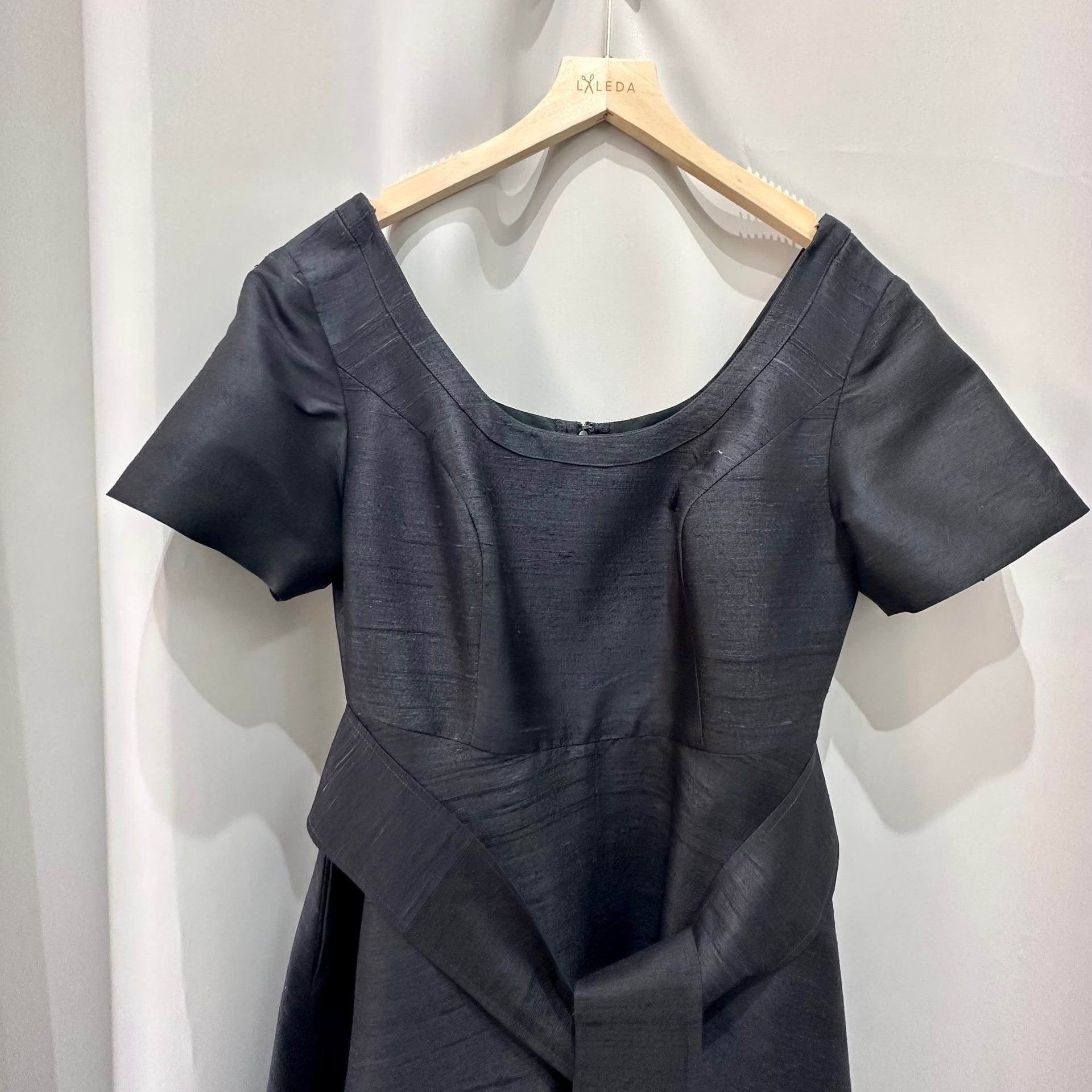
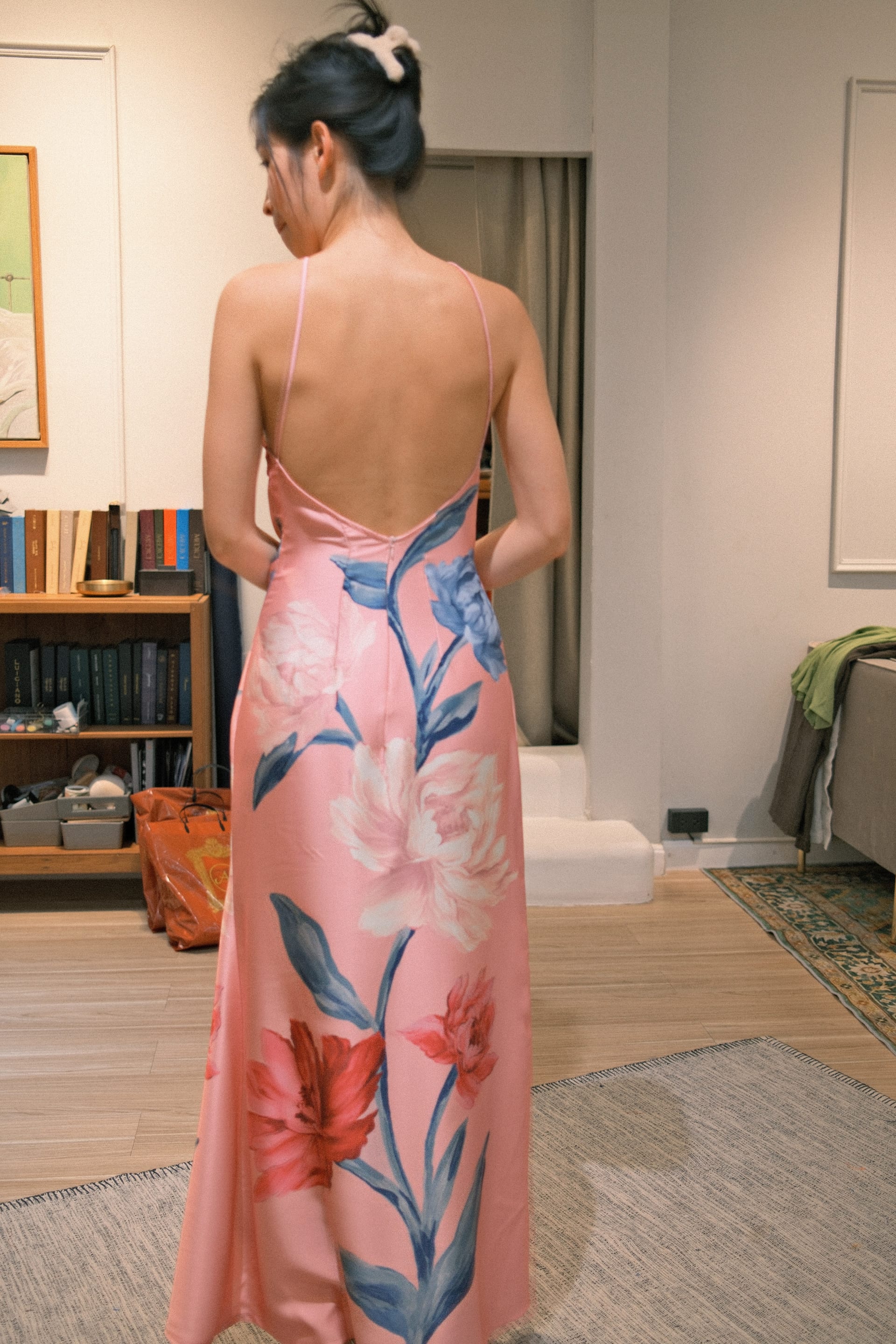
Thai silk cut and fitted at LALEDA. The shop trip is only half the story.
Thai silk pieces we have tailored
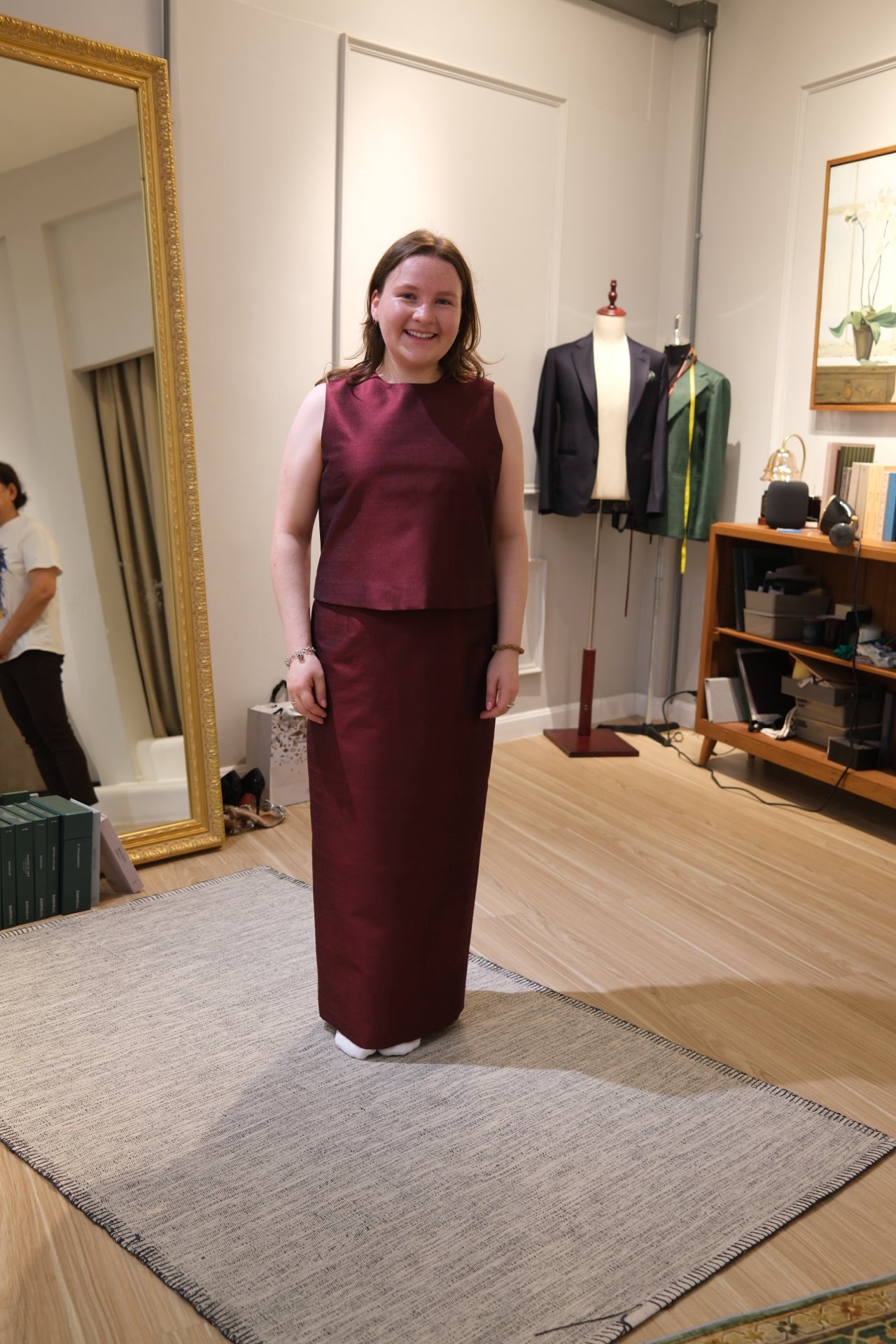
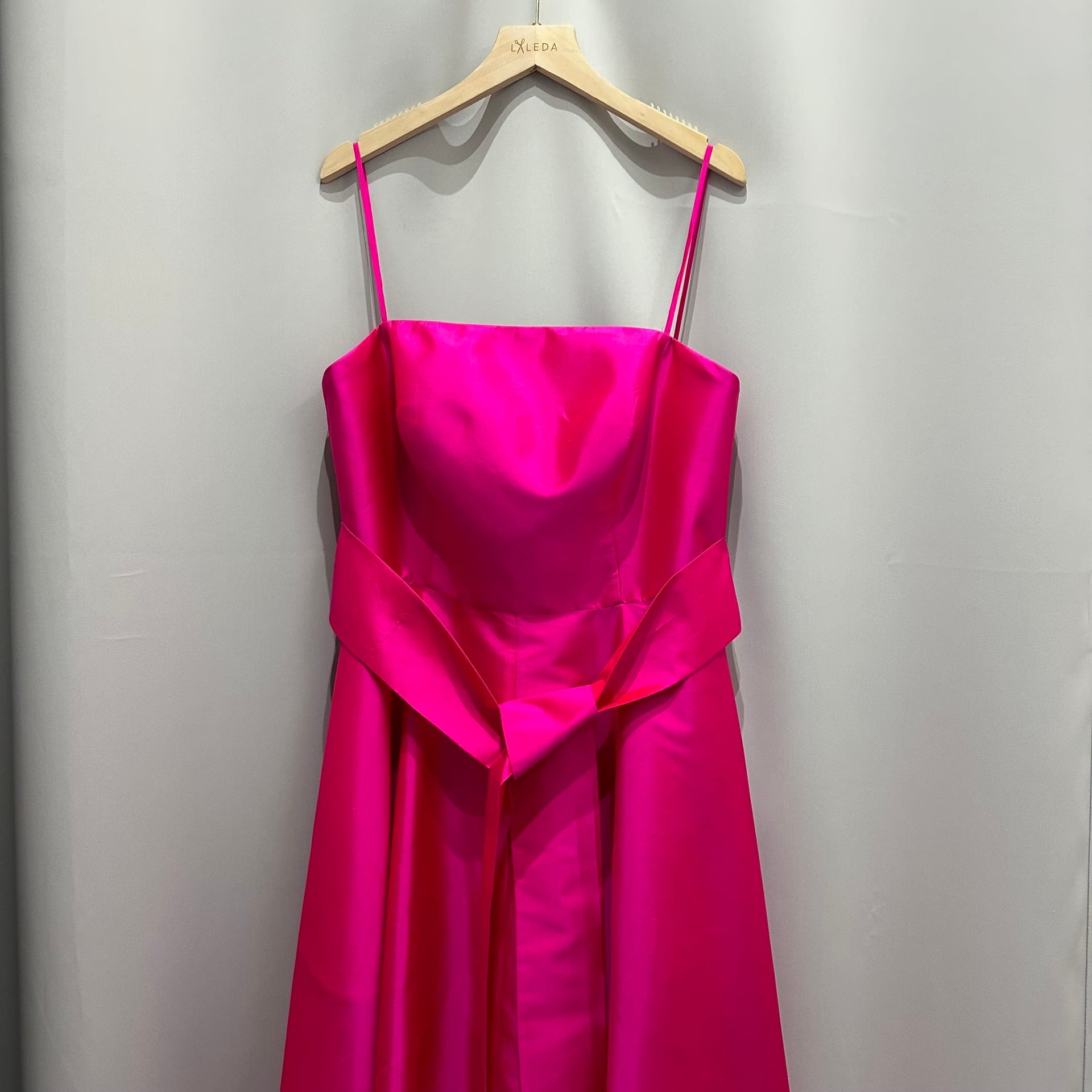
A few metres on a bolt look different once they are cut, lined and fitted. These are pieces made from silk and silk-blend cloth at LALEDA, useful if you are still deciding between a blouse, a dress or something more structured.
How to tell real Thai silk from fake
Tourist markets sell a great deal of polyester labelled "Thai silk", so a few quick checks save disappointment.
- 1
Quick checks at the stall
Price is the first clue: real silk is rarely very cheap. Feel is the second, as silk warms to your hand while polyester stays cool and slippery. Then look for the two-tone shimmer and the faint slubs of a real weave.
- 2
The burn test
The reliable test is the burn test, which reputable shops will happily do on a loose thread for you. Real silk burns to a soft, crushable ash that smells of burnt hair and stops burning once you take the flame away. Polyester melts into a hard plastic bead and smells chemical. If a stall refuses to test a single thread, treat that as your answer.
What Thai silk costs
Rough guide only: colour, ply, weave and the day's stock all move the number. Prices are per metre.
| Type / place | Typical price (THB/m) |
|---|---|
| Light two-ply silk (Chinatown / markets) | About 300-600 |
| Good hand-woven silk (independent shops) | About 700-1,500 |
| Premium local weaves (mudmee and similar) | Often 1,500+ |
| Jim Thompson flagship (fashion weights) | About 2,000-3,000+ |
| Jim Thompson exotic / special / limited weaves | Higher still |
| Imported Italian silk (e.g. Gandhi / Cynosure) | About 5,000+ |
Thai silk is usually woven narrow, around a metre wide, so budget a little more length than you would with wide European cloth. Even so, a dress's worth of beautiful local silk is often a few thousand baht rather than tens of thousands, still far less than many imported wools or branded suiting.
Turning Thai silk into something you'll wear
Buying the cloth is the romantic part. Getting it cut well is what makes it wearable.
At LALEDA we tailor Thai silk into blouses, dresses and jackets, and we are happy to work with silk you bought yourself. Because Thai silk is narrow and can fray, it wants a tailor who will match the grain, finish the seams cleanly and line it so it sits well and stays comfortable in the heat.
Bring your fabric, or come empty-handed and choose from the bolts at the atelier. Either way, you can see exactly how we work before anything is cut. A typical dress is ready within one to two weeks of that first visit. We have been dressing women in Bangkok from beautiful cloth since 1989.
Book a fabric consultationFrequently asked questions
Yes. Plenty of clients arrive with a few metres they fell in love with at Jim Thompson or a market.
We check the width and quantity, tell you if you need a little more, and tailor it into a dress, blouse or jacket. Bringing your own cloth is always welcome.
Real silk breathes better than most people expect. A lighter one or two-ply Thai silk, cut with a breathable lining, is comfortable for evenings and air-conditioned events.
Heavy four-ply silk is warmer and better kept for structured pieces and cooler rooms.
As a rough guide, two to two and a half metres for a blouse, three to four metres for a dress, and a little more for a gown with a full skirt or sleeves.
Thai silk is often woven narrow, around one metre wide, so you usually need more length than with wide European cloth. We confirm the exact amount once we know the style.
Dry clean, or hand wash gently in cool water with a mild detergent and no wringing, then dry in the shade.
Keep it out of long stretches of direct sun and press on low heat from the back. Treated well, Thai silk lasts for decades.
Thai silk is usually heavier, with a slightly irregular, slubby weave and a two-tone shimmer because the warp and weft are often different colours.
Chinese and Indian silks tend to be smoother and lighter. Neither is better, they simply suit different garments.
Every silk shop, and where it is
The six shops above plus our atelier on Rama 4, grouped by neighbourhood. The numbers match the sections above, so you can plan a morning in the old city and an afternoon downtown.
Old city & Chinatown4 shops
Independent shop
3. Phanthip Thai Silk
A compact independent on Phra Sumen Road, a short hop from Khao San, at mid-range prices.
The Silk Zone
4. Old Siam Plaza
The largest concentration of Thai silk in Bangkok: a couple of dozen shops under one air-conditioned roof.
Named booth at Old Siam
5. Sukjai Thaisilk
Room C2-14 inside the Old Siam Silk Zone, for when you would rather aim for a shop name than hunt every stall.
Imported Italian silk
6. Gandhi / Cynosure Fabrics
Not a Thai-silk stop: imported Italian silk for evening and wedding work, at premium prices.
Downtown & Sukhumvit3 shops
Flagship, by the metre
1. Jim Thompson
The icon on Surawong: premium prices, reliable quality, a huge colour range. The Sukhumvit 93 outlet sells the same brand for less.
Working silk house
2. H.M. Factory for Thai Silk
A working silk house on an alley behind Emquartier, selling handwoven cloth by the metre without the flagship markup.
Atelier & tailoring
7. LALEDA (Rama 4)
Bring the metres you bought to our atelier on Rama 4, near Sukhumvit 24, or come empty-handed and choose from the bolts there.
Red pin: LALEDA, our atelier on Rama 4 near Sukhumvit 24
Hover or tap a card to find it on the map. Tap any pin for directions in Google Maps.