A wedding dress that fits is the difference between dancing all night and tugging at a strap every twenty minutes. Most gowns, even expensive ones, need work after they arrive. This guide covers what to expect, what to ask, and what to budget.
Almost every bride needs about three fittings before the dress sits right. Costs at our atelier on Sukhumvit usually fall between 1,000 and 10,000 THB depending on what's involved. If you're still deciding whether to alter or commission new, our piece on why a tailored wedding dress is worth it compares the two paths.
What our team does at a fitting
A first fitting at LALEDA usually runs up to an hour. Our in-house seamstresses pin and chalk the dress on you, talk through what's working and what isn't, and book the next session. Our wedding dress tailoring service handles fittings on dresses we've made and on dresses you've bought elsewhere. If we think another tailor would suit a particular gown better, we'll say so.
The two kinds of alteration
Fit work
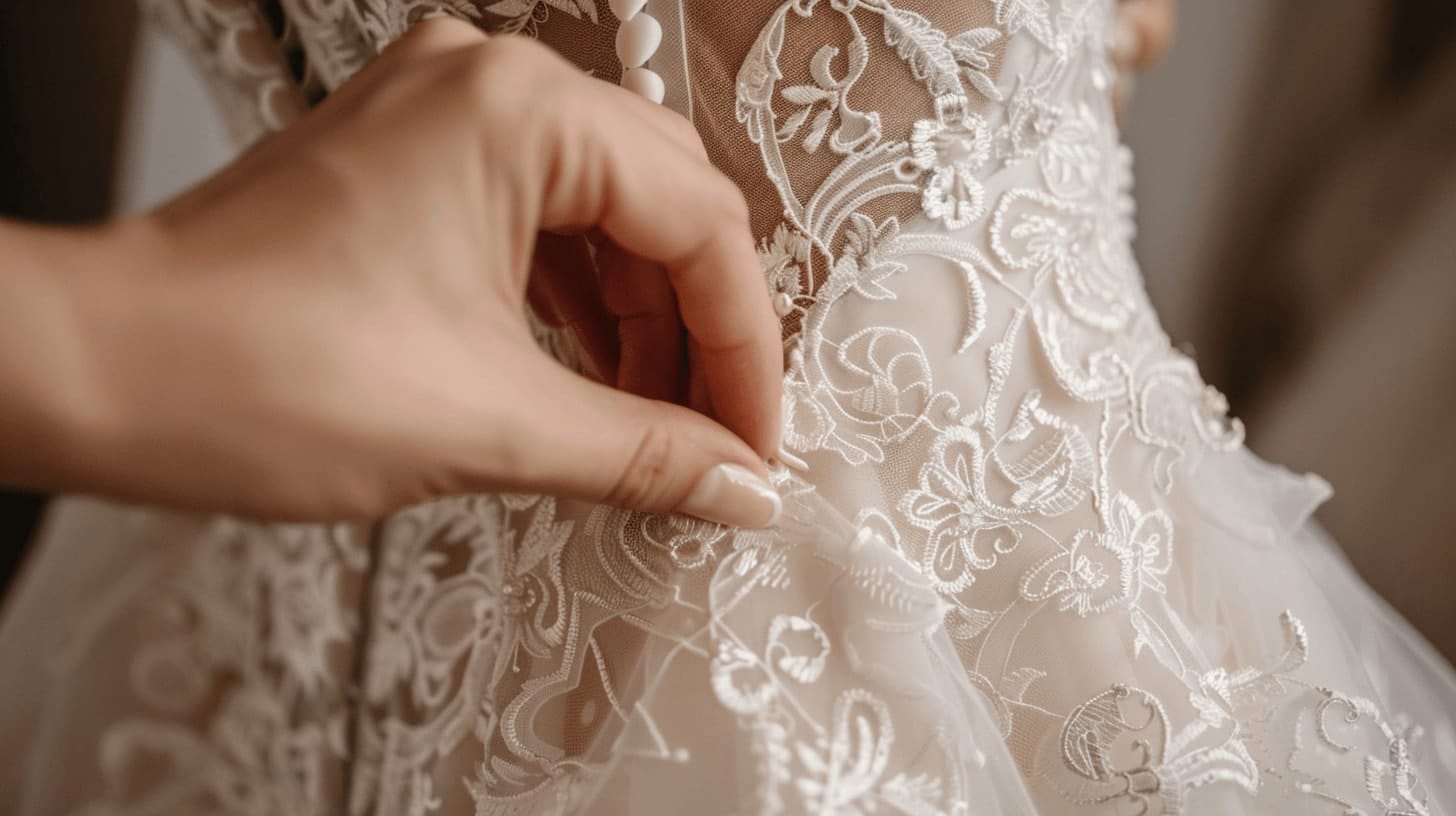
The basics: shortening the hem, taking in the sides, lifting or dropping the bust line, adjusting straps, and getting the skirt to clear the floor without tripping you. Most dresses need at least some of this. Budget 1,000–5,000 THB for standard fit work; intricate beading or lace pushes that higher because each cut has to be done by hand.
Design changes
With more lead time, you can add or remove straps, build a bustle so the train can be hooked up after the ceremony, add lace appliqués, change buttons, swap a neckline, or add sleeves. If you're picking fabric for a panel or overlay, our guide to choosing the right fabric for a dress walks through the trade-offs that matter most in Bangkok humidity.
Things we wish more brides knew
Start earlier than feels reasonable
Order your dress around 10 months out (made-to-order gowns can take five months to arrive). Book the first fitting two to three months before the wedding and the final one no later than two weeks before. If you're pregnant or planning a substantial body change, add buffer.
When in doubt, order a size up
Sizing down a too-large dress is straightforward. Sizing up a too-small one is fabric-limited and sometimes impossible. Structured gowns with corsets give you the most adjustment room; A-lines forgive a few kilos either way.
Bring the shoes and underwear you'll wear
The hemline depends on heel height, and the bust depends on the bra. Without both, we're guessing. Bring accessories too, even if they don't affect fit, so you can see the full picture in the mirror at the same time we do.
Aim for a hem that just brushes the floor
You want enough length that it skims, not so much that you're catching it on the dance floor. The hem will pick up dust and a little dirt by the end of the night. That's normal and comes out in preservation cleaning.
Don't panic about a kilo or two
We expect small fluctuations between fittings and adjust at each one. If something larger happens (illness, pregnancy, an unplanned diet), tell us early. We can sometimes source extra fabric from the designer and add panels.
Heavy alterations don't ruin a dress
Brides often worry that big changes will compromise the gown's original design. In practice, that's exactly what alterations are for. A skilled team keeps the lines and proportions intact while adapting the dress to your body. The integrity of the original design survives.
Bring one person, not five
One trusted friend or family member is helpful: a second opinion, someone to take photos, someone to share the moment with. A larger group tends to make decisions harder and slow the fitting down. Save the wider audience for after.
Pick your tailor before the gown if you can
The right tailor will tell you whether a dress is alterable before you commit to buying it. If you're still deciding where to bring your gown, our checklist on choosing a women's tailor in Bangkok covers the questions worth asking up front.
Frequently asked questions
How many fittings will I need?
Plan for three. Most dresses are sized to your largest measurement, so the first fitting is heavy on pinning and sculpting; by the second the dress is close to right; the third is where you sign off. Schedule the final fitting one to two weeks before the wedding so any last-minute change can still be done in time.
When should I schedule my first fitting?
Eight to twelve weeks before the wedding. That gives us comfortable room for alterations without rushing the second and third fittings.
What should I bring to my fittings?
The shoes, undergarments, and accessories you'll wear on the day. Without them we can only approximate.
Can you alter dresses purchased elsewhere?
Yes. We work on dresses bought from other Bangkok boutiques, brought in from overseas, or ordered online. Same standards as our own gowns.
How long does each fitting appointment take?
30 to 90 minutes, depending on what's being adjusted. First fittings tend to be the longest.
What if I lose or gain weight after the final fitting?
Tell us as soon as you notice. Small changes are usually fixable in a quick session; bigger ones need more lead time and more care, so the earlier we know the better.
Do you offer rush alterations?
We're usually booked solid with tailoring and alteration work, but if your wedding is in two weeks, ask anyway. We sometimes have a slot. Rush jobs run a small surcharge and we recommend starting alterations early whenever possible to avoid the stress.
What should I budget for alterations?
We quote after seeing the dress and discussing what you'd like changed. Most adjustments fall in the 1,000–5,000 THB range. Heavily structured gowns and delicate lace can run up to 10,000 THB because the cutting has to be done by hand.
Ready to book?
Bring the dress, the shoes, and the underwear you'll wear, and we'll take it from there.
Schedule Your Wedding Dress Fitting
Malai Chanhom
Malai brings 20 years of invaluable experience from working in tailoring. Her expertise and passion for crafting the perfect fit drive her mission to help every customer find their ideal style. Her dedication to her craft goes beyond the workroom. She's often found sketching new designs, studying fashion history, or discussing tailoring innovations with fellow enthusiasts.