
Bridal magazines shoot in climate-controlled rooms. Bangkok ceremonies often do not. At 35°C the dress, the fabric, the shape of the day and even the shoes matter as much as the silhouette on Pinterest. This is the advice we give after 37 years of fittings on Sukhumvit: affectionate, a little blunt, and very practical.
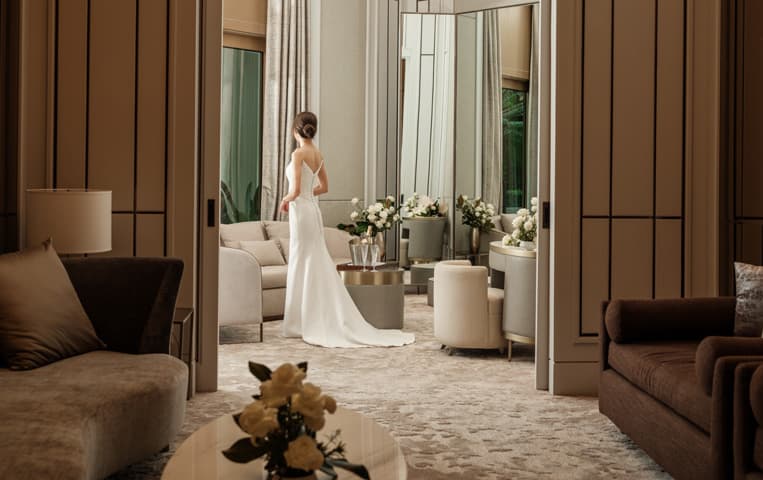
The editorial bride walks on a cool lawn in soft light. The Bangkok bride steps out of air conditioning into wet heat, holds a bouquet that starts to wilt by lunch, and stands for portraits while the city hits 35°C. We love that energy. We also refuse to pretend a European winter magazine knows your underarms. Here is what bridal magazines will not tell you about getting married in this climate, and how we cut dresses so you still look like the point of the day, not a survivor of it.
A gown that only works at 22°C is a costume, not a wedding dress for Bangkok.
Heat is a design brief, not a surprise
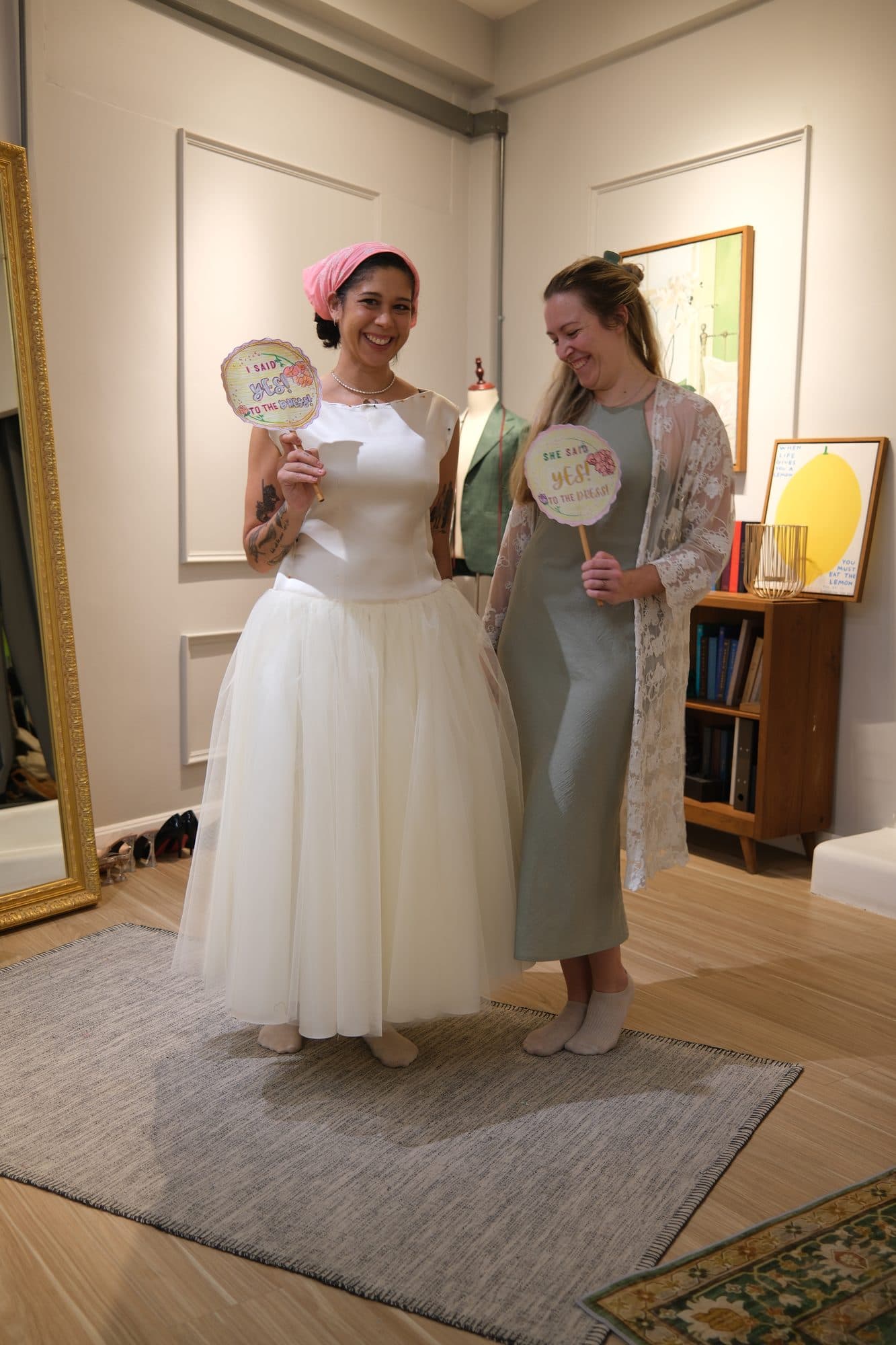
Magazines sell fantasy fabric first: heavy lace, six layers of tulle, long trains that pool like cold water. In Bangkok those choices meet humidity, taxi transfers, outdoor vows and hotel corridors that swing between freezer and sauna. The dress has to survive both. If it only looks right in air conditioning, it is not finished yet.
When you book a custom wedding dress with us, we treat temperature like neckline: it is on the brief. Where is the ceremony? How long are you outdoors? Is there a boat, a garden, a rooftop at 4pm? Answer those and half the fabric decision is already made before we open a swatch book.
Three fabric stories that fall apart here
More layers always look richer. In dry air, maybe. Here, extra layers hold sweat against the body and turn the skirt into a portable greenhouse. Rich can mean one excellent silk with clean structure, not five mediocre nets stacked for drama.
All-over lace is the romantic default. We have a whole opinion on that in plain silk vs loud lace. Dense lace traps heat and fights movement when you climb temple steps or board a shuttle. Romance that you cannot dance in is not very romantic by midnight.
Ivory is always cooler than colour. Light colours can feel cooler in sun, but synthetic “ivory satin” that does not breathe will still stick. Fibre and weave matter more than the paint chip on the sample card.
What we actually cut for 35°C
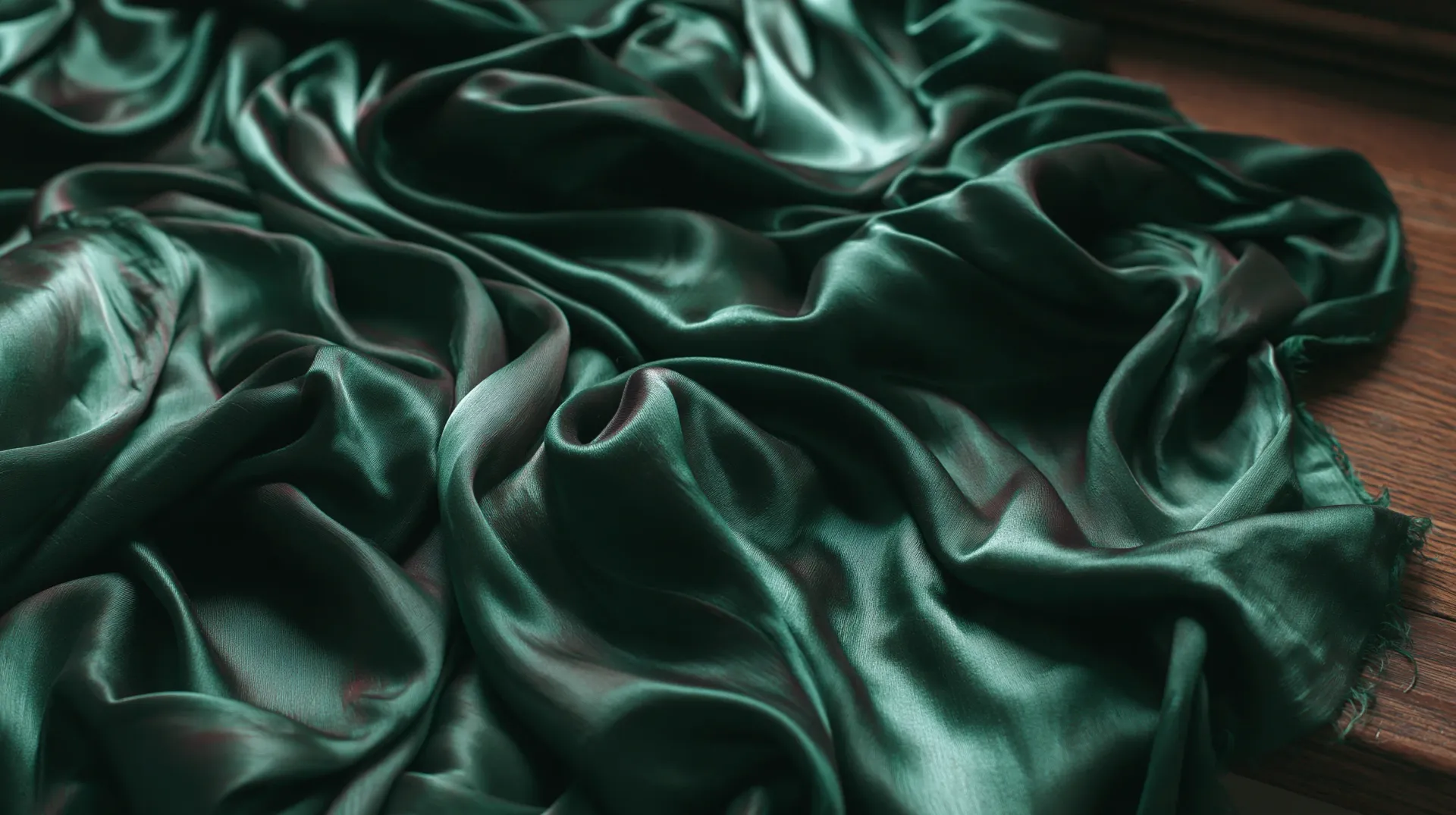
For long outdoor stretches we reach first for silk crepe and fine silk (quiet surface, less cling than cheap satin), chiffon or georgette over a light lining (movement without a heavy shell), and Thai silk chosen in a weight you can wear through a whole day. Structure still has a place: boning and shape where you need them, not a full cage for a garden lunch. Trains should bustle fast, because the walk from chapel to dinner is a climate change.
For evening only, inside a ballroom, we can go heavier. That is the honest split in our evening fabric guide: garden heat and air-conditioned night are different jobs. Same bride. Different cloth.
The day timeline magazines skip
Magazines show the kiss. They rarely show 11:40am traffic, a humid car, and forty minutes of photos on a bright lawn. Plan the dress around the sequence, not the single still frame you pinned.
A morning ceremony outdoors wants lighter cloth, less understructure, a shorter outdoor window. Hotel lobby into an AC ballroom can take a little more polish for a second look. Riverside or boat means snag risk and wind; skip fragile lace trains that catch every corner. And two looks are not extravagance here. A heat-smart ceremony dress and a cooler reception dress is strategy.
Match the cloth to the venue type, not only to the mood board. The venue is part of the weather system.
Body, makeup, shoes: the non-dress heat rules
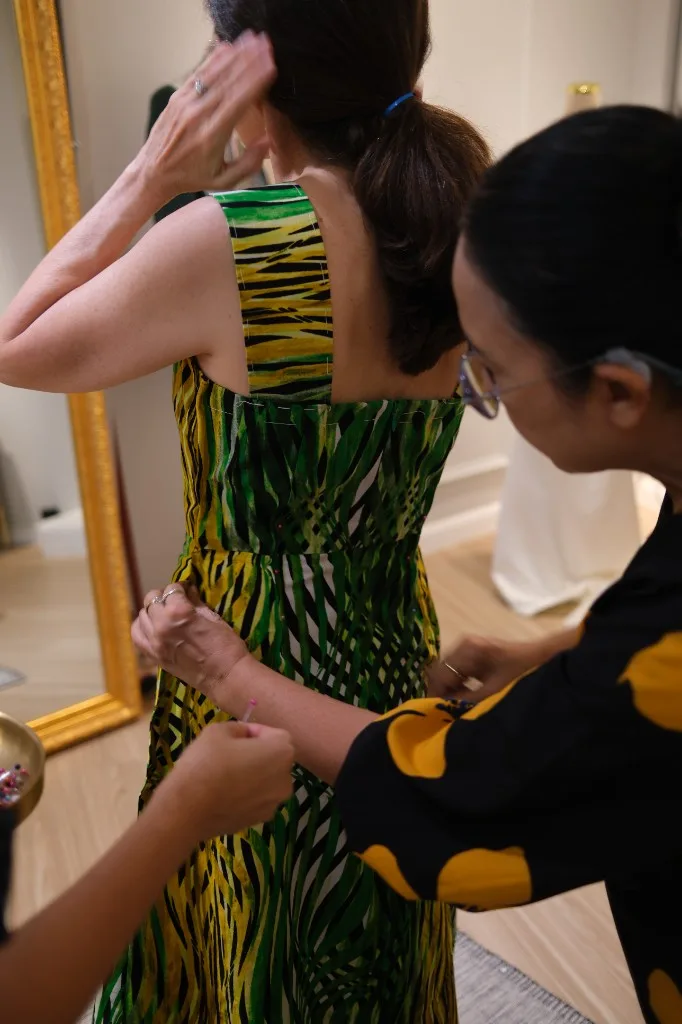
Magazines sell perfect matte skin under ring lights. Real humidity melts foundation into the neckline. We leave a little ease at the underarm and choose linings that do not glue to damp skin. Bring blotting papers, not only a powder compact, and test your full look in warm air once, not only in the salon. The dress has to survive the makeup as well as the vows.
Shoes matter more than Instagram admits. Long outdoor paths plus heat means swelling feet. If the magazine shoe is a 12cm heel for grass, we will say so. A beautiful dress with limping is not a bridal aesthetic we endorse, no matter how pretty the still looks.
What to order, and when
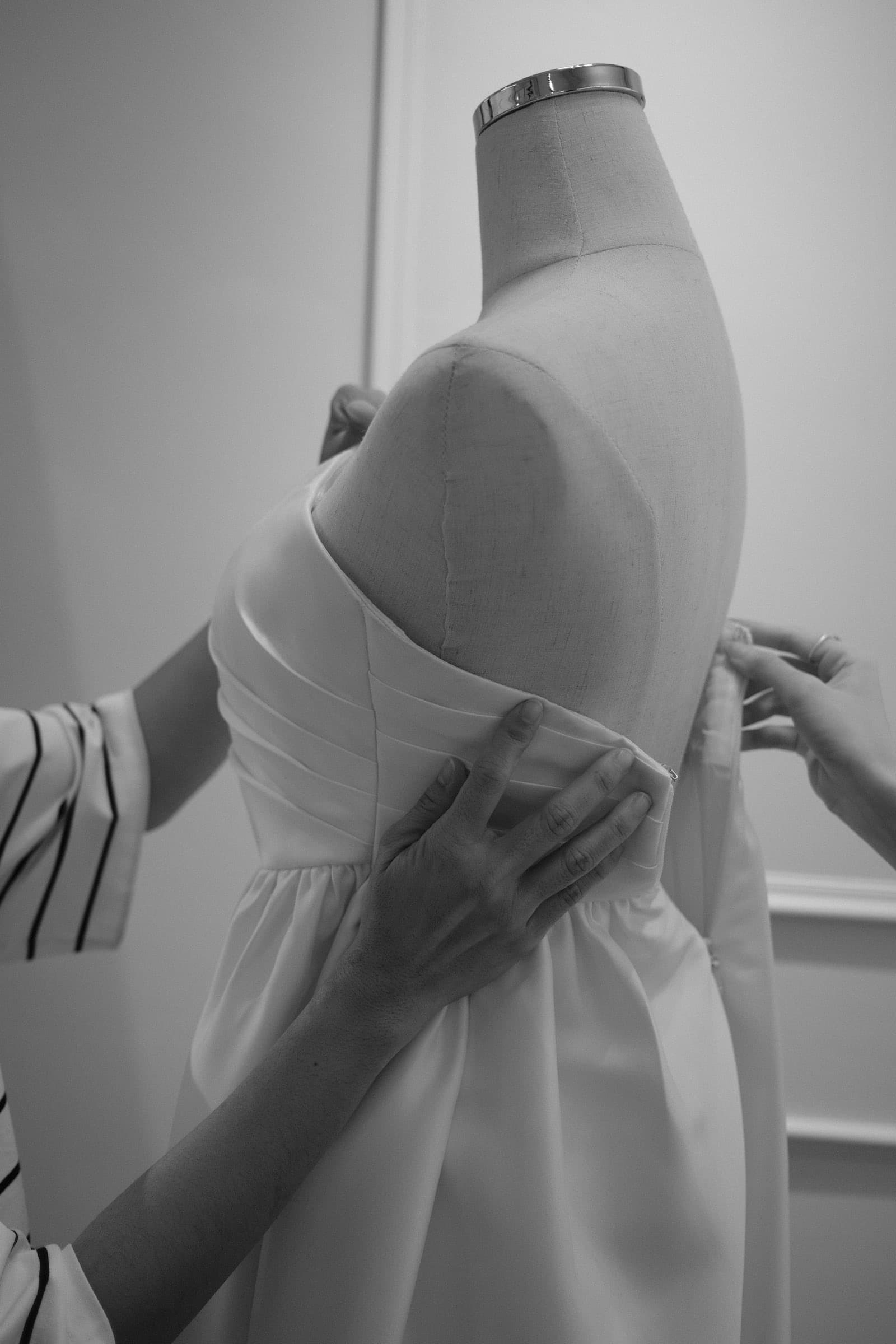
Heat does not speed up sewing. A custom gown still needs design time, cloth, making and fittings. Most of our wedding dresses take 4-6 weeks of work. A simpler design can be ready in 2 weeks, not less. Starting 2-3 months before the day is the comfortable path. Full timeline thinking lives in our custom wedding dress Bangkok guide, and the case for bespoke over rack is in tailored vs off-the-rack.
If you already bought a heavy magazine gown and Bangkok is fighting it, we can often help with alterations: open underarms, lighten layers, bustle, shorten for dance floors that feel exactly like tropical dance floors. Sometimes the bravest edit is taking fabric away.
And the bride is rarely the only one dressing for 35°C. We cut mother of the bride dresses in the same breathable cloths, so the whole family survives the portraits looking composed.
Quick answers
Breathable lighter cloth: silk crepe, chiffon over a light lining, fine georgette, and well-chosen Thai silk. Avoid dense all-over lace sandwiches and heavy multilayer ballgowns for outdoor ceremonies.
You can still have structure; it should not trap heat all afternoon.
Early morning or late afternoon into evening. Midday outdoor vows at 35°C are hard on makeup, guests and cloth.
If noon is fixed, shorten outdoor segments and keep a cooler indoor plan for portraits.
Start 2-3 months out. Most custom gowns take 4-6 weeks of making plus fittings. A simpler design can be ready in 2 weeks; we do not go shorter than that.
Heat does not shorten the sewing calendar; it only changes how we choose fabric and structure.
Bring the forecast to the fitting
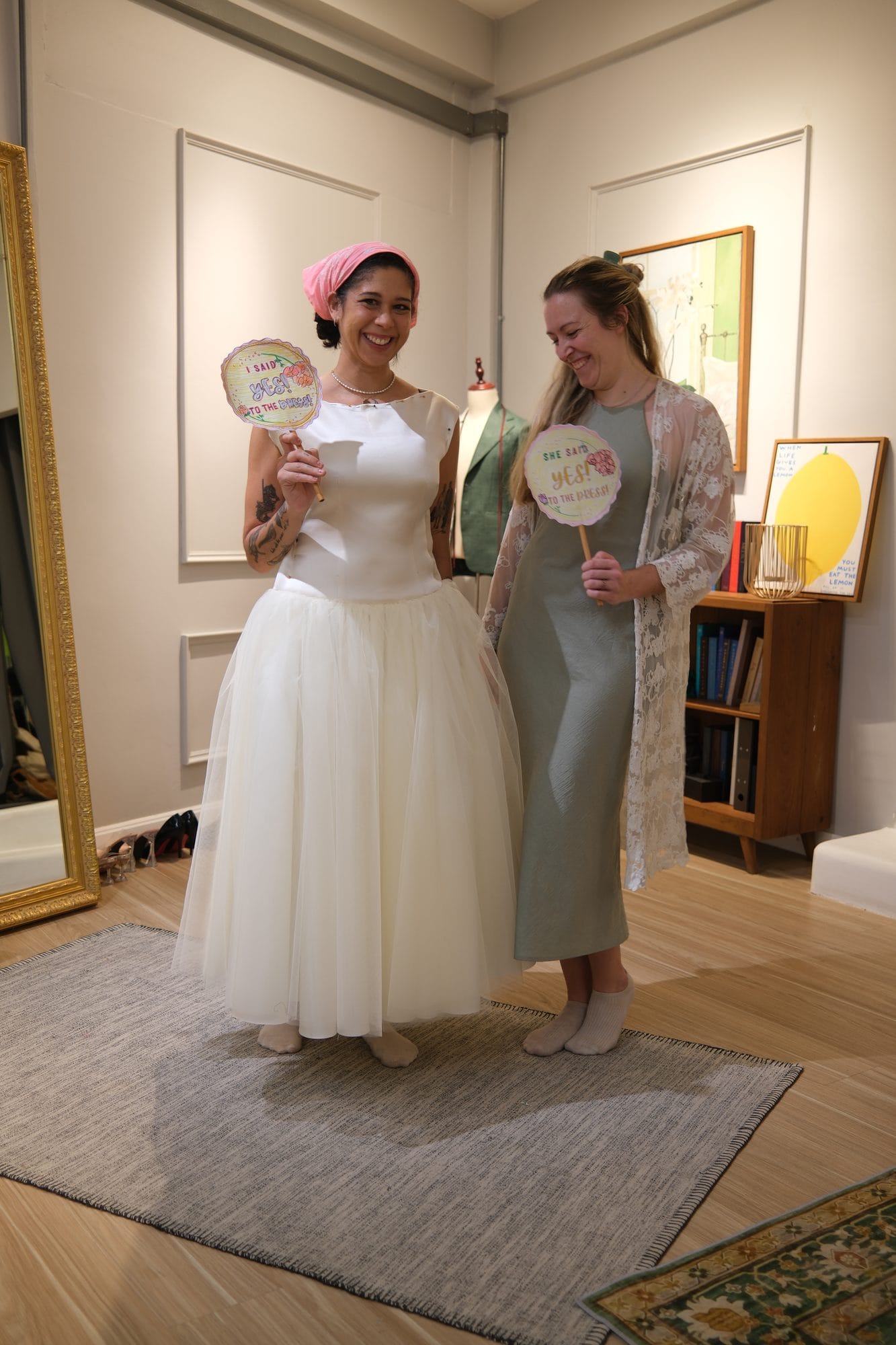
Come with venue photos, the time of the ceremony, and how long you will be outdoors. We will be blunt about fabric and kind about fantasy. Both matter.
A dress that thrives at 35°C still photographs like a love letter. It just refuses to pretend Bangkok is Paris in April, and that honesty is half the beauty.
Book a Wedding Dress Consultation