
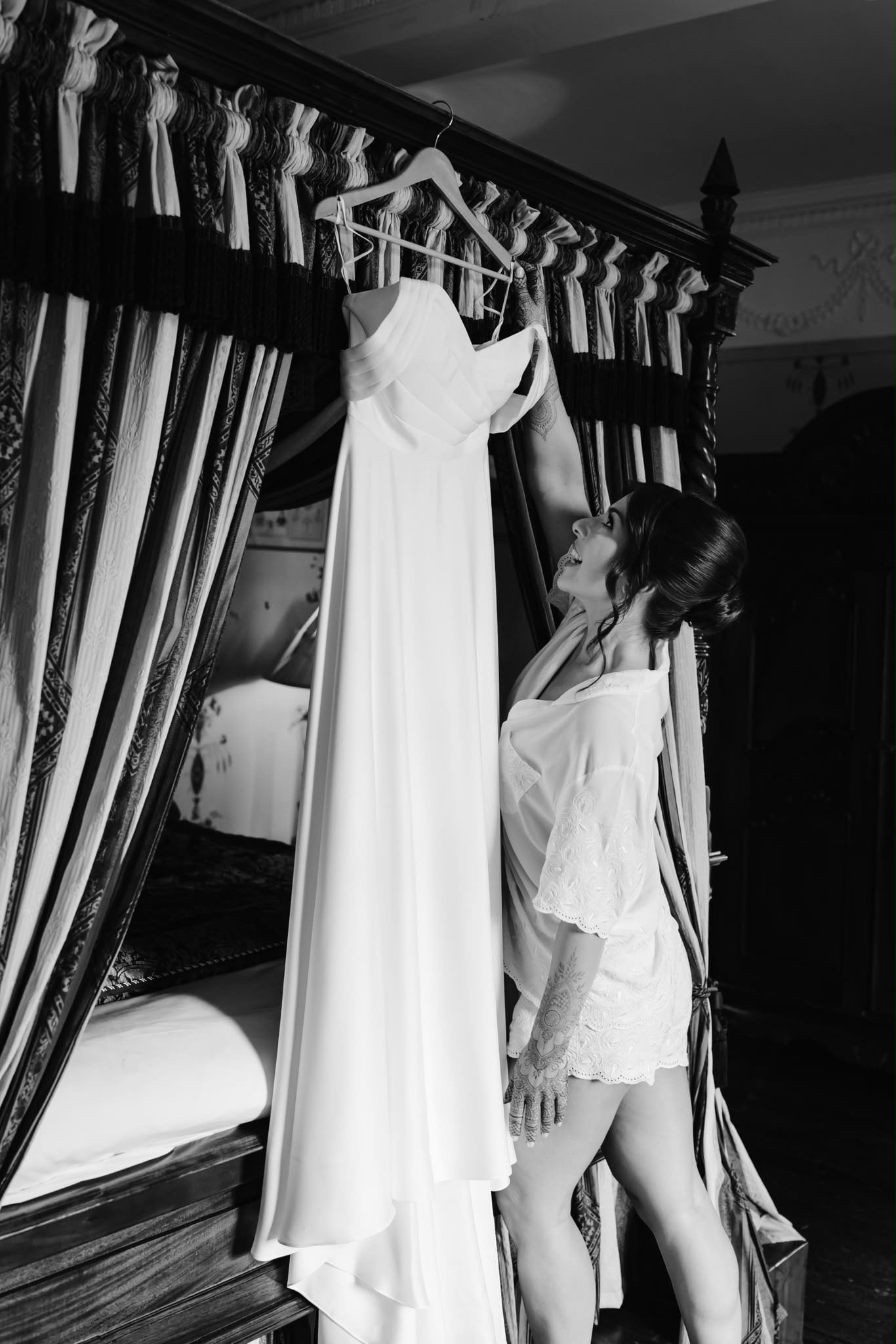
Most of our wedding dresses never leave Bangkok. This one flew to England in a garment bag, hung inside a four-poster bed the night before the wedding, and walked down the aisle of a small stone chapel a few hours after a henna artist finished the last line on Emma's hand.
Emma came to us needing a dress for two mornings, not one: a mehndi celebration that would cover her hands and forearms in pattern, a nod to her own family's heritage, and an English church wedding a few hours later where the dress had an entirely different job.
On a day with that much going on, the last thing the gown needed to do was compete.
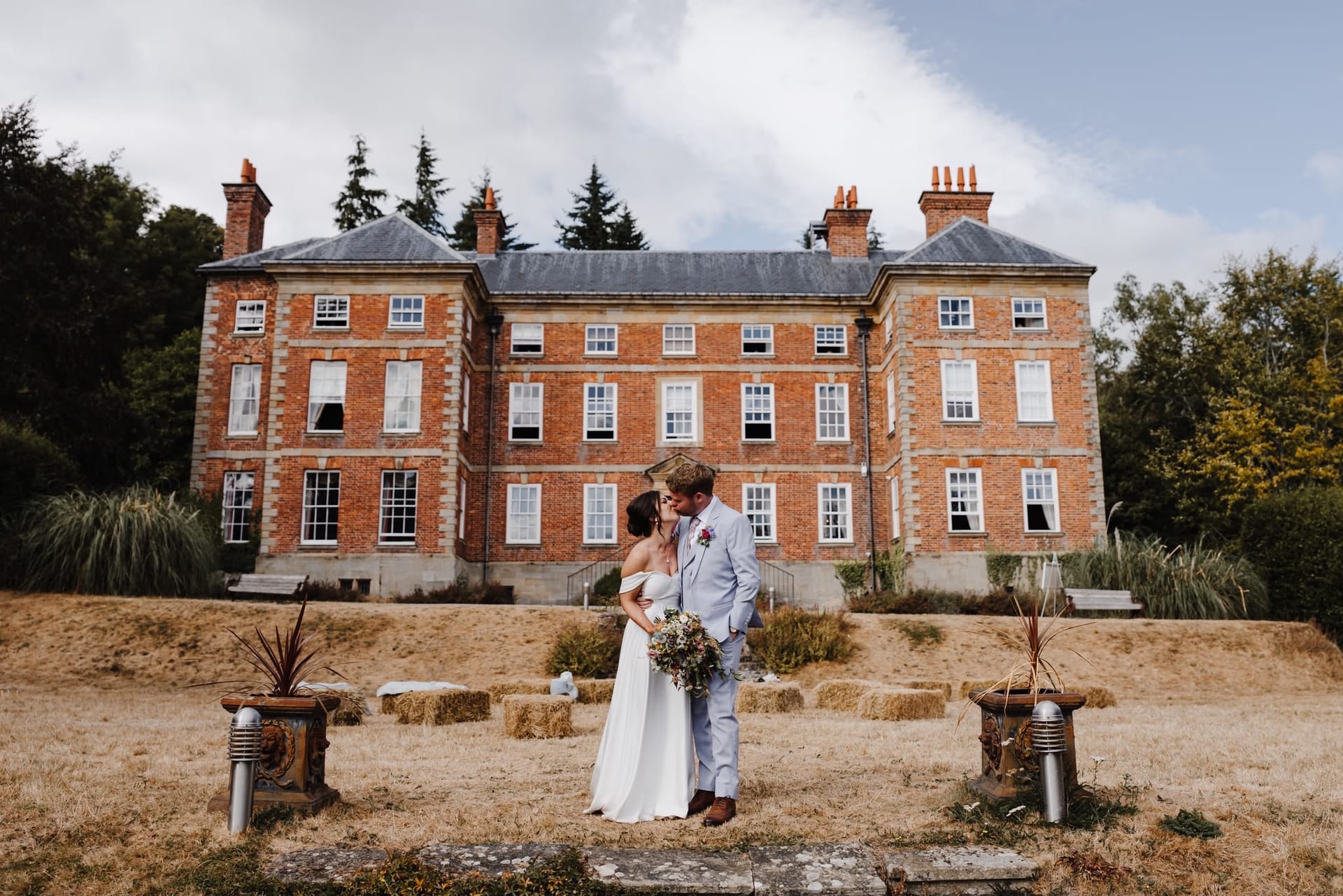
Two mornings, one dress
The mehndi happened first, in a bedroom with the curtains drawn against the morning light. By the time the artist packed up her cones, Emma's hands and forearms were covered wrist to elbow in fine paisley and lace-work henna, the same pattern her family has carried through every wedding for generations.
No dress was going to upstage that, and none was meant to.
A family member helped her into the gown afterwards, dressed for the day herself in a gold-and-rose sari and full jewellery, the two traditions sitting in the same room without either one shouting over the other.
That was the actual brief, even if nobody wrote it down as one: build a dress calm enough to share the morning with henna, a sari, and a four-poster bed, then hold its own again a few hours later in front of a congregation.
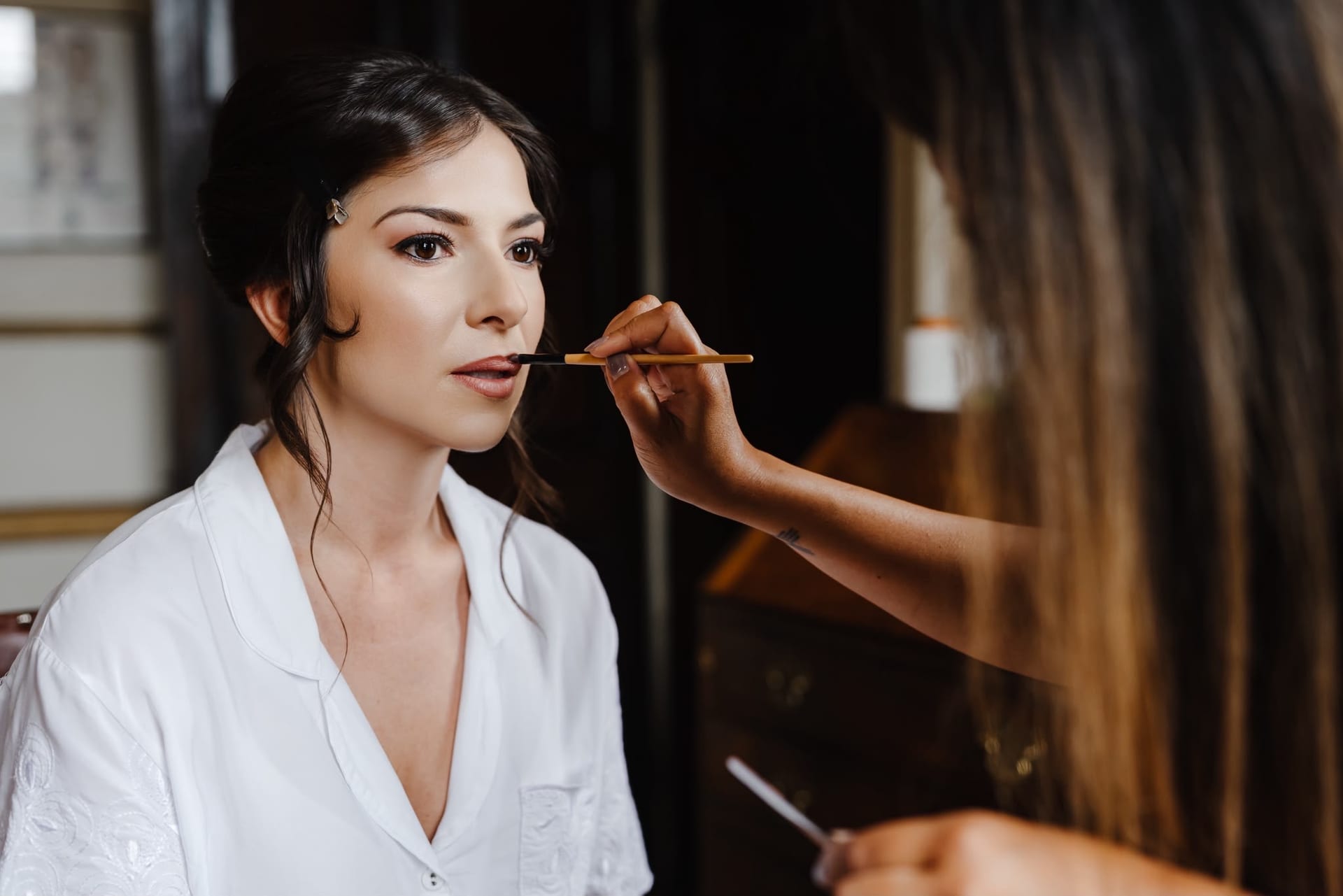
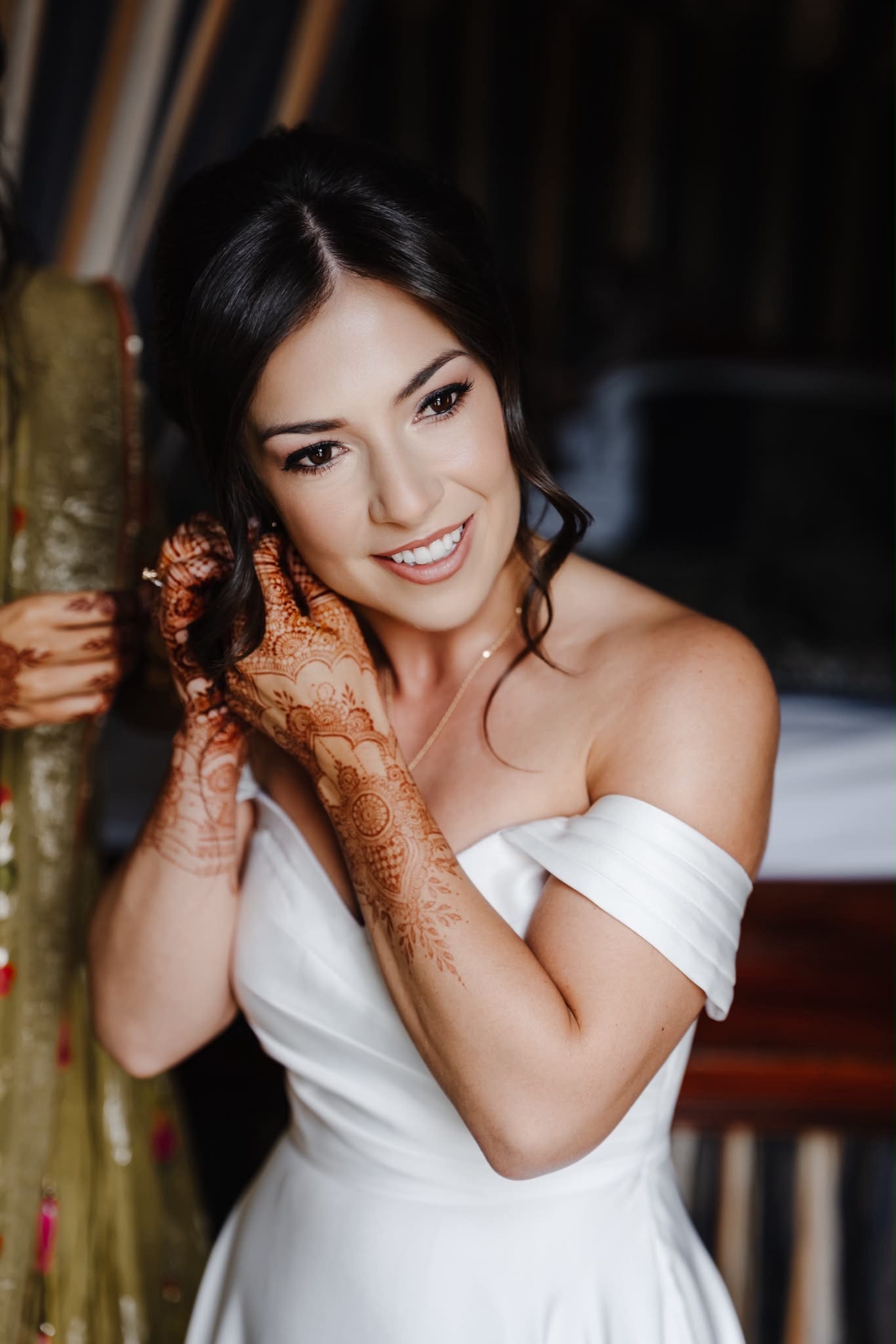
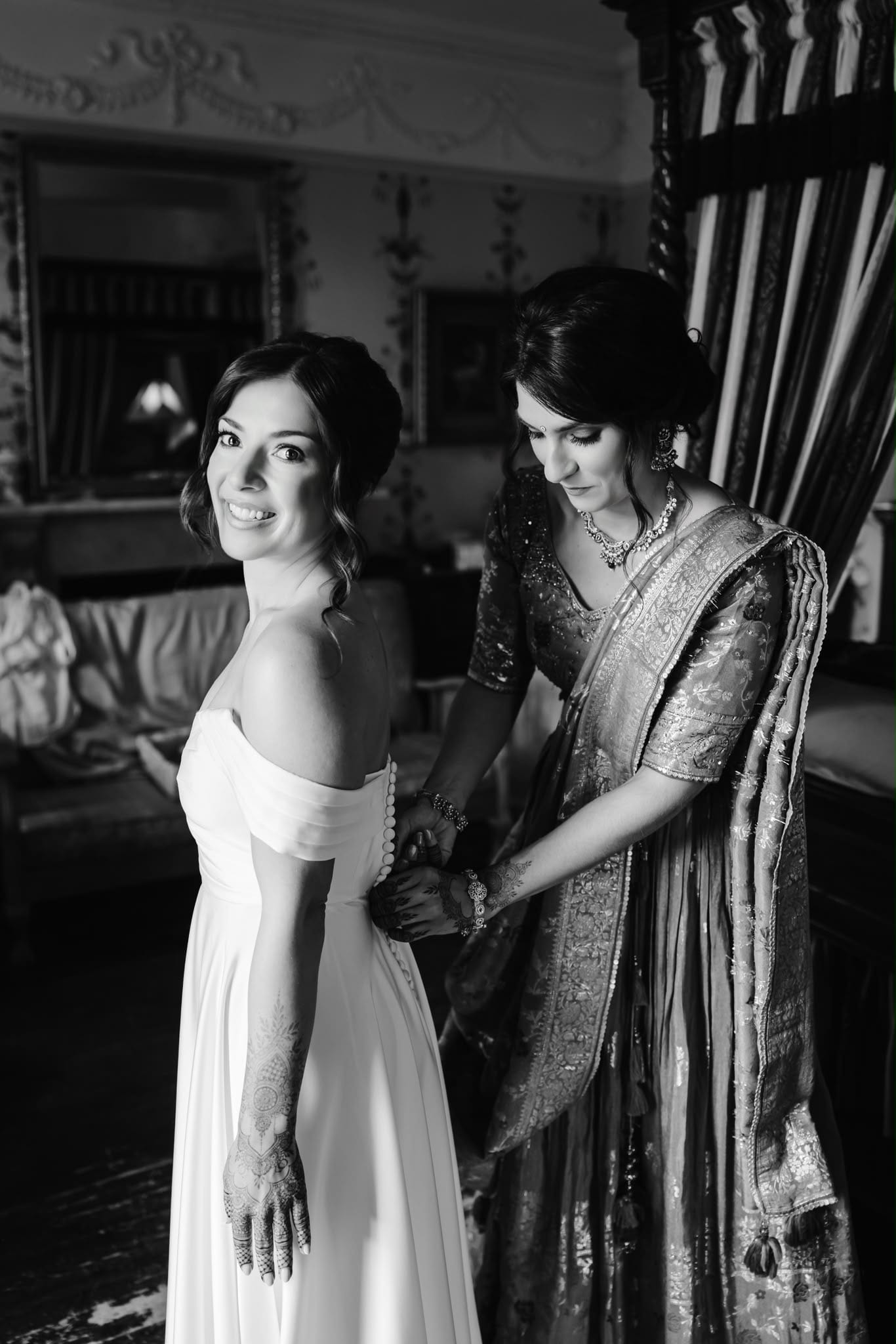
Build the dress the room needs, not the one that photographs loudest on its own.
Why we kept it plain
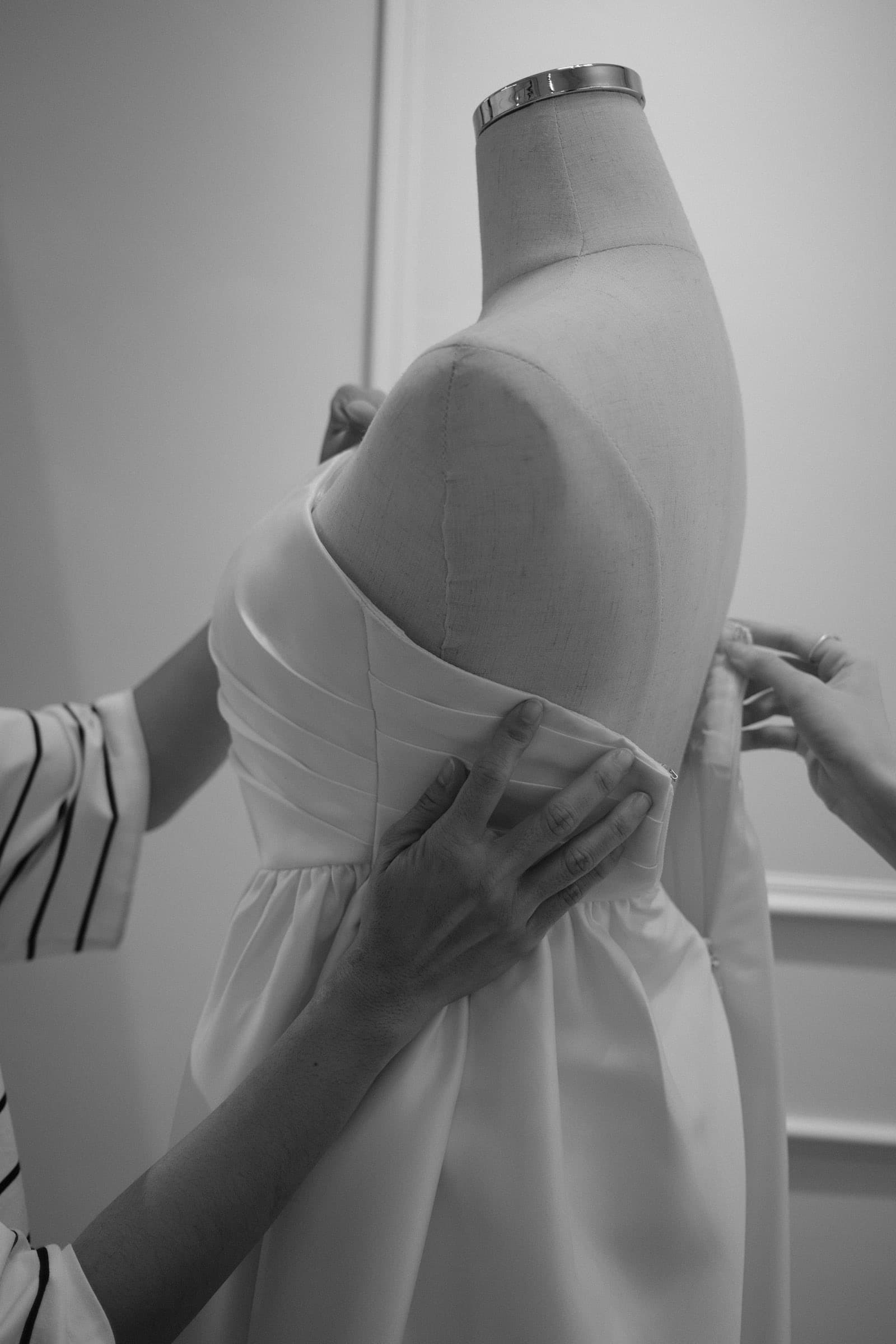
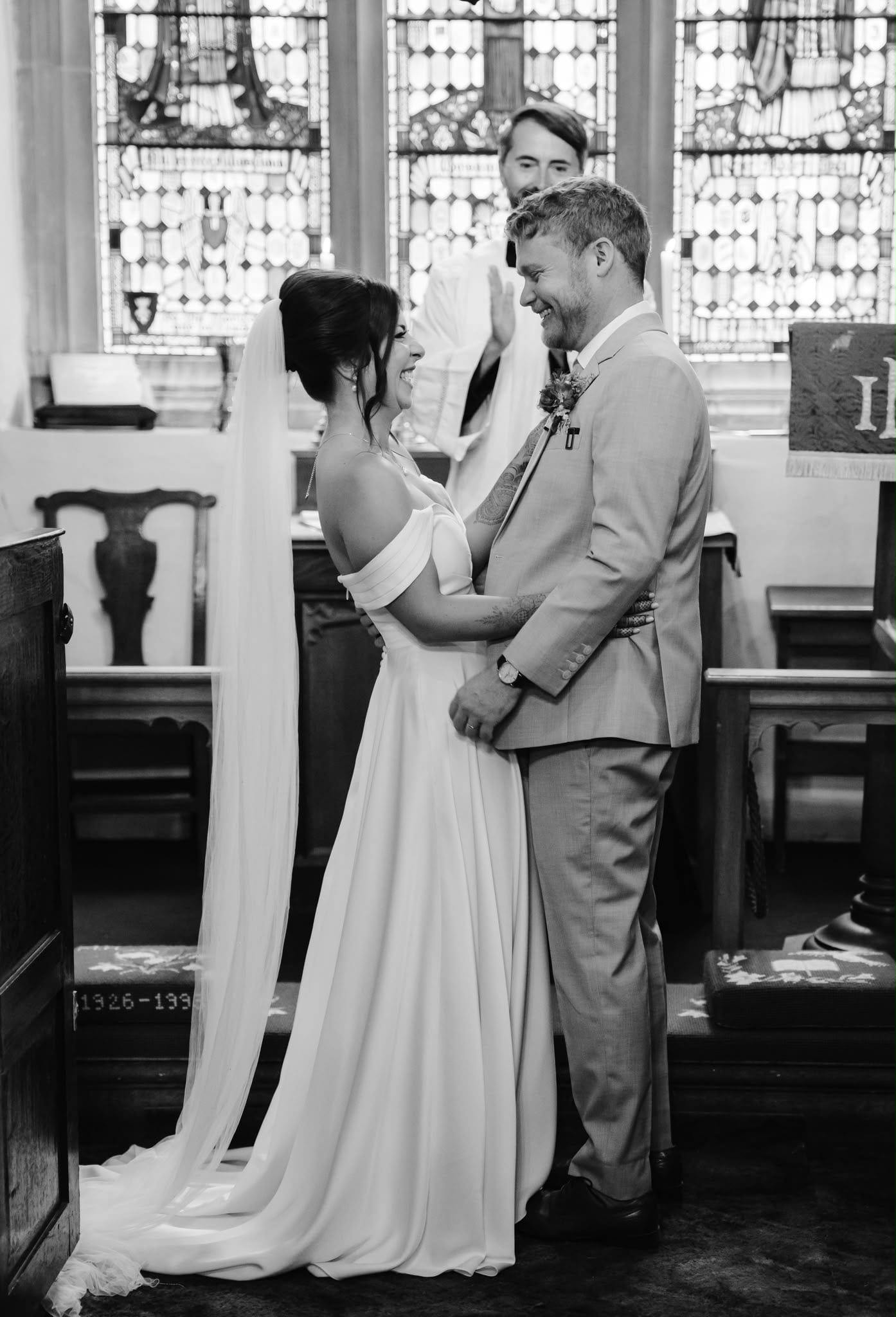
There was no lace, no beading, no embroidery competing with the henna for attention. We cut Emma's gown from a plain, matte crepe with an off-the-shoulder pleated bodice and a clean line down to a covered button back, the kind of dress we usually reach for when a client wants the fabric to behave itself and let the room notice the person wearing it.
It is the same argument we make in plain silk vs loud lace: a busy print or an all-over lace sandwich has nowhere to go next to hand-drawn henna and heirloom jewellery. Plain cloth gives those things somewhere to land.
It also had a practical job. A gown made in Bangkok and worn in England has to survive a very long day before it ever reaches the aisle: a flight, a wardrobe, a morning of mehndi, a change of hands.
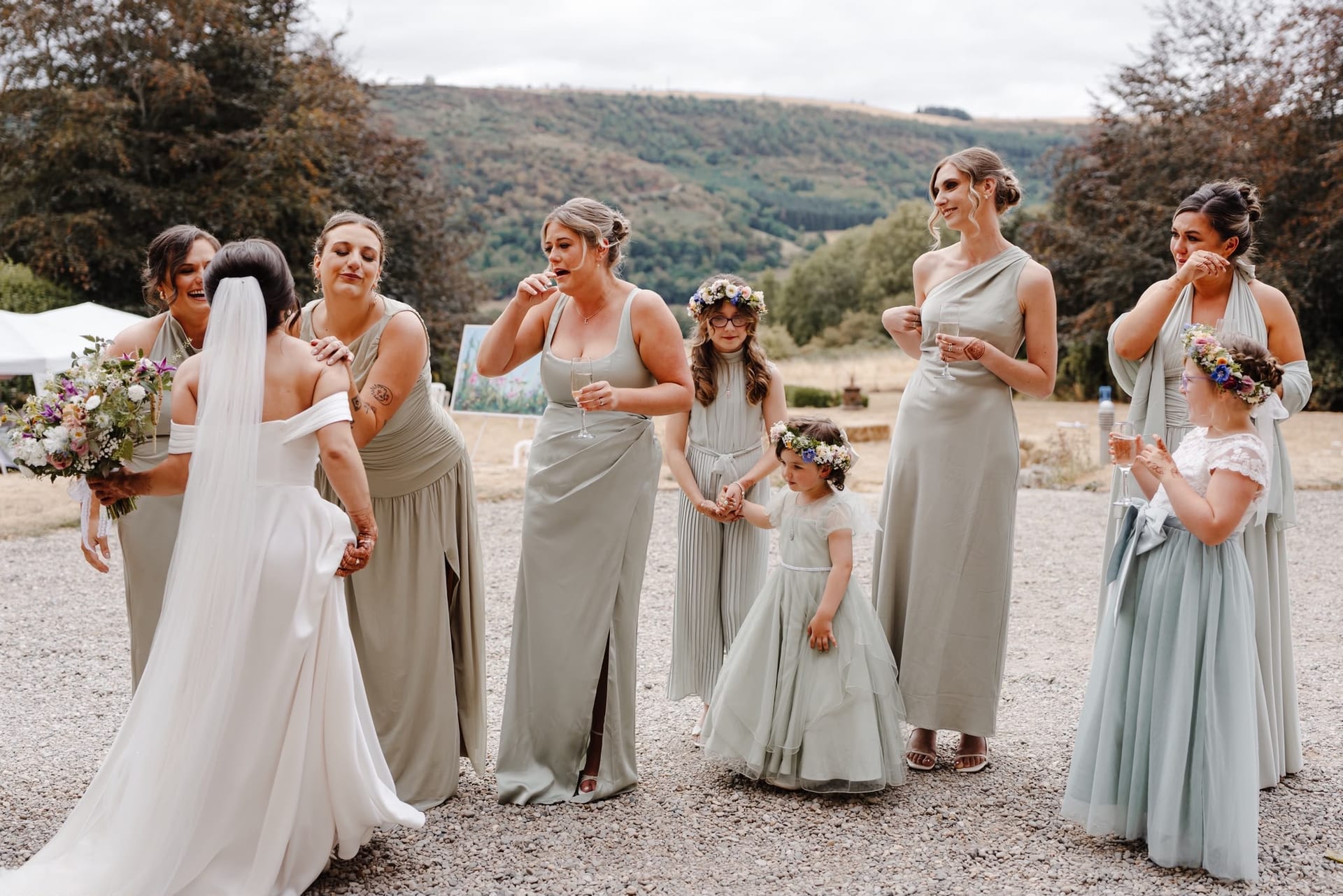
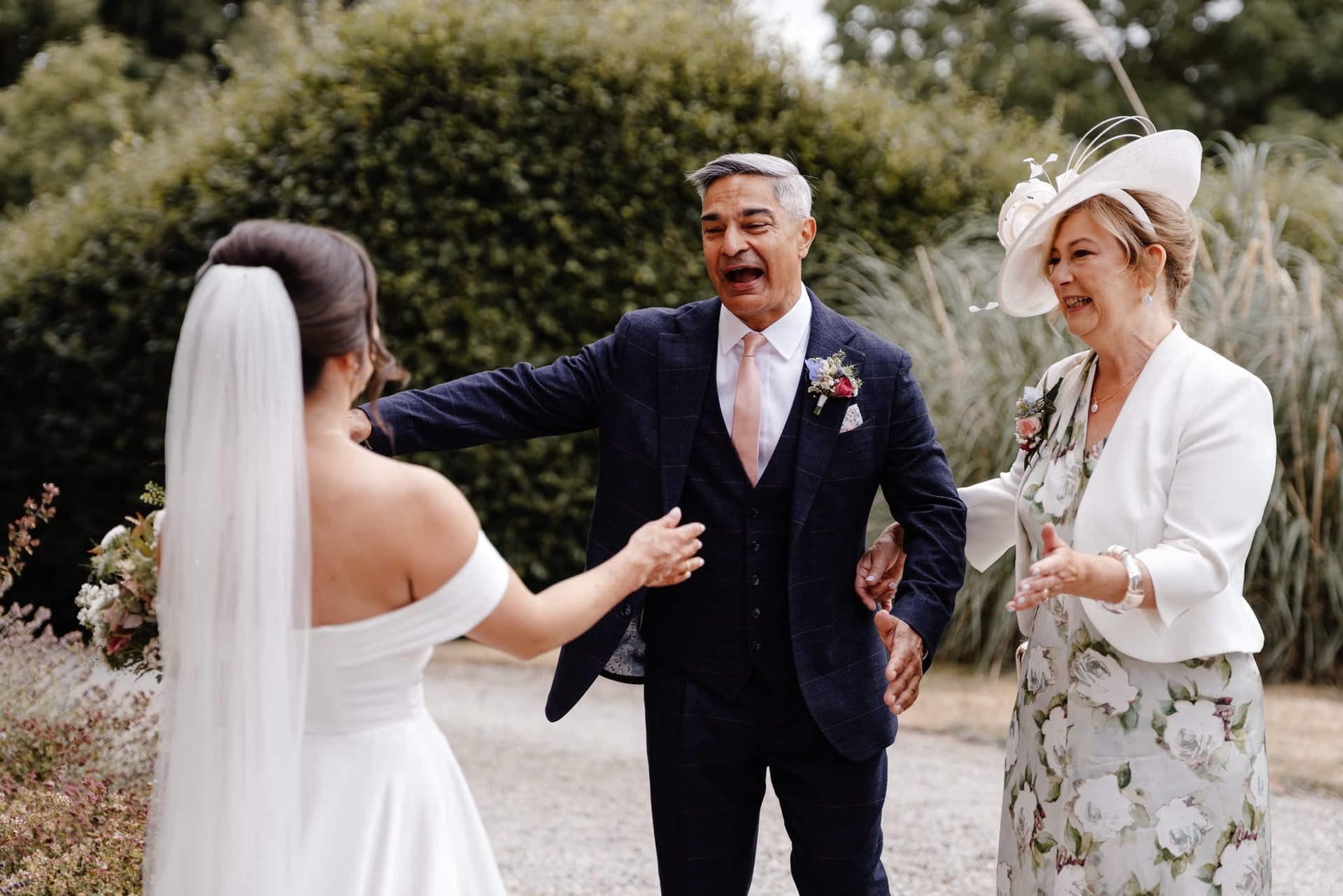
It needed structure without a cage, cloth that would not crease into a map of the journey, and sleeves loose enough to hug an entire wedding party in a gravel courtyard without complaint. A dress built for Bangkok heat and a dress built to travel turn out to want a lot of the same things.
Vows in a stone chapel
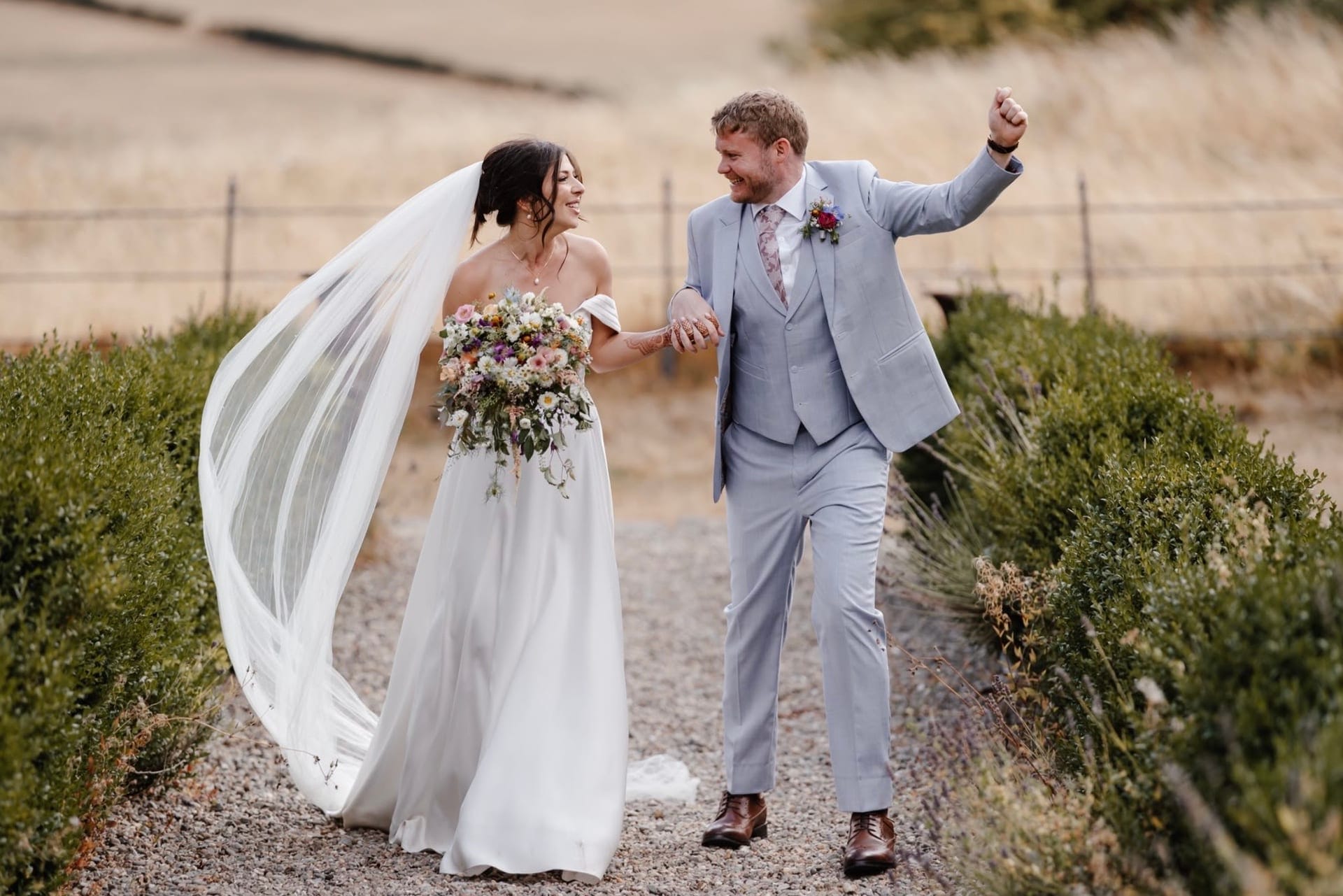
By the ceremony the henna had dried to a deep terracotta, and the dress had done its quiet work: nothing about it pulled focus from her hands, her face, or James waiting at the front of a small stone chapel in a soft grey suit.
She wore a cathedral veil, one strand of curled hair loose at each side, no headpiece competing for space. A plain dress is built to disappear at exactly the right moment and let everything else be the story.
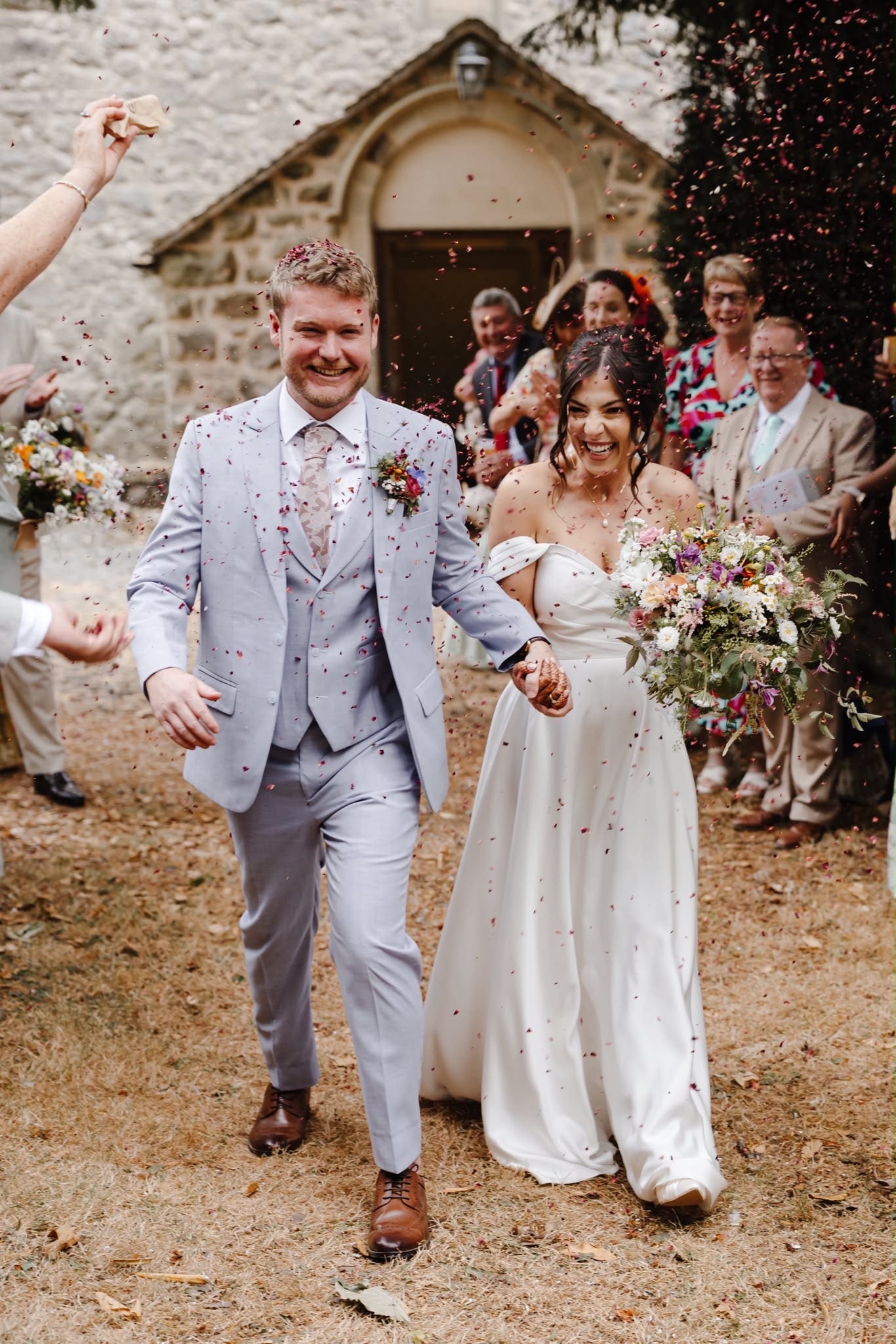
Afterwards came the part no amount of planning fully prepares a dress for: confetti thrown at close range, a churchyard full of people reaching in for a hug, and a walk back down a gravel path with a veil catching every gust of wind.
A pleated bodice with real structure underneath earns its keep here, holding its shape through all of it instead of collapsing into a crumpled column by the time the photographs start.
Hay bales and sage green
The reception moved everyone downhill from the manor to a sloping field lined with hay bales, wildflower bouquets, and bridesmaids in sage green catching the last of the summer light.
It is about as far from a Bangkok ballroom as a wedding can get, and that was rather the point of building the dress this way: cut it right, and the same gown works just as well in a stone chapel as it does on a hillside picnic, with nothing swapped out underneath it.
Match the cloth to the whole day, not just the ceremony photograph. That thinking runs through most of what we build for weddings, Bangkok or otherwise, and it is the same advice in our custom wedding dress guide: the venue, the traditions, and the hours in between all belong in the brief.
The dress, in brief
Plain matte crepe, off-the-shoulder pleated bodice, clean A-line skirt, covered buttons the length of the back, cathedral veil. Built to hold its shape through a mehndi morning, a flight, a church service, and a field full of hay bales, without ever needing a second dress underneath it.
If your own wedding has more than one tradition, more than one venue, or more than one country in it, that is exactly the kind of brief we like best. Bring us all of it, not just the Pinterest board for the ceremony.
Book a Wedding Dress Consultation